
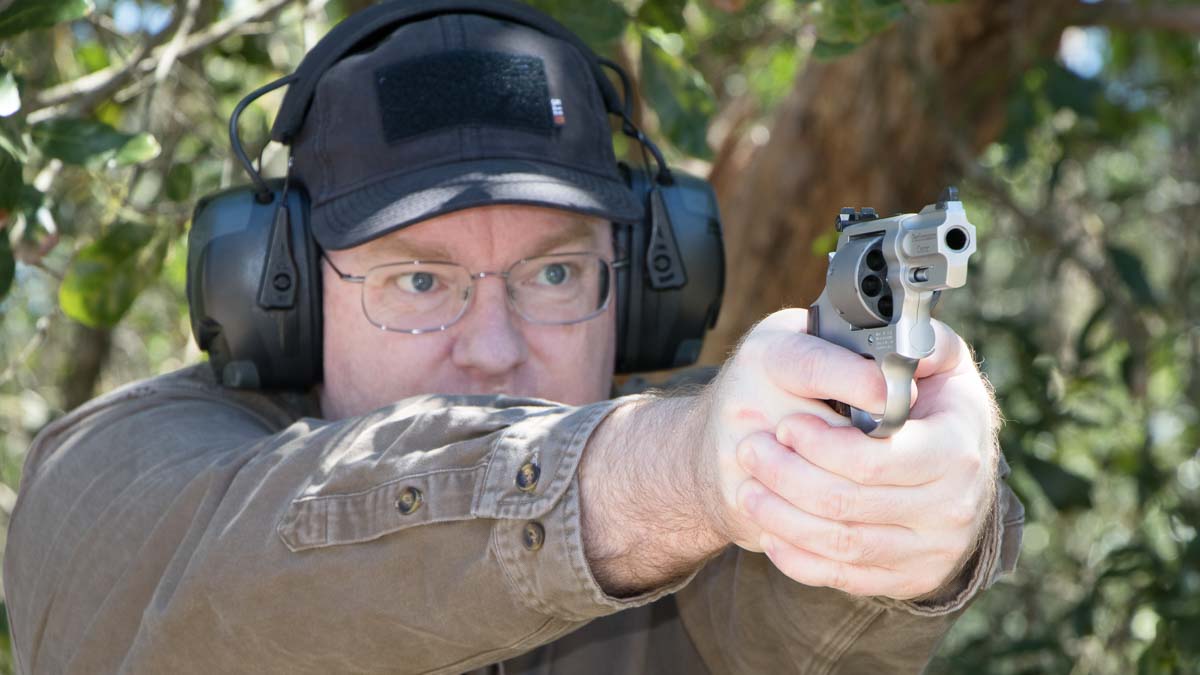
I’ve always had a soft spot for revolvers that don’t quite follow the traditional script. The Smith & Wesson 986 falls squarely into that category. A 9mm revolver isn’t new, but it’s still uncommon enough to raise eyebrows, especially among shooters who’ve spent years running semi-autos for defensive carry.
For me, the appeal is practical as much as it is mechanical curiosity. A revolver that runs the same ammunition as my carry pistol simplifies logistics. Fewer calibers, fewer variables. At the same time, I’m not willing to compromise reliability or shootability just for novelty.
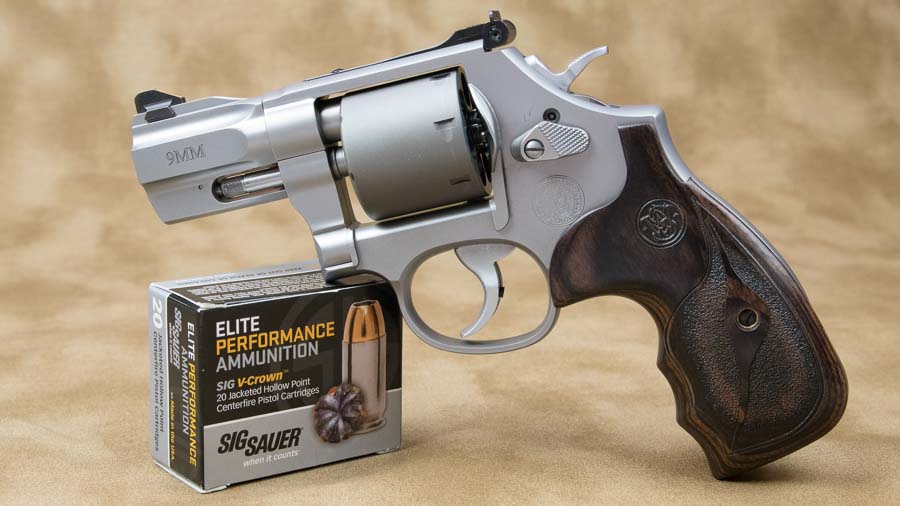
After spending time with the Performance Center Model 986, I can say this: it’s not a gimmick. But it’s also not for everyone. If you’re considering adding a 9mm wheel gun to your carry rotation, or just want a serious, well-built revolver that bridges old-school reliability with modern ammo, this one deserves a closer look.
Quick Summary
Strengths
- Excellent build quality from the Performance Center
- Smooth, predictable trigger (especially in single action)
- 7-round capacity: unusual for a revolver in this size class
- Manageable recoil with full-power 9mm loads
- Moon clip system allows fast reloads (with practice)
Limitations
- Requires moon clips for best performance
- Grip shape may not suit all hand sizes
- Price point is firmly in premium territory
- Slightly heavier than some concealed carry options
Verdict
A well-executed, purpose-built revolver that makes sense for experienced shooters who value versatility and craftsmanship, but it’s not a beginner’s gun or a budget option.
What the Smith & Wesson 986 Is
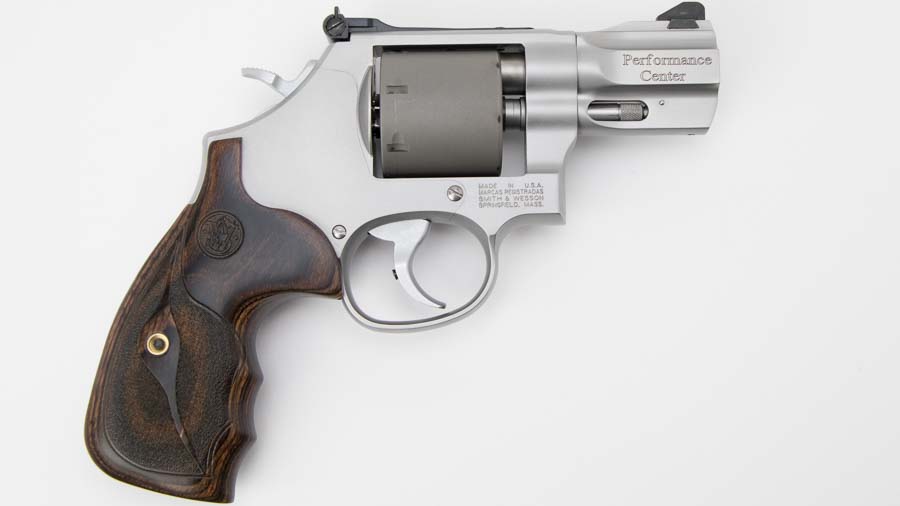
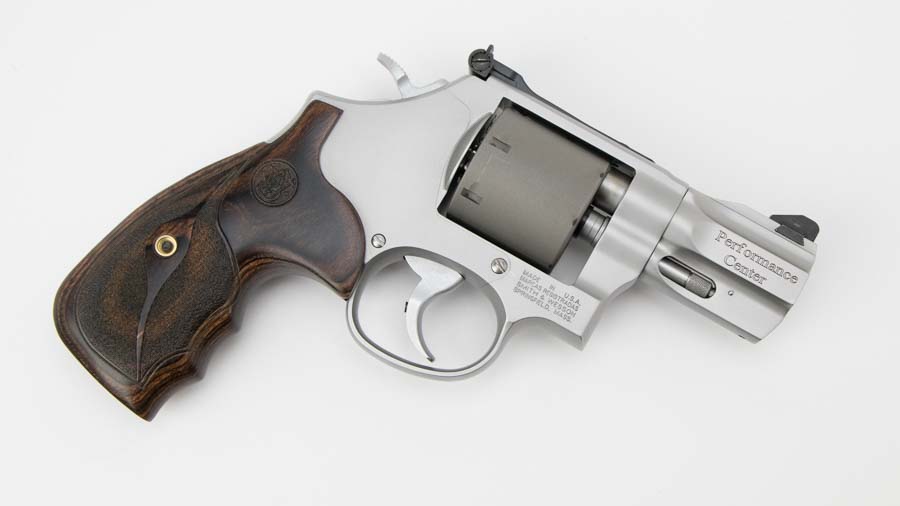
The Model 986 is part of Smith & Wesson’s Performance Center lineup, which means it’s not a standard production revolver. It’s built with tighter tolerances, hand-fitted components, and a focus on shootability.
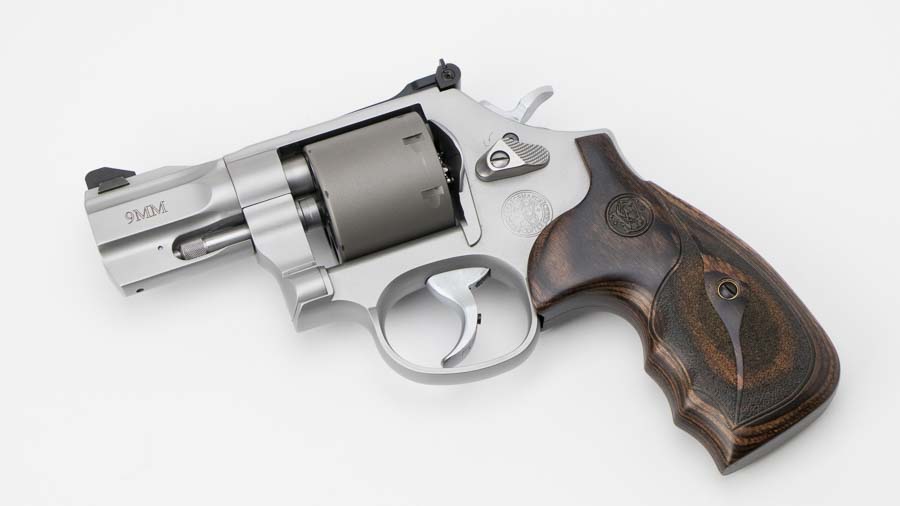
At its core, this is an L-frame revolver chambered in 9mm. That combination is important.
- The L-frame gives you more mass and durability than a J-frame or K-frame
- The 9mm chambering allows compatibility with one of the most common defensive calibers in the world
- It uses moon clips to handle rimless cartridges, essential for reliable extraction
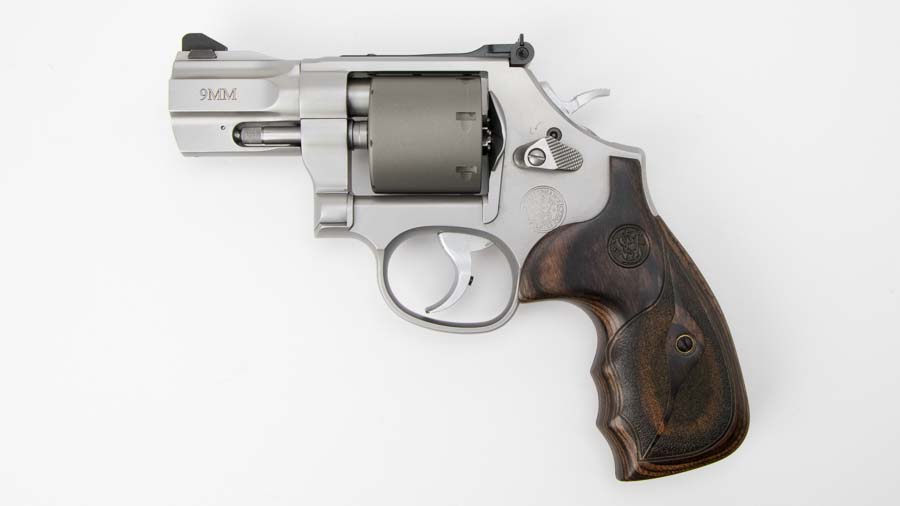
This particular version features a 2.5-inch barrel, putting it in the concealed carry category, though it’s not what I’d call ultra-compact.
Key Features and Design Details
Here’s where the 986 separates itself from basic revolvers.
Core Specifications
- Caliber: 9mm
- Capacity: 7 rounds
- Barrel length: 2.5 inches
- Weight: ~31.7 oz unloaded
- Frame: L-frame
- Action: Double-action / single-action
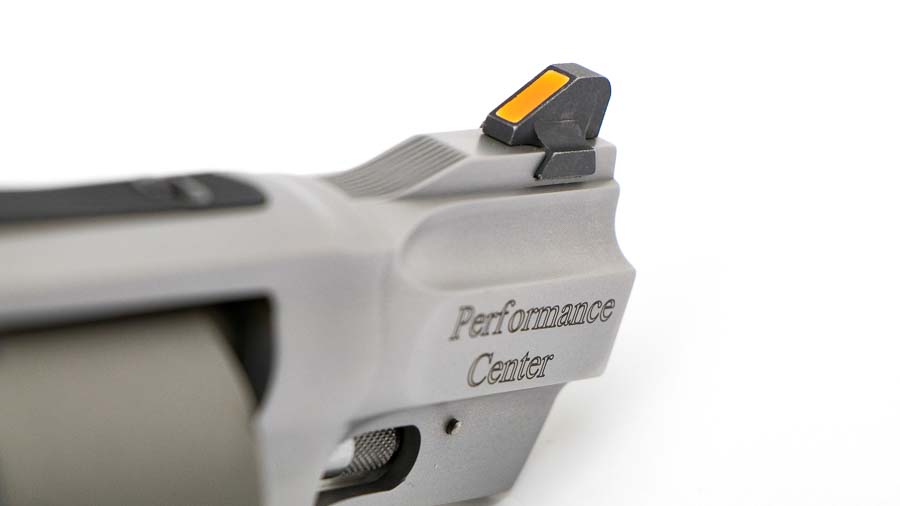
- Sights: Red ramp front, adjustable rear
- Finish: Matte silver
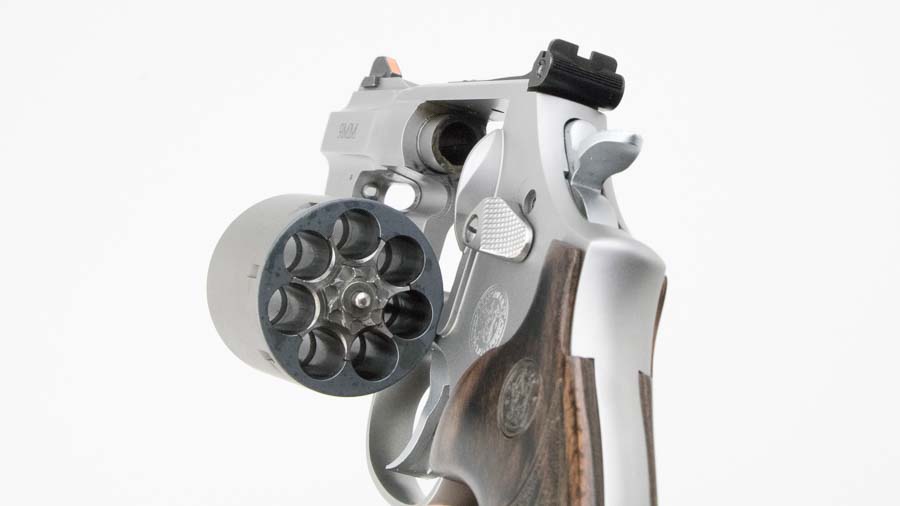
- Cylinder: Titanium, unfluted
Notable Features
1. Titanium Cylinder (Unfluted)
The cylinder is both strong and relatively lightweight. The unfluted design adds durability and gives the revolver a clean, understated look.
2. 7-Round Capacity
Seven rounds in a revolver this size is significant. It narrows the capacity gap between revolvers and compact semi-autos.
3. Performance Center Action Work
- Tuned internals
- Bossed mainspring
- Overtravel stop
The result is a smoother, more consistent trigger than you’ll find on most factory revolvers.
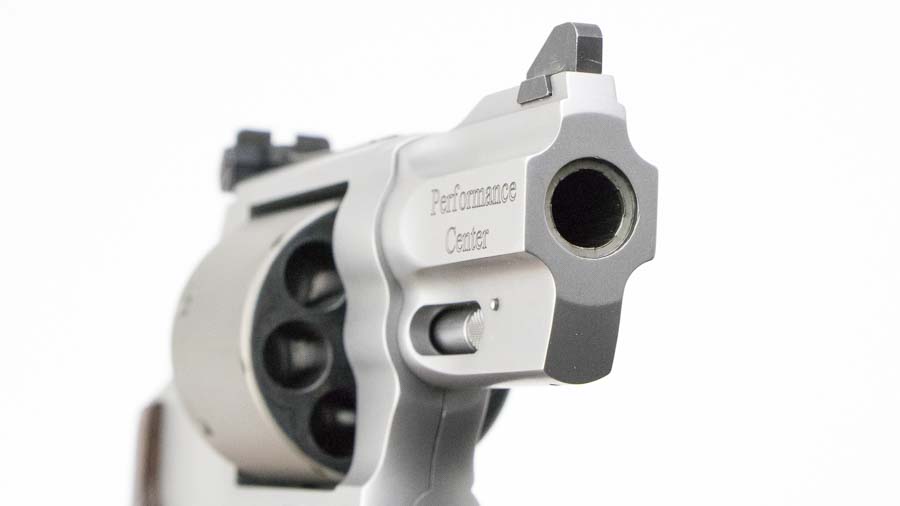
4. Recessed Crown and Barrel Work
The recessed crown protects accuracy-critical surfaces. The barrel lug also adds weight forward, helping with recoil control.
5. Moon Clip System
This is non-negotiable with 9mm revolvers. The clips:
- Ensure proper headspacing
- Allow simultaneous extraction
- Enable faster reloads (with practice)
How It Works (and What Matters in Real Use)
If you’ve never run a 9mm revolver, there are a few key differences compared to traditional .38 Special or .357 Magnum guns.
Moon Clips Are the System
Without moon clips, extraction becomes unreliable. With them, the system works extremely well, but it introduces a few realities:
- You’ll need to load and unload clips (which takes time or tools)
- Bent clips can cause issues
- Carrying spare clips requires a different approach than speedloaders
That said, once you’re set up, reloads can be surprisingly fast; arguably faster than traditional revolver reloads.
Trigger Characteristics
My sample averaged:
- Double-action: ~11 pounds
- Single-action: ~4 pounds
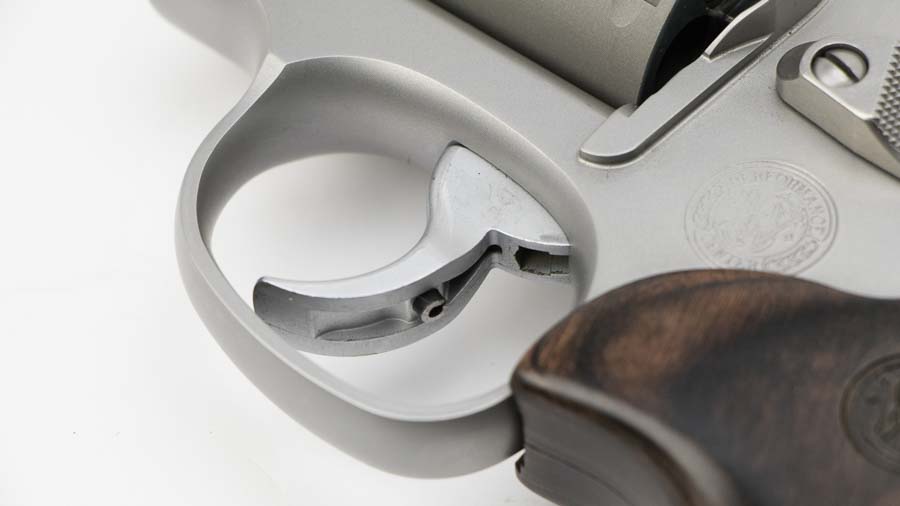
The double-action pull is smooth and consistent, which matters far more than raw weight. There’s minimal stacking, and it’s predictable through the entire stroke.
Recoil Behavior
This is where many shooters get surprised.
9mm in a revolver feels different than in a semi-auto:
- There’s no slide absorbing recoil
- The impulse is sharper
- Muzzle rise is more noticeable
That said, the L-frame weight helps a lot. Compared to lightweight 9mm revolvers, the 986 is far more controllable.
Practical Use Cases
Concealed Carry
This is where opinions will split.
Pros for carry:
- Reliable ignition and operation
- No dependence on magazine function
- Compatible with your existing 9mm ammo supply
Cons:
- Heavier than many compact pistols
- Bulkier cylinder profile
- Reloads require more planning
For me, this is a viable but niche carry option. It works best for someone who already prefers revolvers.
Range and Training Use
This is where the 986 shines.
- Cheaper ammo compared to .357 Magnum
- Reduced recoil compared to magnum loads
- Excellent trigger for skill development
It’s a great training revolver if you want to build double-action proficiency without the punishment of heavier calibers.
Backup or Secondary Gun
For someone carrying a 9mm semi-auto, the 986 makes logistical sense as a backup:
- Shared ammunition
- Mechanical simplicity
- Different failure modes than a semi-auto
Real-World Performance
Accuracy
The revolver is more accurate than most shooters can exploit, especially at defensive distances.
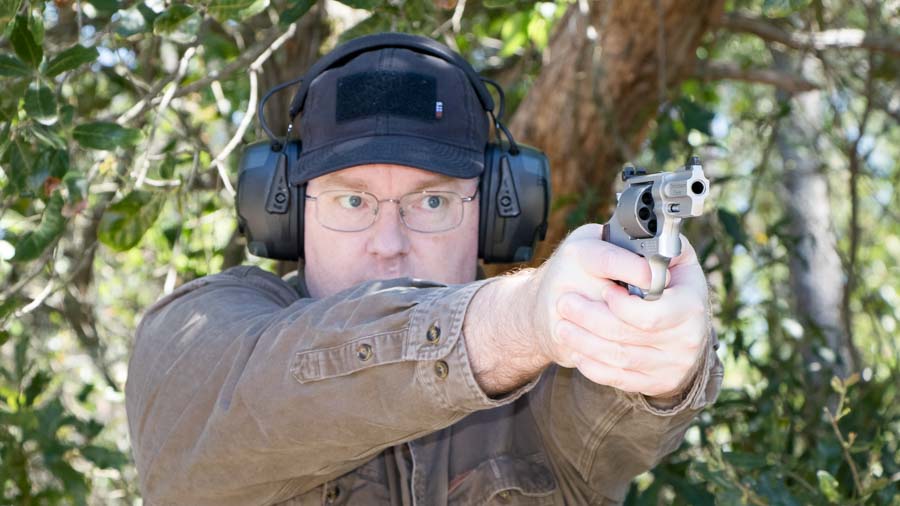
The sight setup is solid:
- Bright front ramp is easy to pick up
- Rear notch is precise, though slightly tight for fast shooting
If I had one complaint, it’s that I prefer a slightly wider rear notch for quicker front sight acquisition under stress.
| Velocity | Energy | |
|---|---|---|
| American Eagle 124-grain FMJ | 974 fps | 261 ft-lbs |
| Blazer Brass 115-grain FMJ | 1,002 fps | 256 ft-lbs |
| Blazer Brass 124-grain FMJ | 1,010 fps | 281 ft-lbs |
| Federal 115-grain JHP +P+ | 1,143 fps | 334 ft-lbs |
| Federal HST 124-grain JHP | 1,092 fps | 328 ft-lbs |
| L-Tech 124-grain CuHP | 951 fps | 249 ft-lbs |
| Remington 115-grain JHP | 1,015 fps | 263 ft-lbs |
| SIG 115-grain FMJ | 1,084 fps | 300 ft-lbs |
| SIG V-Crown 115-grain JHP | 1,068 fps | 291 ft-lbs |
| SIG V-Crown 124-grain JHP | 1,118 fps | 344 ft-lbs |
| SIG V-Crown 147-grain JHP | 949 fps | 294 ft-lbs |
| Speer Gold Dot 124-grain JHP | 1,036 fps | 295 ft-lbs |
| Winchester PDX1 Defender 124-grain JHP +P | 1,101 fps | 334 ft-lbs |
Reliability
I specifically checked for bullet jump, which can be an issue in lightweight revolvers shooting 9mm.
Results:
- No measurable bullet migration
- No cylinder binding
- No extraction issues with moon clips
The weight of the gun plays a big role here. At roughly 32 ounces, it avoids many of the problems seen in ultra-light revolvers.
Grip Ergonomics
This is subjective, but worth noting.
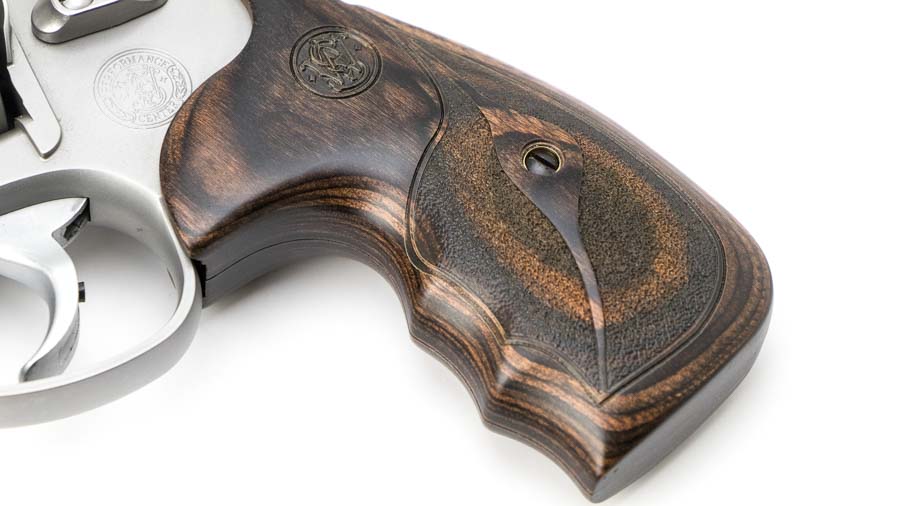
The factory wood grips:
- Look excellent
- Fit well
- Provide decent control
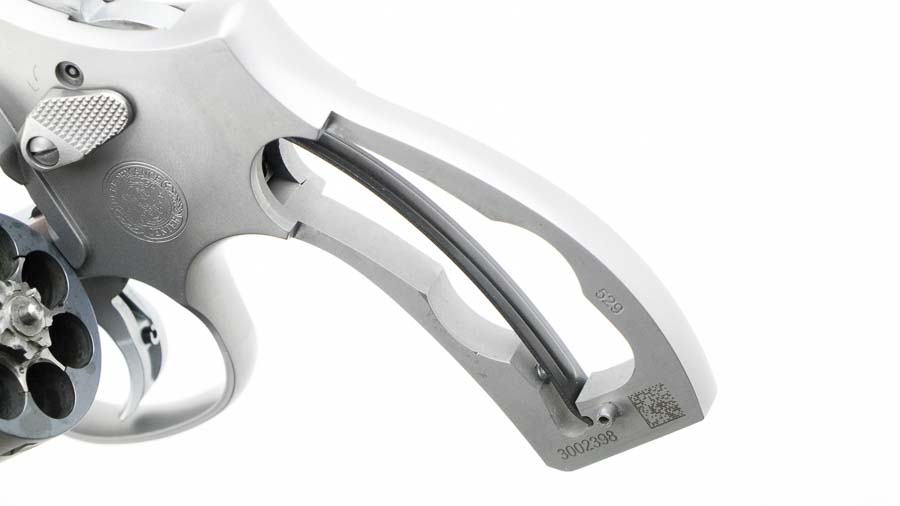
However, I found the lower portion slightly bulky, which affected my grip, particularly pinky engagement. Shooters with larger hands will likely appreciate them more than I did.
Pros and Cons
Pros
- High-quality fit and finish
- Smooth, consistent trigger
- 7-round capacity is genuinely useful
- Reliable operation with defensive ammo
- Reduced recoil compared to magnum revolvers
- Ammo compatibility with 9mm pistols
Cons
- Premium price point
- Moon clips add complexity
- Grip may not suit all shooters
- Heavier than many carry guns
- Not as fast to reload as a semi-auto under stress
Comparison to Alternatives
Versus .357 Magnum Revolvers
Advantages of the 986 9mm revolver:
- Lower recoil with comparable defensive performance
- Cheaper, more available ammo
- Faster follow-up shots
Advantages of .357 Magnum:
- Greater power ceiling
- No need for moon clips
Versus Compact 9mm Pistols
Advantages of the 986:
- Simpler manual of arms
- Less sensitive to limp-wristing or ammo variations
- Strong reliability track record
Advantages of pistols:
- Higher capacity
- Faster reloads
- Slimmer profile for carry
Versus Other 9mm Revolvers
Compared to smaller options like the 9mm Taurus 905 revolver, the 986 offers:
- Better recoil control
- Higher capacity
- Improved shootability
The tradeoff is size and weight.
Who This Is Best For
The Smith & Wesson 986 makes the most sense for:
- Experienced shooters who already understand revolvers
- Concealed carriers who prefer wheel guns but want 9mm compatibility
- Enthusiasts who appreciate Performance Center craftsmanship
- Shooters looking for a durable, range-friendly revolver with modern ammo
It’s probably not ideal for:
- New shooters
- Budget-conscious buyers
- Anyone unwilling to deal with moon clips
Final Verdict
The Smith & Wesson 986 is a well-thought-out revolver that bridges traditional design with modern practicality. It doesn’t try to replace a semi-auto, and it doesn’t pretend to be something it’s not.
What it does offer is a reliable, accurate, and refined shooting experience in a platform that’s been proven for over a century, and adapted to one of today’s most practical calibers.
Would I carry it daily? Probably not as my primary. But I wouldn’t hesitate to carry it when the situation made sense.
If you’re already a revolver shooter and you’ve been curious about 9mm wheel guns, this is one of the better executions on the market. It’s not cheap, but in this case, you can see where the money goes.