
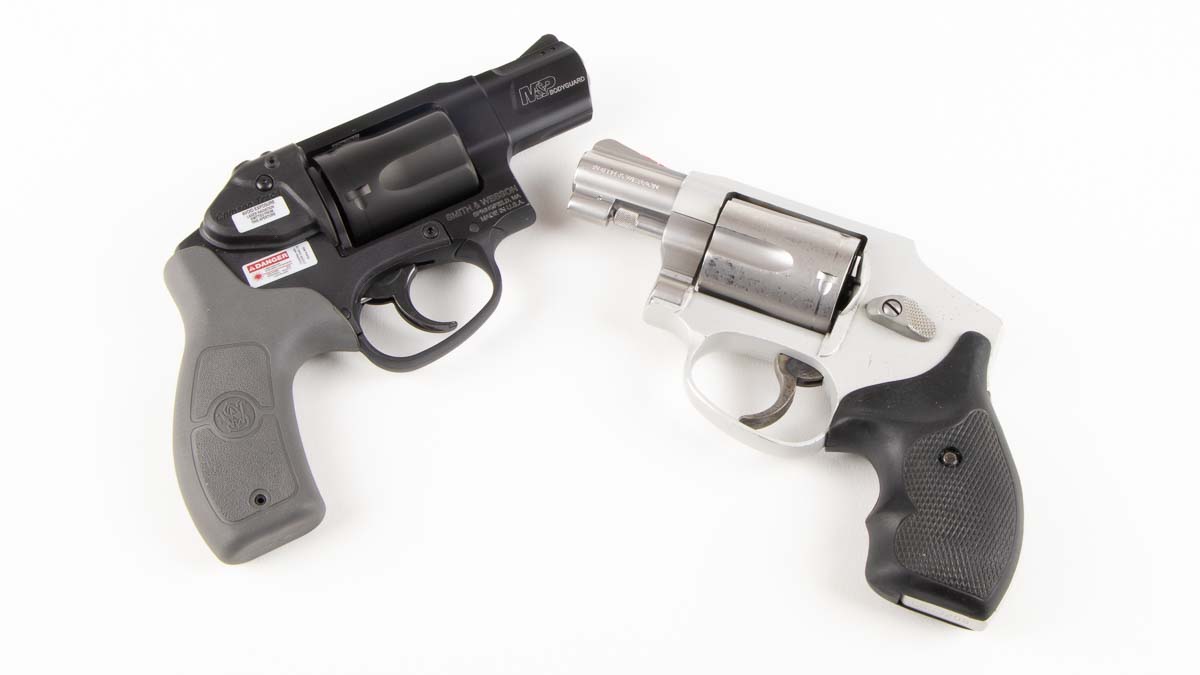
If you’ve spent any time carrying a revolver for self-defense, you already know the appeal of the Smith & Wesson J-frame. It’s simple, durable, and brutally reliable. That’s why the comparison of Smith & Wesson 642 vs Bodyguard 38 still matters, even in a world dominated by micro-compact semi-autos.
I’ve carried a J-frame in one form or another for decades. My Smith & Wesson 642 dates back to the mid-1990s, when I bought it as a backup gun during my law enforcement career. It’s been through sweat, rain, and more neglect than I’d admit publicly. It still works. That alone tells you something.
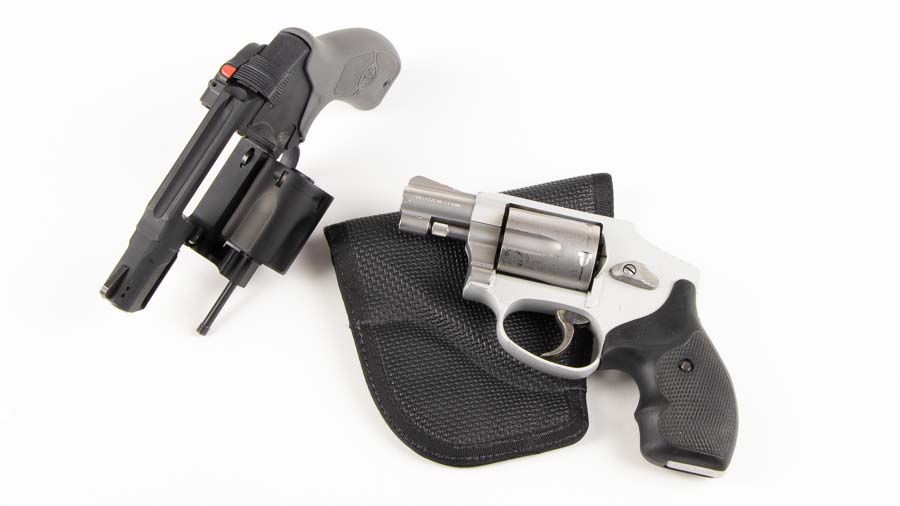
The Bodyguard 38, on the other hand, represents Smith & Wesson’s attempt to modernize the platform. Polymer components, revised ergonomics, and updated features bring it closer to what today’s concealed carriers expect. But modernization doesn’t automatically mean improvement.
This isn’t a spec sheet comparison. It’s a practical evaluation based on how these guns actually perform, carry, and hold up over time.
Quick summary
Strengths of the 642:
- Proven long-term reliability
- Simpler design with fewer failure points
- Better balance in a traditional grip
- Smooth, consistent trigger after break-in
Strengths of the Bodyguard 38:
- Improved sights with replaceable front
- Longer extractor rod for more reliable ejection
- Slightly longer grip for better control
- Ambidextrous cylinder release
Limitations of the 642:
- Minimal sights
- Short extractor rod can slow reloads
- Fixed front sight limits upgrades
Limitations of the Bodyguard 38:
- Heavier trigger pull
- Polymer frame doesn’t noticeably reduce recoil
- Less traditional ergonomics
TL;DR
Both guns are viable for concealed carry. The Bodyguard 38 is objectively more refined in a few key areas, but the 642 remains a more straightforward and time-tested tool. Your choice comes down to whether you value modernization or simplicity.
What These Revolvers Are
Both the Smith & Wesson 642 and the M&P Bodyguard 38 are compact, five-shot revolvers chambered in .38 Special. They’re designed primarily for concealed carry, backup gun roles, and situations where absolute reliability outweighs capacity.
The 642 is part of the classic J-frame Centennial line. It features an internal hammer, aluminum alloy frame, and a long-standing reputation as a no-nonsense defensive revolver.
The Bodyguard 38 builds on that foundation but introduces a hybrid construction. It combines polymer and metal components, changes the control layout, and adds features aimed at modern shooters.
At their core, both guns serve the same purpose. The differences show up in how they handle, how they reload, and how they integrate into a carry routine.
Key Features and Components
Here’s where the practical differences begin to matter.
Frame and Construction
- 642: Aluminum alloy frame, stainless steel cylinder
- Bodyguard 38: Polymer and aluminum hybrid frame, steel cylinder
Capacity
- Both: 5 rounds of .38 Special, rated for +P ammunition
Sights
- 642: Integral front ramp, fixed rear notch
- Bodyguard 38: Pinned front sight, improved rear notch
Cylinder Release
- 642: Traditional left-side thumb piece
- Bodyguard 38: Top-mounted ambidextrous release
Extractor Rod
- 642: Short rod
- Bodyguard 38: Longer rod with full-length shroud
Grip
- 642: Compact grip, typically leaves pinky unsupported
- Bodyguard 38: Slightly longer grip, allows full hand purchase
Trigger System
- Both: Double-action only
- Bodyguard typically has a heavier, longer pull
Weight (approximate)
- 642: Around 15 ounces
- Bodyguard 38: Around 14.4 ounces
These differences might look minor on paper, but they show up immediately when you start shooting and reloading.
How they work in practice
Mechanically, both revolvers operate the same way. Double-action trigger pull rotates the cylinder, cocks the internal hammer, and fires the round. There’s nothing new here.
Where things diverge is in execution.
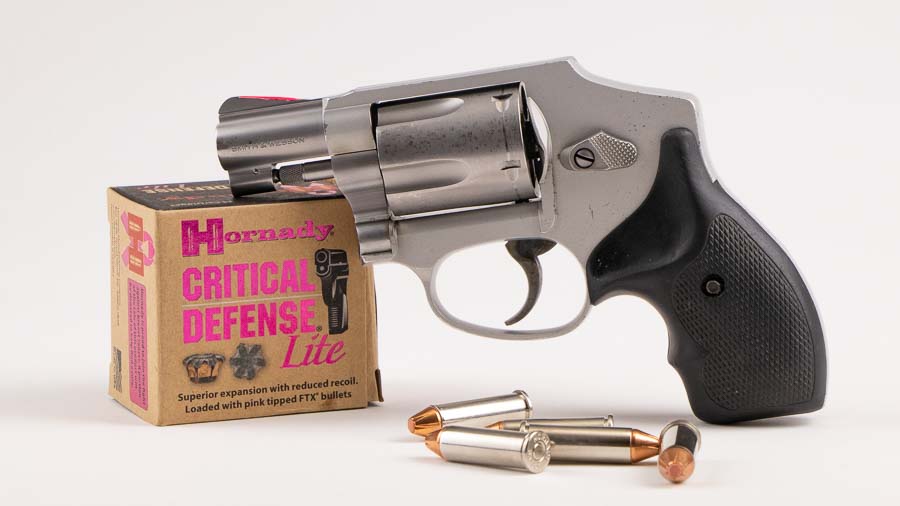
The 642 has what I’d call a traditional J-frame trigger. It’s long, but once it smooths out with use, it becomes predictable. That matters more than lightness in a defensive revolver. I know exactly where it’s going to break every time.
The Bodyguard 38 has a noticeably heavier and longer pull. Some shooters interpret that as added safety. I see it as something you have to train around. It’s not unmanageable, but it’s not as refined.
Reloading is where the Bodyguard clearly pulls ahead. The longer extractor rod makes a real difference. With the 642, I’ve had to manually clear cases often enough that it’s part of my reload routine. With the Bodyguard, empties come out cleanly with a firm stroke.
That’s not a theoretical advantage. Under stress, clean ejection matters.
Practical use and carry considerations
Pocket Carry: Both guns are well-suited for pocket carry, but the 642 edges out slightly due to its more traditional contours. It prints less and draws cleaner from a pocket holster.
The Bodyguard’s shape is a bit more angular. It’s still usable, but not as refined for this role.
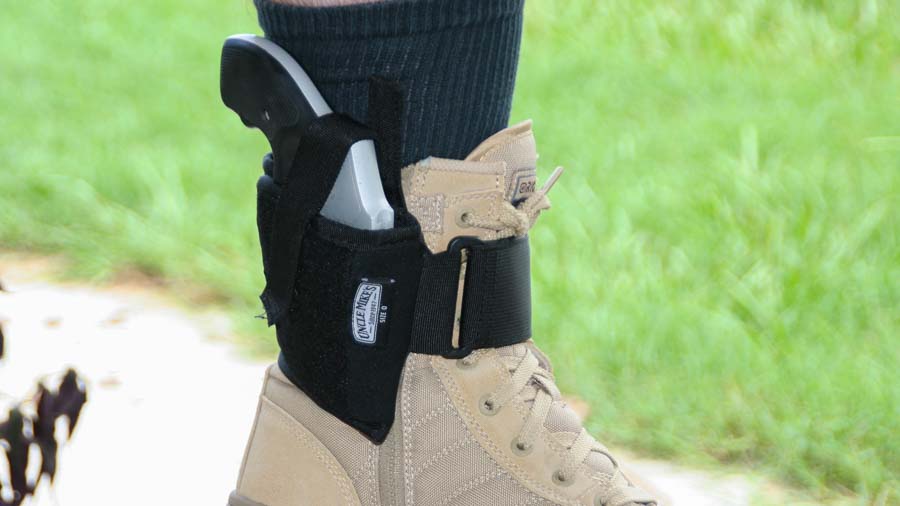
Appendix or Ankle Carry: In these roles, the difference is less noticeable. Both guns are lightweight and compact enough to disappear with the right holster.
The Bodyguard’s slightly longer grip can be an advantage when drawing under stress. That extra purchase gives you more control immediately.
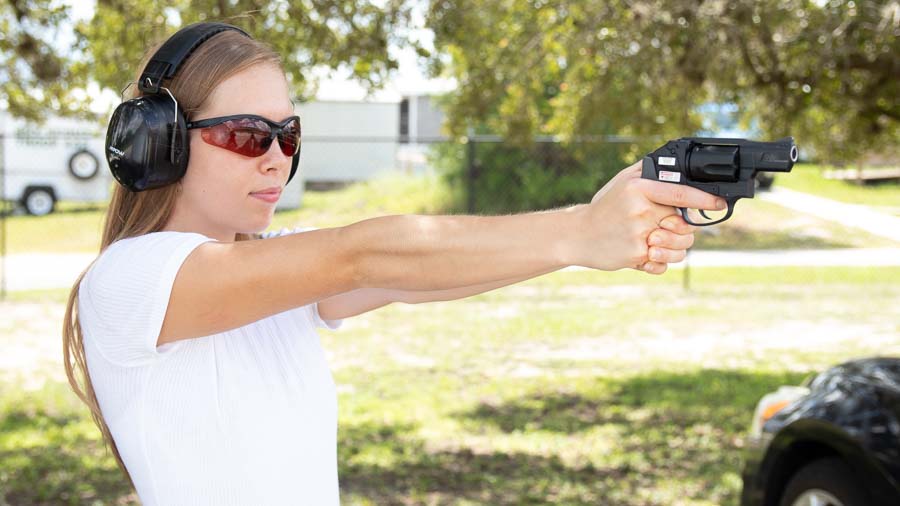
Range Performance
Neither of these is a range gun, but accuracy still matters.
The Bodyguard’s improved sights make a difference. The larger rear notch and replaceable front sight give you a clearer sight picture. I shot tighter groups with it, especially beyond 7 yards.
The 642’s sights are functional, but that’s about it. They’re small, dark, and not particularly easy to pick up quickly.
Recoil Management
There’s been a lot of discussion about the Bodyguard’s polymer frame reducing recoil. In my experience, that’s overstated.
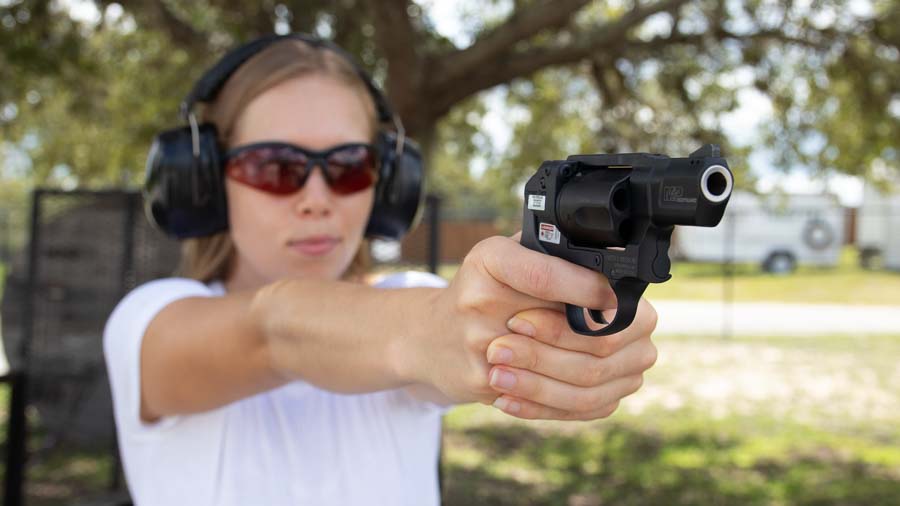
Both guns recoil like lightweight .38s. With standard pressure loads, they’re manageable. With +P, they’re snappy. I didn’t feel a meaningful difference between them.
Grip, on the other hand, does matter. The Bodyguard’s longer grip gives you better control, especially for follow-up shots.
Pros and cons
Smith & Wesson 642
Pros
- Extremely reliable over long-term use
- Simpler, proven design
- Better balance in the hand
- Smoother trigger with use
Cons
- Poor sights
- Short extractor rod slows reloads
- Limited upgrade options
Bodyguard 38
Pros
- Better sights out of the box
- Longer extractor rod improves reload speed
- Slightly improved grip ergonomics
- Ambidextrous controls
Cons
- Heavier trigger pull
- Polymer construction doesn’t meaningfully reduce recoil
- Less intuitive control layout for traditional users
Smith & Wesson 642 vs Bodyguard 38 in a Real-World Comparison
When people search for Smith & Wesson 642 vs Bodyguard 38, they’re usually trying to answer one question: which one should I carry?
Here’s the honest answer.
If you value simplicity, long-term durability, and a proven track record, the 642 is hard to beat. It’s a gun you can carry for decades with minimal maintenance and complete confidence.
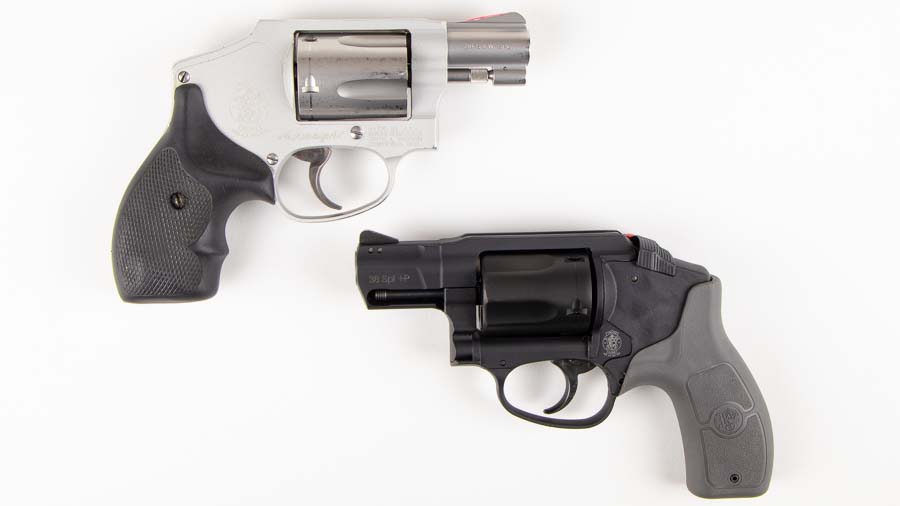
If you want incremental improvements in usability, especially in sights and reloading, the Bodyguard 38 offers real advantages. These aren’t gimmicks. The longer extractor rod and better sight picture are meaningful upgrades.
That said, the Bodyguard doesn’t replace the 642. It refines certain aspects but introduces trade-offs, particularly in trigger feel and overall handling.
Comparison to Alternatives
It’s worth putting both of these in context.
Modern concealed carriers often look at options like the Ruger LCR or micro 9mm pistols such as the SIG P365 or Glock 43. [Don’t miss my Glock 43 review.]
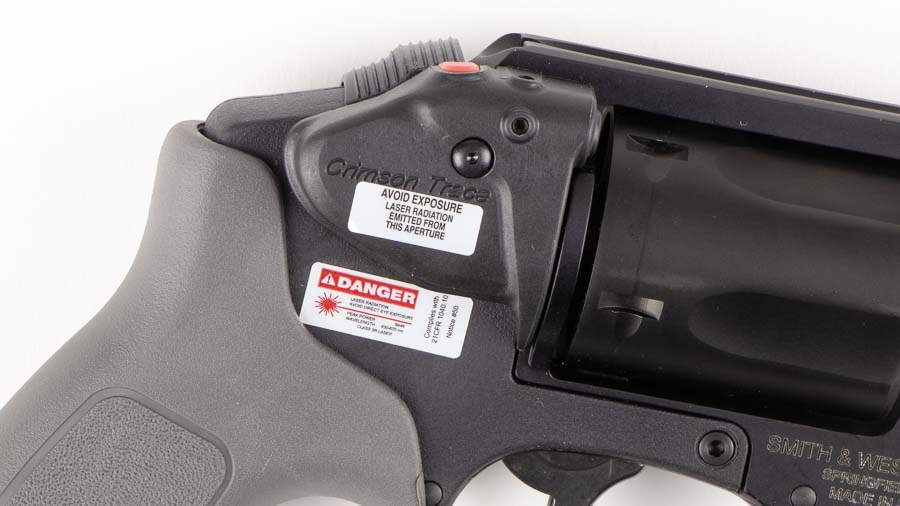
The Ruger LCR arguably has a better trigger than either Smith revolver. It’s lighter and easier to shoot well. However, it doesn’t have the same long-term track record as the 642. I’ve shot the .357 Magnum Ruger LCR and I like the gun a lot.
Micro 9mm pistols offer higher capacity and faster reloads. But they also introduce more complexity. Magazine reliability, slide manipulation, and sensitivity to ammunition all come into play.
A revolver like the 642 or Bodyguard 38 remains appealing because it removes variables. Pull the trigger, and it fires. That simplicity still has value.
Who Is This Best For?
Choose the 642 if:
- You want a proven, no-nonsense defensive revolver
- You prioritize reliability over features
- You prefer traditional controls and ergonomics
- You’re already familiar with J-frame revolvers
Choose the Bodyguard 38 if:
- You want better sights without modification
- You value improved reload reliability
- You prefer a slightly larger grip
- You’re comfortable adapting to a heavier trigger
Both are well-suited for experienced concealed carriers who understand the limitations of a five-shot revolver and train accordingly.
Final Verdict
After spending time with both, I see the Bodyguard 38 as a thoughtful evolution rather than a replacement.
It improves on specific weaknesses of the traditional J-frame, particularly in sights and ejection. Those are real, practical upgrades that matter when you’re actually using the gun.
But the 642 still holds its ground. Its simplicity, balance, and long-term reliability keep it relevant. It’s a tool I trust because it’s proven itself over time, not because of a feature list.
If I were choosing today without prior experience, I’d give serious consideration to the Bodyguard 38. If I already owned and trusted a 642, I wouldn’t feel compelled to replace it.
At the end of the day, both will do the job. The difference comes down to what you value more: refinement or familiarity.