
In today’s article, I review the Princeton Tec Alloy-X flashlight. I was not paid for this review, all of the opinions are my own and the light was provided by Princeton Tec for this article. Some links on this page are affiliate links.
As you’ve probably figured out by now, high-lumen tactical flashlights are big, bulky and feel out of place in an office pocket or with professional clothes.
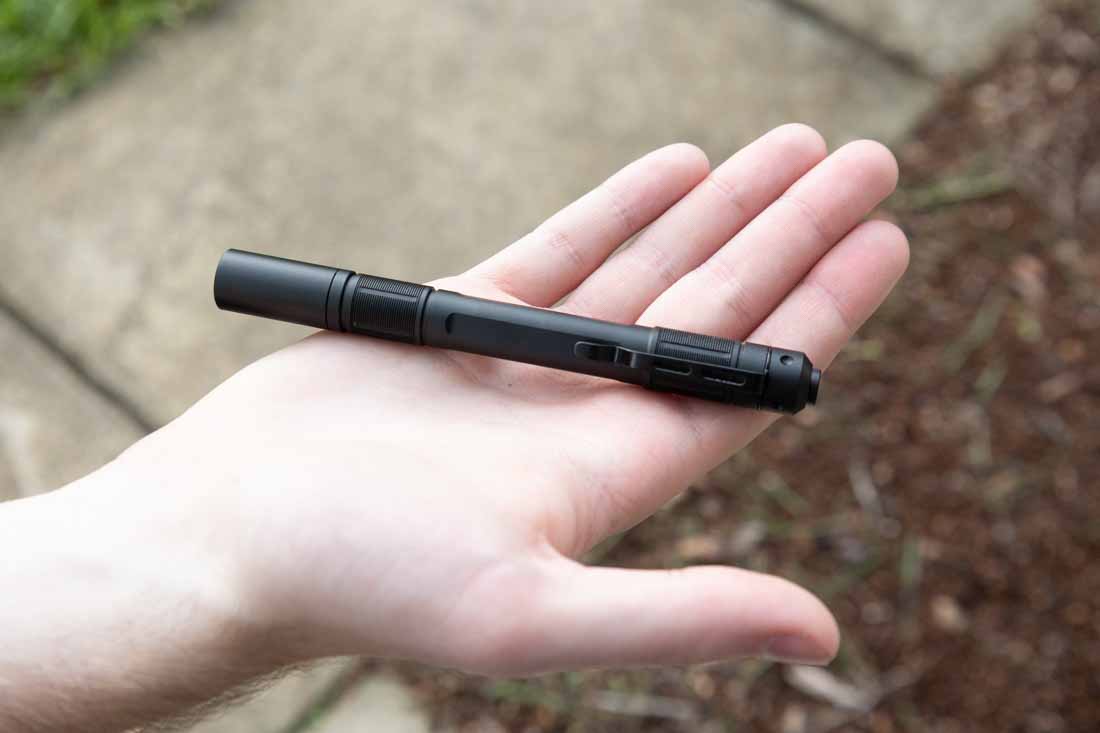
The Princeton Tec Alloy-X doesn’t take that approach. This is a pen-style light: much thinner than most tactical models. But it still brings features you’d expect from a light in the “tactical” category if you’re using that word honestly and not just as a marketing buzzword.
Editor’s note: If you are looking to buy an Alloy-X, click here.
Why the Alloy-X Might Interest You
The Alloy-X matters because most of the flashlights in the “tactical” category are really just too large for anyone who needs something low-profile. As I can attest, carrying a Surefire G2X or Streamlight ProTac HL is great if you’re in jeans or cargo pants. But slip one into a suit jacket pocket, or try it with slacks – suddenly you’re looking a bit odd and likely feeling a touch uncomfortable.
That’s where the Alloy-X fits. It’s slim, light and has a sturdy integrated pocket clip that works.
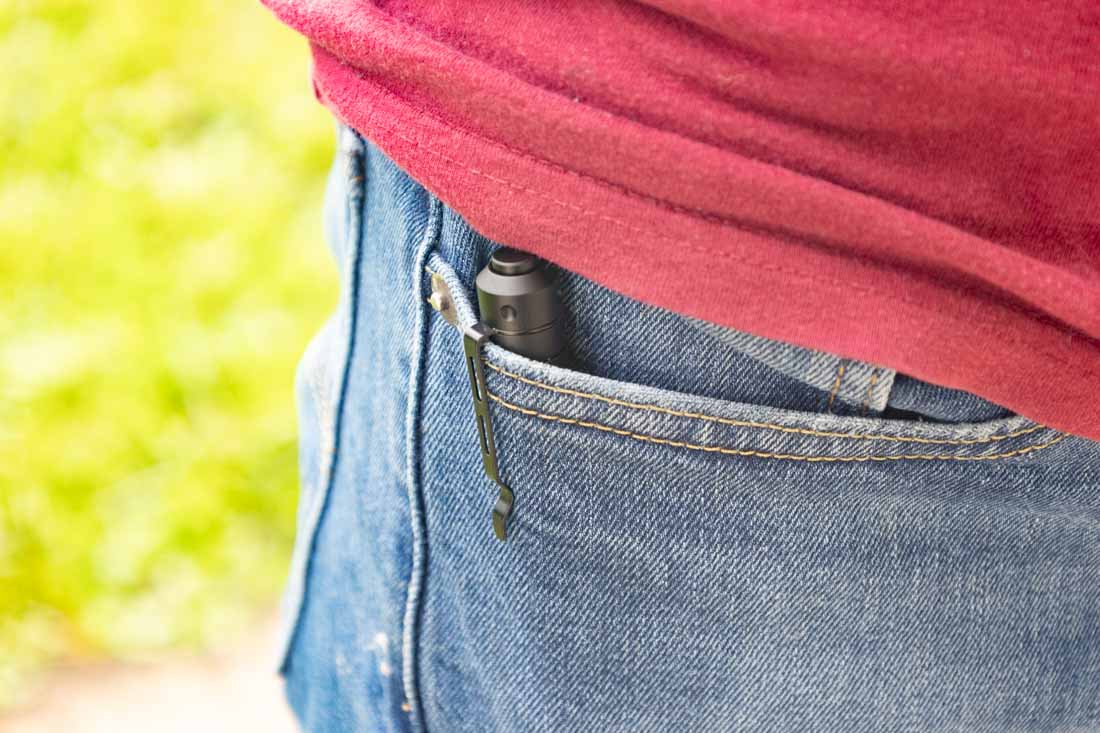
If you’re using a flashlight mainly for daily tasks – you know: finding your dropped keys, checking under your couch for the remote, or poking around your engine compartment – then the Alloy-X feels like a smart balance.
It’s also not bad as a tactical option since it’s rugged and surprisingly bright. It’s not as bright as other options, but when you need something very concealable, this is worth a look.
Use Cases and Who Should Care
This is for anyone who wants a “real” light for everyday carry, not just something for responding to violent attacks. Commuters, maintenance techs, security, anyone who gets home late and has to unlock a door in the dark.
It’s also aimed at people who want tactical features including a rugged build and waterproofing but in a form factor that blends in.
Alloy-X Features Table
| Maximum Output | 400 lumens (High) |
| Other Output Levels | 250 lumens (Medium), 4 lumens (Low) |
| Runtime | 0.6 hrs (High), 1.2 hrs (Medium), 30 hrs (Low) |
| Beam Distance | 56 meters (on High) |
| Beam Pattern | Spot (wide, almost flood-like in real-world use) |
| Body Material | Aluminum (Type II hard anodized) |
| Waterproof Rating | IPX7 (1m for 30 minutes) |
| Battery Options | Dual Fuel: Rechargeable 10900 Li-ion (700mAh) or 2x AAA |
| Battery Included | Yes, rechargeable 10900 w/ USB-C charging port |
| Charging Method | USB-C (direct to battery, no cradle needed) |
| Switch Type | Tail clicky, momentary on (half-press), constant on (full press) |
| Light Modes Cycle Order | Medium ? Low ? High |
| Pocket Clip | Yes, integrated steel |
| Length / Weight | 5.5″ (14 cm), 1.5 oz (43g) |
| Price | $61.99 (including battery and charging cord) |
Performance and Light Output
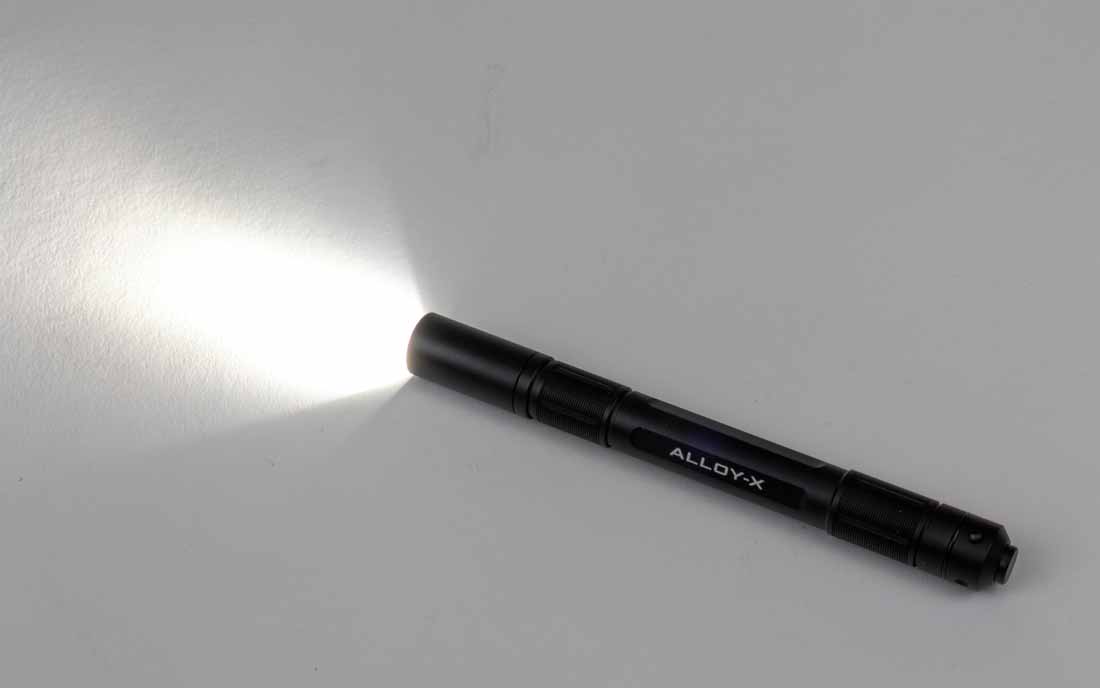
The first concerns many people have is how bright is it and what’s the beam like? The Alloy-X hits a total light output of 400 lumens on high, which is right up there with bigger tactical flashlights from just a few years ago.
Medium is 250 lumens, which I found plenty for most close-up work, and low is just 4 lumens, more like a moonlight mode.
According to the company, you get about 0.6 hours at full blast, 1.2 hours on medium, and up to 30 hours on low. These numbers reflect real-world use: you’re probably not going to run high constantly, but it’s there if you need it. Medium is where you’ll live, and it’s honestly what I used most.
The beam pattern is officially “spot,” but compared to most tactical spot beams, it feels much wider. In my estimation, it is more flood than spot, which isn’t a bad thing. For room searches or checking under a car, a wide beam makes sense.
I couldn’t find an official candela number, but doing the math, you’re looking at about 3,100 candelas. Not blinding, but very usable, and not so intense that it will wash out everything in your field of vision.
Durability and Build Quality
This is a tough little light. The Alloy-X uses aluminum with a Type II anodized finish. No, not the hardest coating on the planet, but after weeks of daily carry (including being dropped and knocking around in a bag) there was barely a scratch on it.
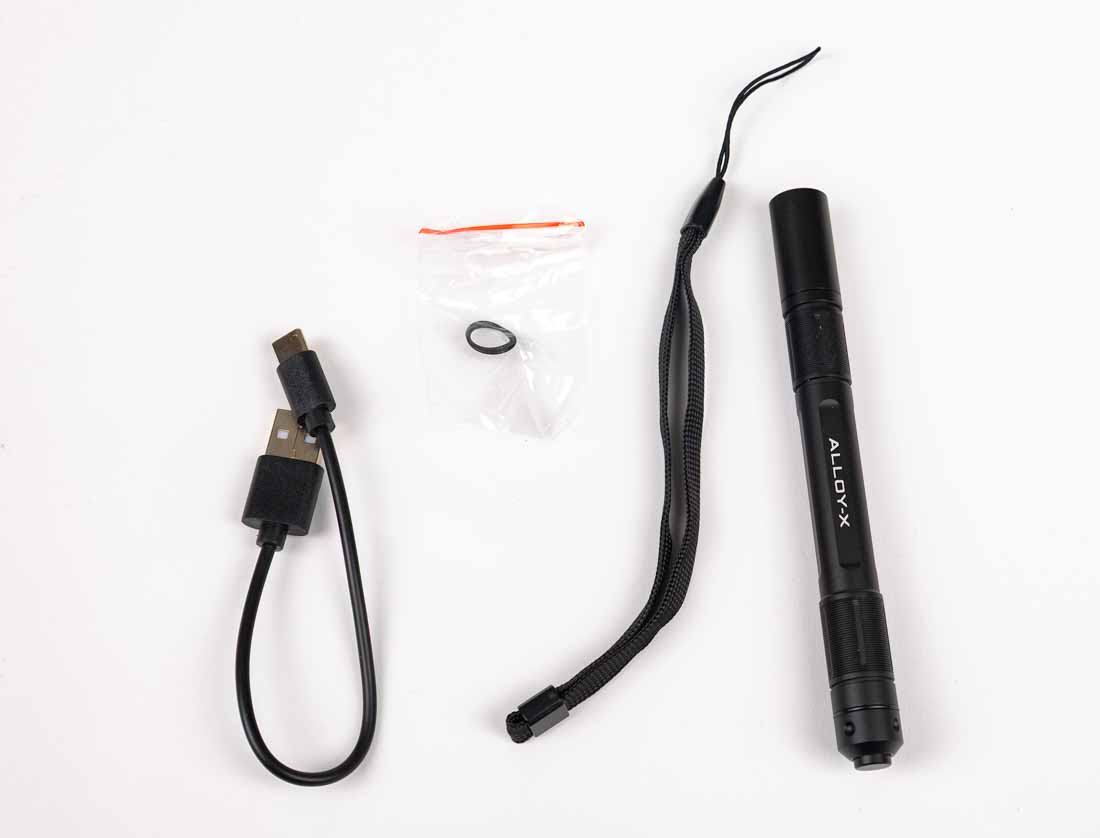
I found the pocket clip is sturdy and tight, no cheap flex or wobble. It was as tight at the end of the review as it was right out of the package.
Threading at the head is smooth, no burrs, and the O-ring provides real waterproofing. IPX7 means you can submerge it in a meter of water for 30 minutes. Mine sat at the bottom of a pool for an hour, and still worked. Not a dive light, but more than good enough for rain, splashes and accidental drops. You can take a shower with it if the power goes out – a concern for us here in hurricane country.
Dual Fuel Battery Design: AAA and Rechargeable
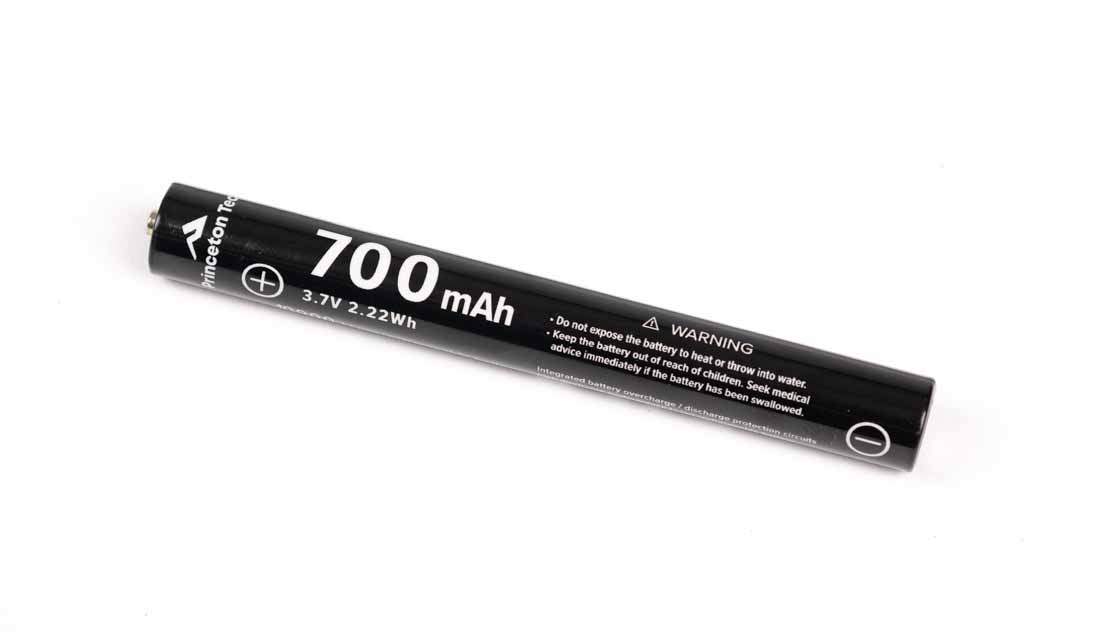
Most penlights run on AAA cells, and that’s it. Princeton Tec gives you another option. The Alloy-X comes with a 10900 rechargeable lithium-ion battery (rated at 700mAh, 3.7V), branded and spec’d by Princeton Tec. There’s a USB-C port built right into the battery, so you don’t need an external charger. You can charge from a power bank, laptop, wall brick, anything.
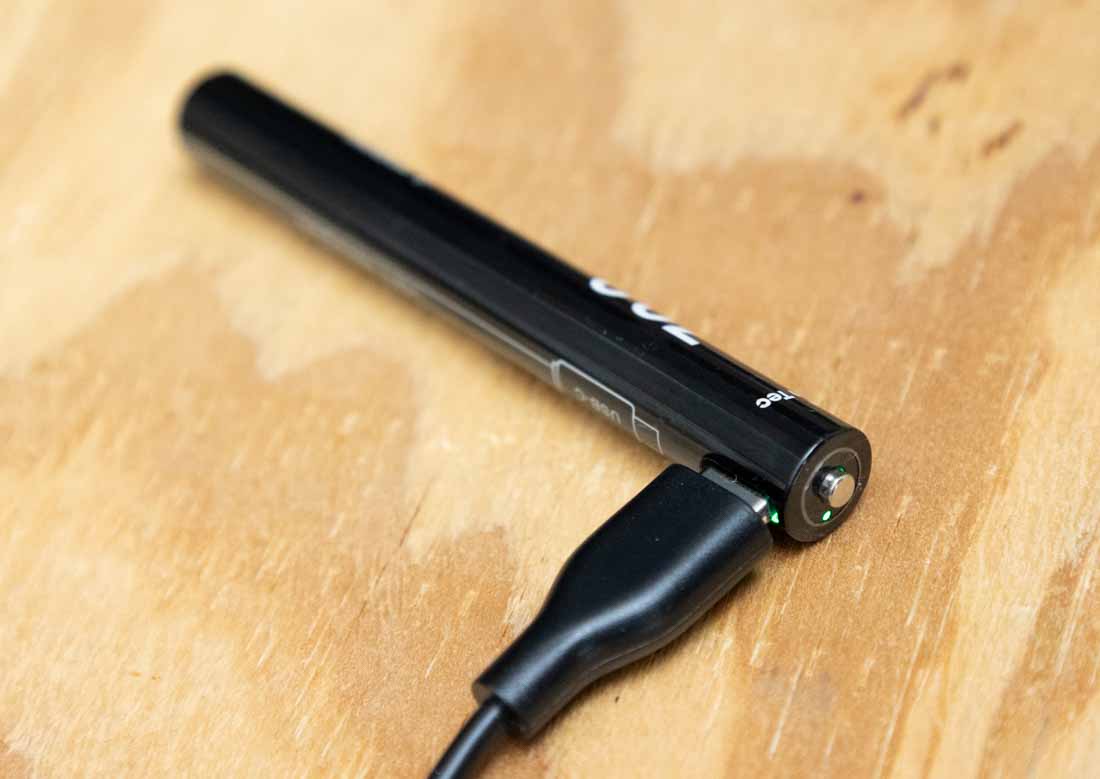
If you forget to charge, or can’t get to a USB-C cable, just pop in two standard AAA batteries. No adapters, no hunting for specialty cells. The switch from rechargeable to AAA is seamless.
You get a bit more power out of the 10900 battery than you do alkaline AAA batteries, but in a tight spot I don’t see any concerns.
Everyday Use and Ergonomics
For daily carry, the Alloy-X disappears in a jacket or pants pocket. It doesn’t pull at your clothing or print through fabric. The pocket clip keeps it where you put it, which is more than I can say for some heavier tactical models. The light’s balance is good; it doesn’t roll around on a flat surface.
The activation switch is tail-mounted and made of a rigid polymer. Cycling modes is a matter of full-clicking repeatedly: medium first, then low, then high. This means you have to cycle twice to get to high.
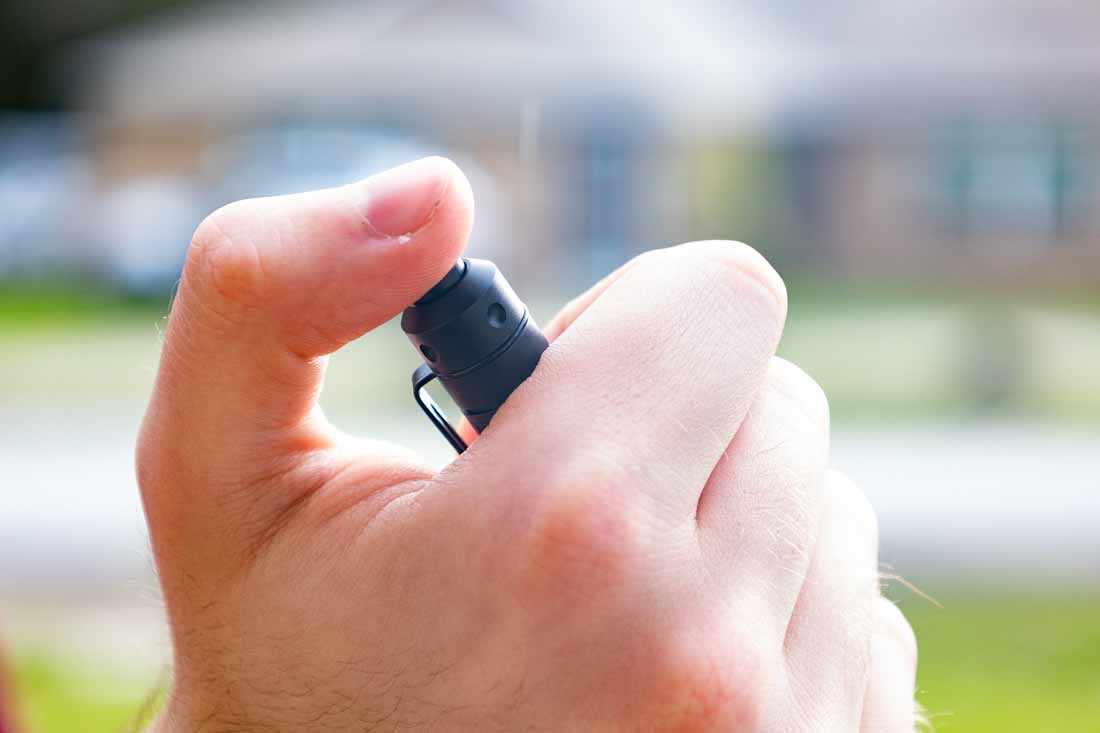
For everyday work tasks, starting in medium is fine. But if you want a true tactical “first click = maximum light” function, this isn’t it.
Princeton Tec states that the light is supposed to have a momentary-on feature. However, this did not work on my light.
Where the Princeton Tec Alloy-X Falls Short
If you’re coming from the tactical world, this is the only sticking point: the mode order. The Alloy-X always starts in medium. There’s no way to program it to start in high mode.
In a defensive context, if you need all 400 lumens right now, you’re clicking two more times. If that bothers you, this isn’t your light.
For EDC and work use, it’s not a big deal. Medium is the right brightness choice for most tasks. But if your main priority is “instant maximum output for blinding,” this isn’t configurable out of the box. No lockout or strobe function, either.
My Final Thoughts on the Flashlight
For $61.99, including the rechargeable battery and USB-C cord, the Alloy-X is priced reasonably. You’re not just paying for the brand. You’re getting a well-built tool that fills a gap between giant tactical lights and tiny keychain flashlights.
It’s suitable as a primary light for anyone who values pocket space, and as a secondary/backup for tactical types.
Online, you’ll see people using the Alloy-X everywhere from cave trips to car repairs. The general reputation is positive, with high marks for reliability, comfort, and flexibility. There’s almost nothing to complain about, except the lack of user programmability and that mode order issue.
Bottom line: if you need a rugged, reliable, bright pen-style flashlight that won’t weigh you down or draw attention, the Alloy-X should be on your shortlist.
Where to Buy the Alloy-X
You can get the Alloy-X directly from the Princeton Tec website here.