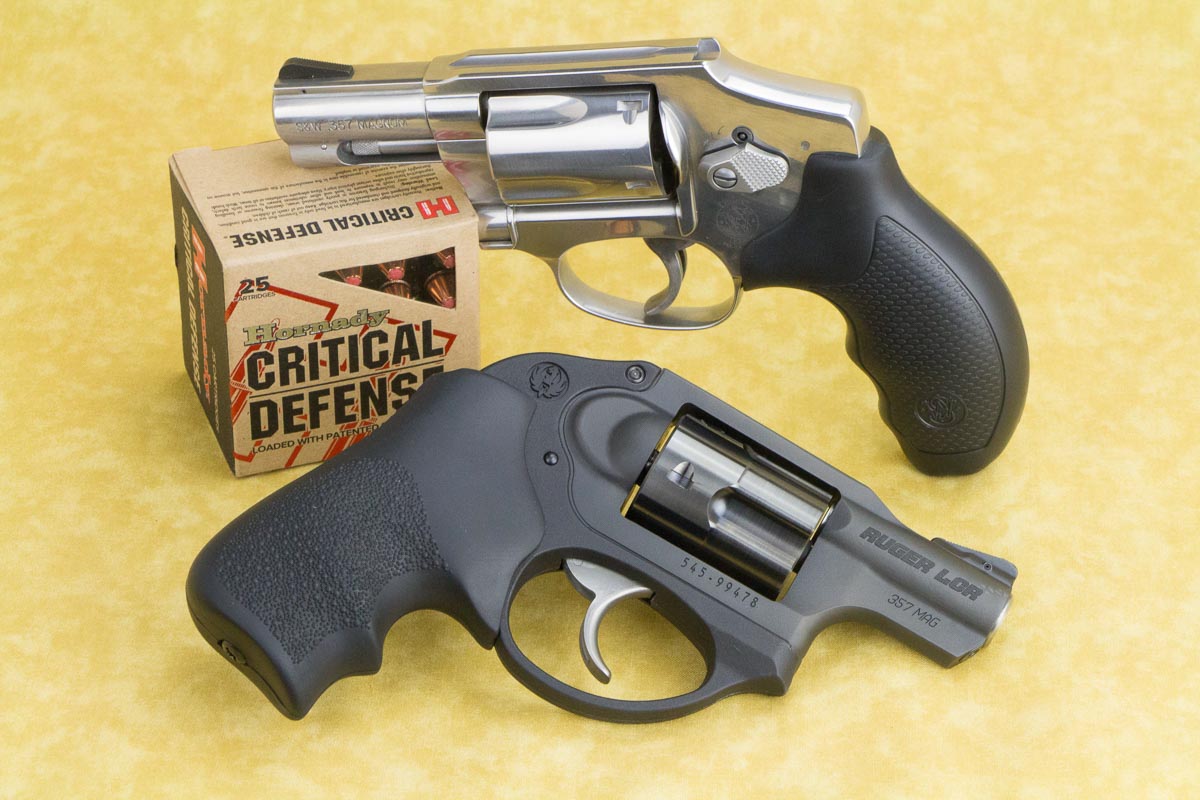
If you’ve spent any time evaluating defensive revolvers, you’ve probably found yourself weighing the Ruger LCR vs. Smith & Wesson 640 question. I’ve carried, trained with, and tested both platforms over the years, and they represent two very different philosophies applied to the same problem: delivering reliable, concealable .357 Magnum firepower.
There’s no nostalgia factor driving my interest here. I’m not a revolver purist. I carry semi-autos regularly. But there are still situations, deep concealment, pocket carry, simplified manual of arms, where a small-frame revolver makes a lot of sense. And when you’re talking about serious defensive loads, the .357 Magnum still earns respect.
The question isn’t whether either of these guns works. Both do. The question is which one works better for you, under realistic conditions: not on paper, not in marketing copy, but in your hand, under recoil, under time pressure.
Let’s break it down the way it actually matters.
Quick Summary: Strengths, Weaknesses, and Verdict
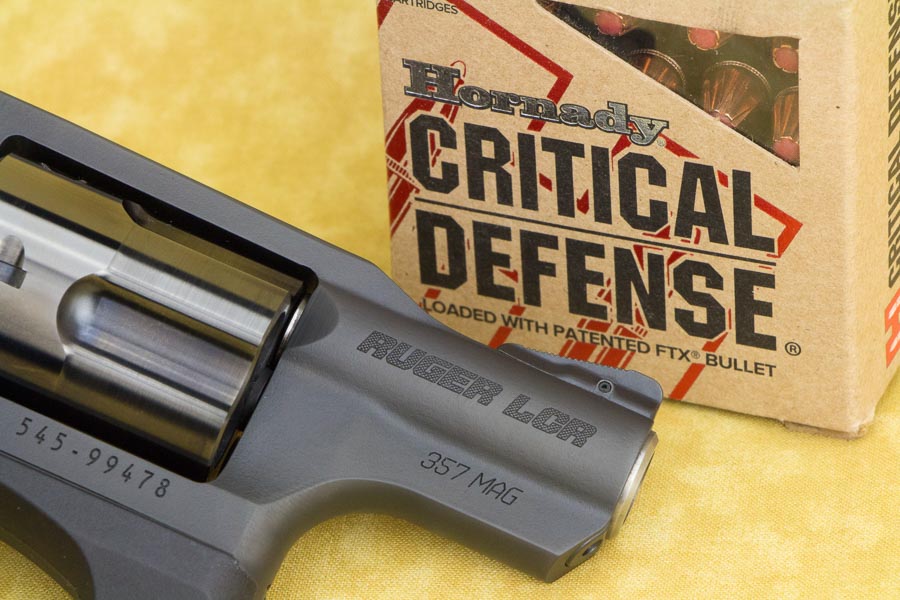
Ruger LCR
- Lighter weight, easier for all-day carry
- Exceptionally smooth trigger for a DAO revolver
- Modern design with polymer fire control housing
- Slightly better practical accuracy in my testing
- Weaker trigger reset requires deliberate technique
- Read my Ruger LCR 357 review for additional information
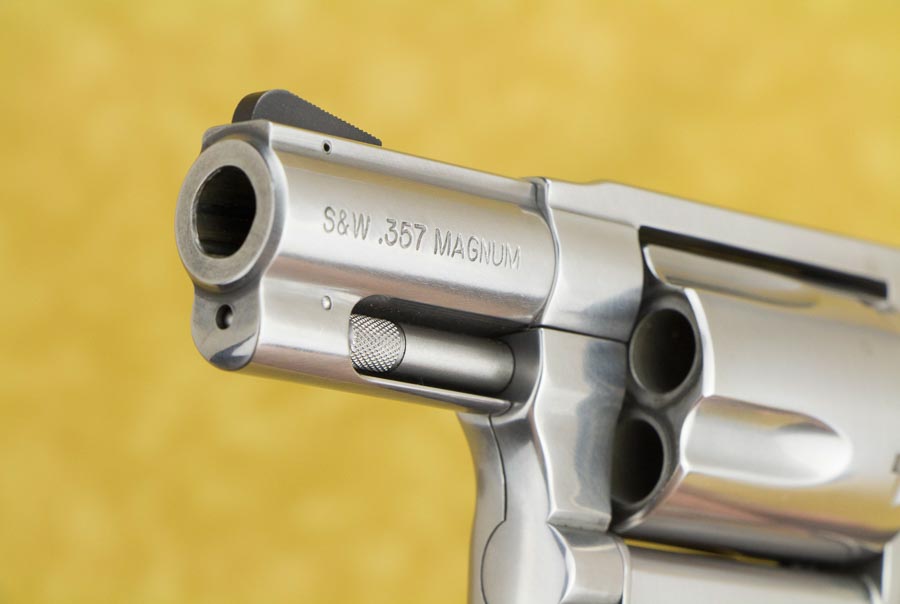
Smith & Wesson 640
- Heavier, all-steel construction helps tame recoil
- Strong, positive trigger reset
- More reliable case extraction under speed
- Better recoil control and faster follow-up shots
- Slightly heavier for pocket or lightweight carry
- Read my Smith & Wesson 640 review for additional information
Short Verdict:
If you prioritize shootability and control, the 640 has the edge. If you prioritize weight and carry comfort, the LCR pulls ahead. For most experienced shooters, I lean slightly toward the 640, but it’s not a universal answer.
What These Revolvers Actually Are
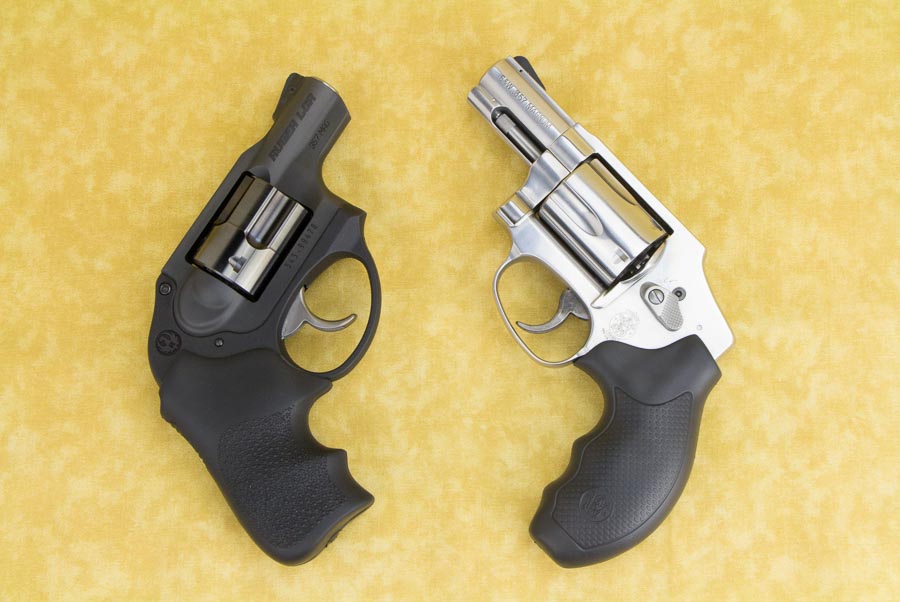
Both the Ruger LCR and Smith & Wesson 640 are double-action-only (DAO), small-frame revolvers chambered in .357 Magnum, designed primarily for concealed carry.
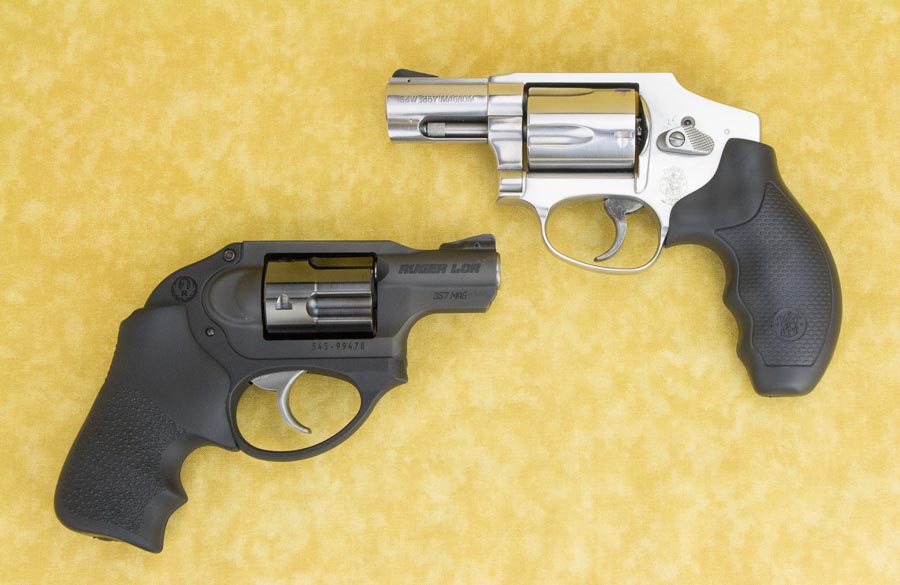
They share core characteristics:
- 5-round capacity
- Snub-nose barrels (typically around 2–2.125 inches)
- Enclosed or internal hammer systems
- Designed for close-range defensive use
Where they diverge is in execution.
The LCR is a modern hybrid design: polymer and metal combined for weight savings and manufacturing efficiency. The 640 is a traditional all-steel J-frame, built on decades of refinement.
That difference shows up everywhere: recoil, trigger feel, durability perception, and even how the gun behaves under stress.
Key Features and Design Differences
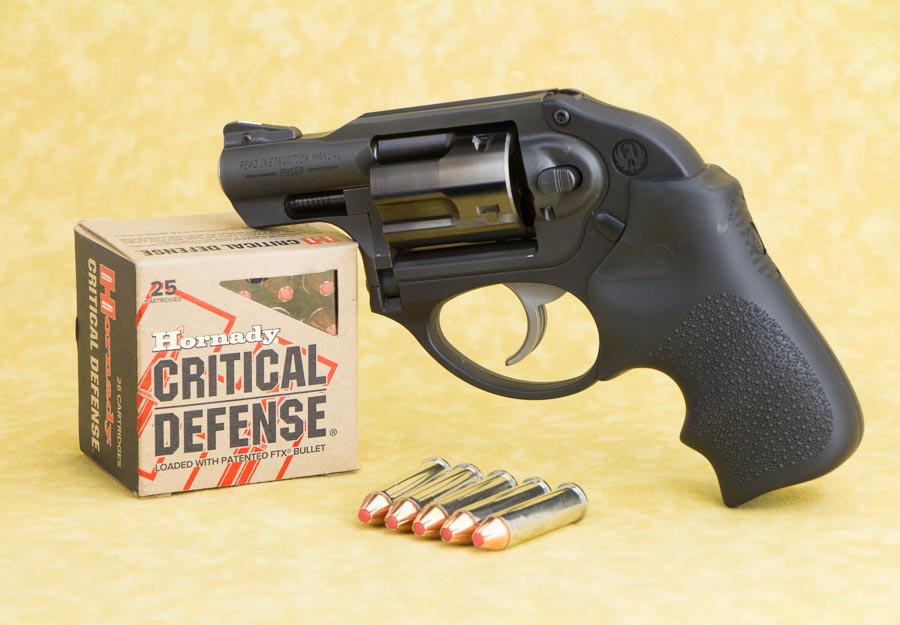
Ruger LCR
- Polymer fire control housing with stainless steel frame
- Friction-reducing cam trigger system
- Hogue Tamer grip with recoil-absorbing insert
- Replaceable front sight
- Matte black finish
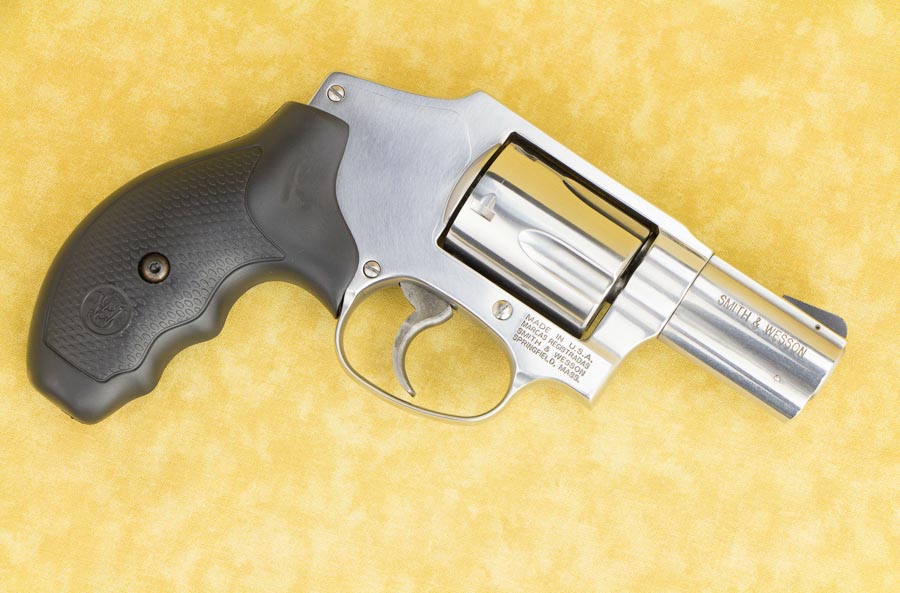
Smith & Wesson 640
- All stainless steel construction (frame, cylinder, barrel)
- Internal hammer (true DAO)
- Traditional J-frame geometry
- Pinned front sight (replaceable)
- Satin stainless finish
Side-by-Side Snapshot
Weight
- LCR: ~17 oz
- 640: ~23 oz
Trigger Feel
- LCR: lighter, smoother pull
- 640: slightly heavier, stronger reset
Recoil Behavior
- LCR: more snap and flip
- 640: more controlled, less muzzle rise
Extraction
- LCR: occasionally sticky under speed
- 640: consistently clean ejection
How They Actually Perform on the Range
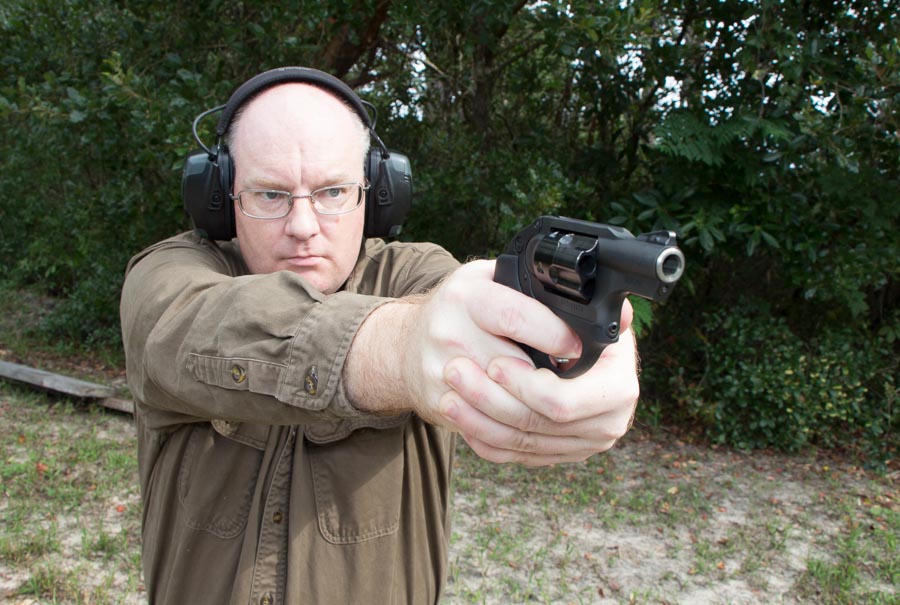
Trigger Mechanics and Real-World Use
On paper, the LCR’s trigger is impressive, and in isolation, it probably is the better-feeling trigger.
It’s smooth, relatively light, and consistent. Ruger’s cam system does exactly what it’s supposed to do.
But here’s the part that matters: reset.
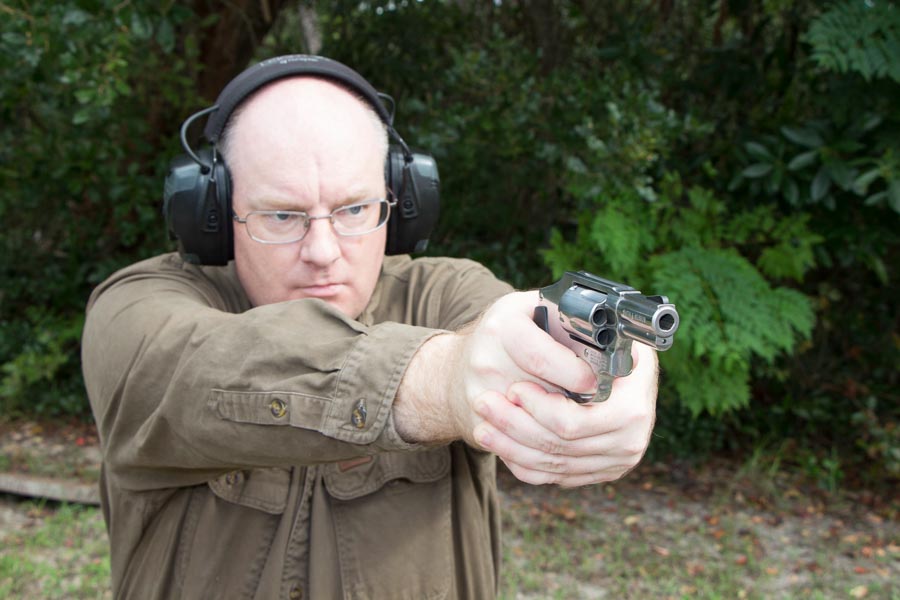
The LCR has a softer, less aggressive reset. If you short-stroke it, even slightly, you can tie up your rhythm. I’ve seen it happen, and I’ve done it myself when pushing speed.
The 640, by contrast, has a more traditional Smith & Wesson trigger:
- Slightly heavier
- Stronger return
- More forgiving under rapid fire
If you’re running defensive drills, Bill drills, failure drills, or even just controlled pairs, the 640 is easier to run fast without thinking about trigger mechanics.
Accuracy: Practical vs. Theoretical
Let’s be honest: these are not precision pistols. But accuracy still matters.
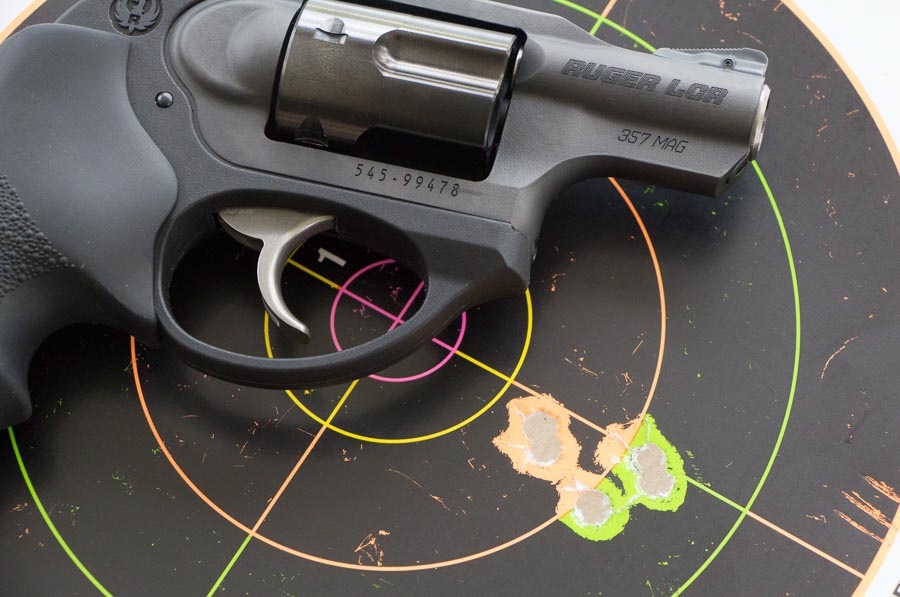
From a two-handed defensive stance at realistic distances (7–15 yards), both guns are capable of:
- Sub-3-inch groups with quality defensive ammo
- Consistent center-mass hits under time
| Ruger LCR Velocity | Ruger LCR Accuracy | S&W 640 Velocity | S&W 640 Accuracy | |
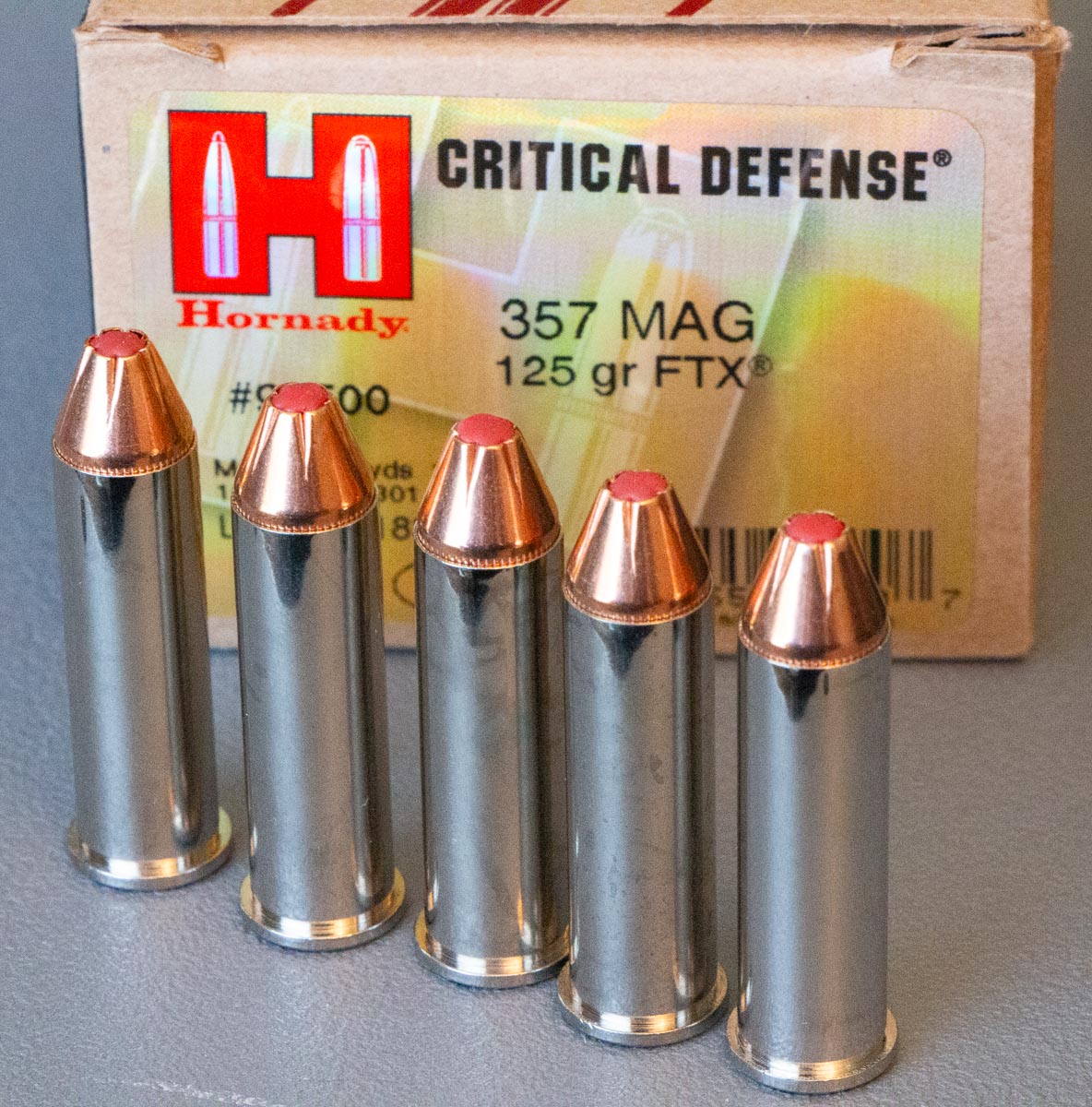
| Hornady Critical Defense 125 gr FTX | 1,176 fps | 1.141” | 1,175 fps | 1.780” |
| Remington Golden Saber 125 gr JHP | 1,121 fps | 2.200” | 1,127 fps | 1.995” |
| Speer Gold Dot 158 gr JHP | 996 fps | 2.020” | 980 fps | 2.402” |
In my experience:
- The LCR edged out slightly tighter groups with certain loads
- The difference wasn’t dramatic enough to matter defensively
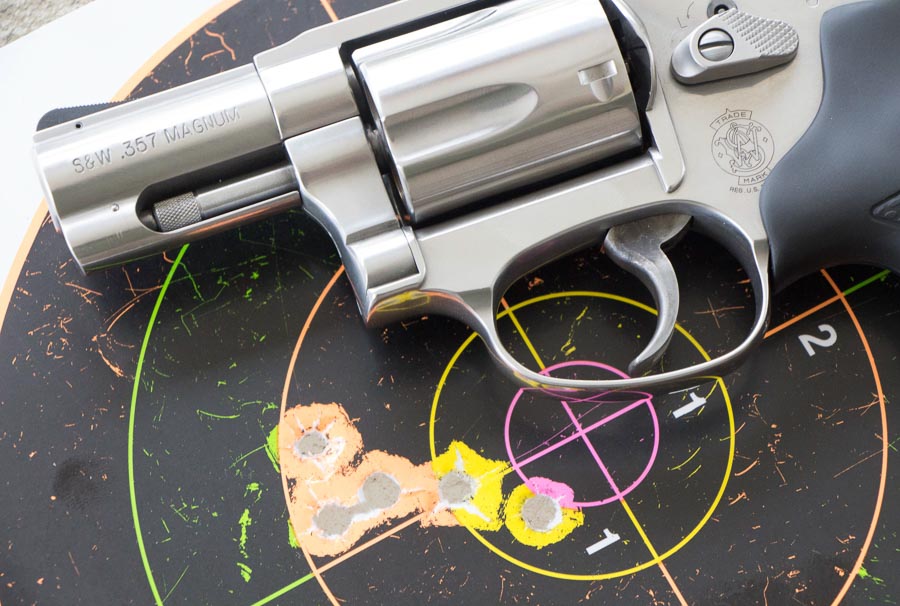
The bigger factor isn’t mechanical accuracy: it’s how well you manage the gun under recoil.
Recoil and Control
This is where expectations often get flipped.
You’d think the LCR, with its recoil-absorbing grip and polymer flex. would be easier to shoot.
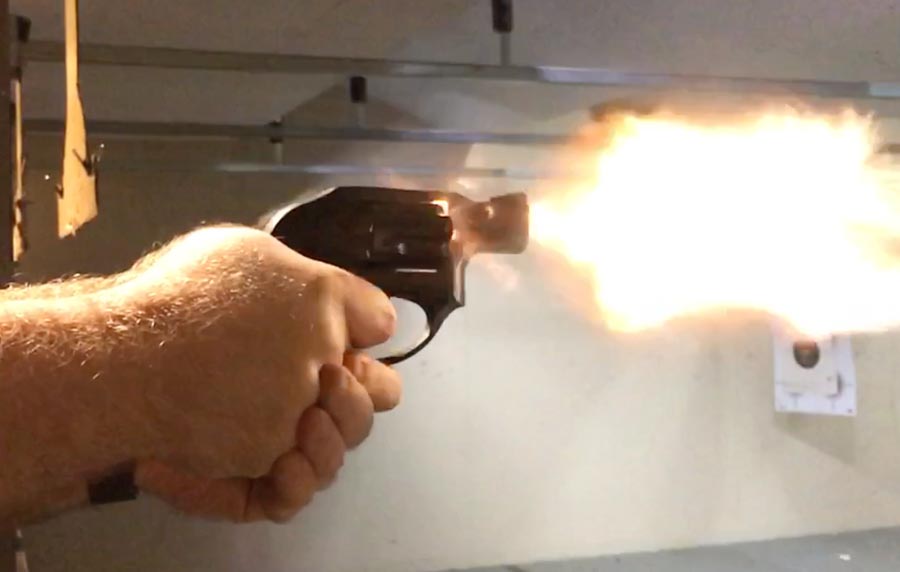
It’s not.
I found that the 640’s extra weight makes a real difference:
- Less muzzle flip
- Better tracking between shots
- More manageable with full-power .357 loads
The LCR isn’t uncontrollable, but it’s noticeably sharper. With hotter loads, the difference becomes obvious.
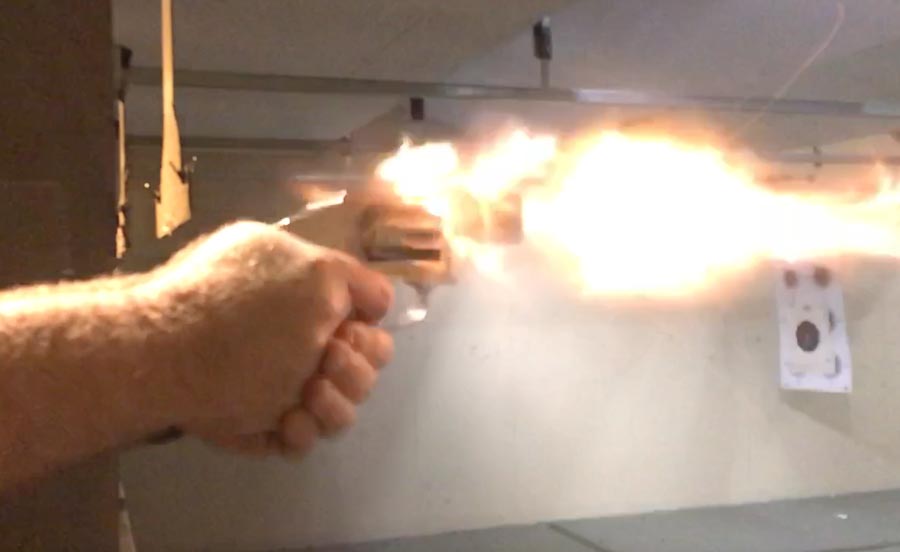
If you train regularly and shoot magnum loads, the 640 is simply more comfortable over time.
Reliability Beyond “It Goes Bang”
Both revolvers fire reliably. That’s expected.
The more interesting issue is extraction under stress.
After firing .357 Magnum, cases expand and can stick in the cylinder. That’s where ejector rod length and leverage matter.
- The 640 consistently clears spent cases cleanly with a firm strike
- The LCR occasionally leaves cases hanging slightly
That may sound minor, but in a defensive reload scenario, it’s not.
A reload that doesn’t go cleanly is a reload that fails.
How I Use These Revolvers
Carry Considerations
When I carry a revolver, it’s usually for:
- Pocket carry in a proper holster
- Backup gun role
- Deep concealment when wardrobe limits options
In those roles:
LCR Advantages
- Lighter weight = less fatigue
- Slightly more comfortable for all-day carry
- Better for lighter clothing
640 Advantages
- More stable draw due to weight
- Better shooting characteristics once deployed
Ammunition Choices
Most experienced shooters eventually settle on:
- .38 Special +P for controllability
- .357 Magnum for maximum performance (with trade-offs)
In these guns:
- The 640 handles .357 more comfortably
- The LCR is often better suited to +P for most shooters
There’s no shame in that. Shot placement beats theoretical energy every time.
Practical Use Cases
1. Pocket Carry
- LCR wins on comfort and weight
- 640 is doable but more noticeable
2. Inside-the-Waistband Carry
- Both perform similarly
- Weight difference becomes less important
3. Backup Gun (BUG)
- LCR is easier to forget you’re carrying
- 640 is easier to shoot well under pressure
4. Training and Practice
- 640 encourages longer practice sessions
- LCR may fatigue your hand faster with magnum loads
Pros and Cons
Ruger LCR
Pros
- Lightweight and easy to carry
- Excellent trigger pull
- Modern design features
- Good accuracy
Cons
- Sharper recoil
- Weaker trigger reset
- Less reliable extraction under speed
Smith & Wesson 640
Pros
- Better recoil control
- Strong, reliable trigger reset
- Consistent extraction
- Proven durability
Cons
- Heavier for daily carry
- Slightly higher cost
- Less refined trigger feel (subjectively)
Comparison to Other Alternatives
If you’re looking beyond the Ruger LCR vs. Smith & Wesson 640 debate, a few other options come up:
- Smith & Wesson 642 (lighter, .38-only)
- Ruger SP101 (heavier, more shootable, less concealable)
- Kimber K6s (premium option with excellent trigger)
Each represents a different balance of:
- Weight
- Shootability
- Cost
But the LCR and 640 sit in a very practical middle ground.
Who These Revolvers Are Best For
Choose the LCR if you:
- Prioritize lightweight carry above all else
- Prefer a smoother trigger pull
- Carry primarily in a pocket
- Shoot mostly .38 Special +P
Choose the 640 if you:
- Value control and shootability
- Train regularly with magnum loads
- Want a more forgiving trigger system under stress
- Don’t mind a little extra weight
Final Verdict
The Ruger LCR vs. Smith & Wesson 640 debate isn’t about which gun is “better.” It’s about which compromises you’re willing to accept.
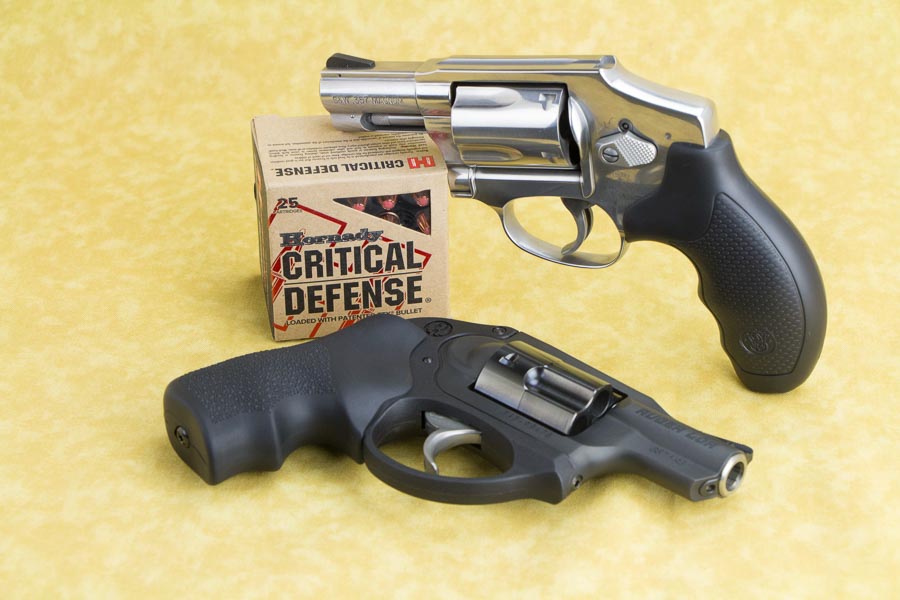
The LCR is easier to carry. The 640 is easier to shoot.
If I had to choose one for serious defensive use, and I knew I’d be training regularly, I’d take the 640. The combination of recoil control, reliable extraction, and a strong trigger reset gives it an edge where it counts: under pressure.
But if your priority is consistent carry, not range performance, the LCR makes a strong case.
At the end of the day, the better gun is the one you’ll actually carry, and the one you can run confidently when it matters.