
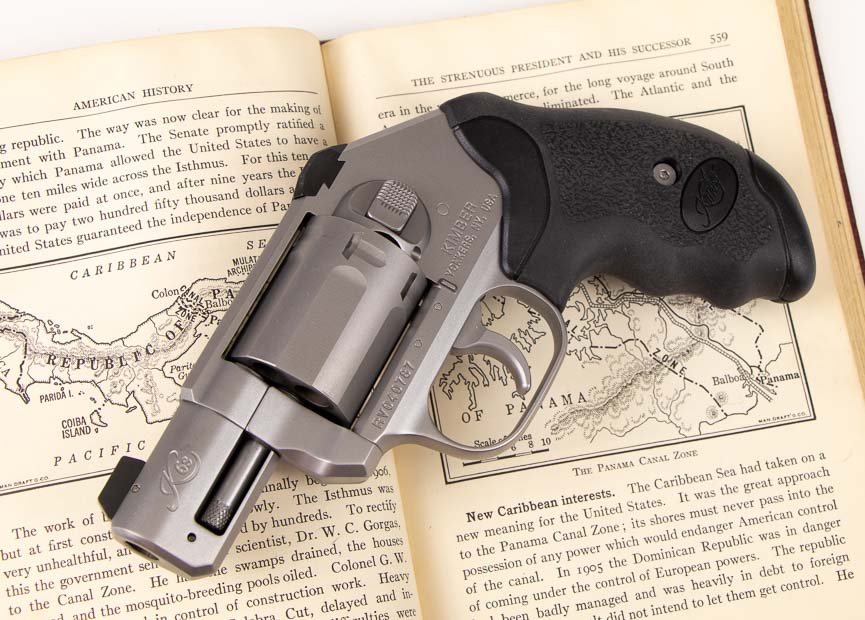
A shooting buddy once told me firing full-power .357 Magnum loads through his snub-nose revolver felt like holding a stick of dynamite the moment it went off. Maybe it’s hyperbole, but not by much. It is also a serious problem, because a handgun that punishes the shooter is a handgun that rarely gets practiced with.
The compact .357 Magnum revolver is not a new idea. Smith & Wesson, Ruger, Colt and Taurus have been building snub-nose Magnums for decades. What is newer is the way Kimber engineered the K6s line to soften the worst part of the small-frame Magnum experience while keeping six rounds in the cylinder. After spending real time behind the trigger with .357 Magnum and .38 Special loads, I came away thinking the K6s deserves a hard look from anyone shopping a serious snubbie.
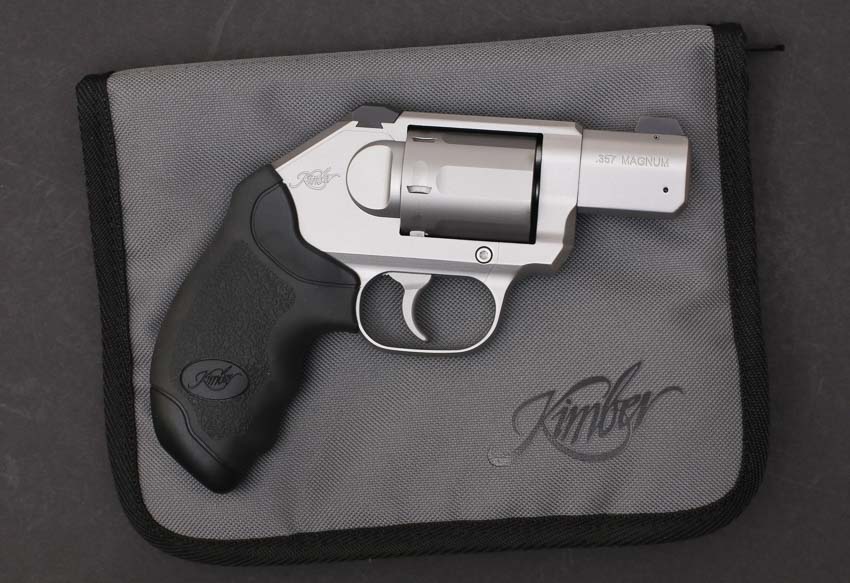
This Kimber K6s review covers what the gun is, who it is for, how it performed on the range against two of its toughest competitors, and what I think you should buy if you decide it is the revolver for you.
Kimber K6s Review: The Short Answer
If you want the snippet version, here it is. The Kimber K6s is a stainless steel, six-shot, .357 Magnum revolver built on a small frame, available with a 2-inch or 3-inch barrel, fully concealed internal hammer on the DAO version, and a smooth match-grade trigger. It weighs roughly 23 ounces, fits in the same holster footprint as a five-shot J-frame, and recoils noticeably softer than most snub-nose Magnums I have shot. MSRP runs from the high $800s into four figures depending on the variant.
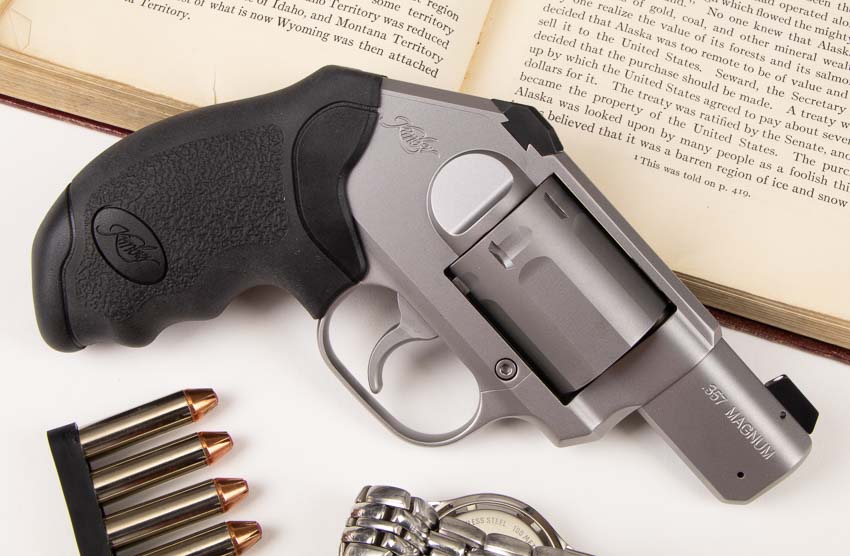
My gun was completely reliable and shot well when compared to other small revolvers. The standard K6s comes with boot grips, but I opted for the model with the Control Core grips. Same gun, but with a slightly longer and softer grip. I don’t think Kimber offers the option as standard anymore, but you can get the Control Core grips fairly cheap through the company’s online store.
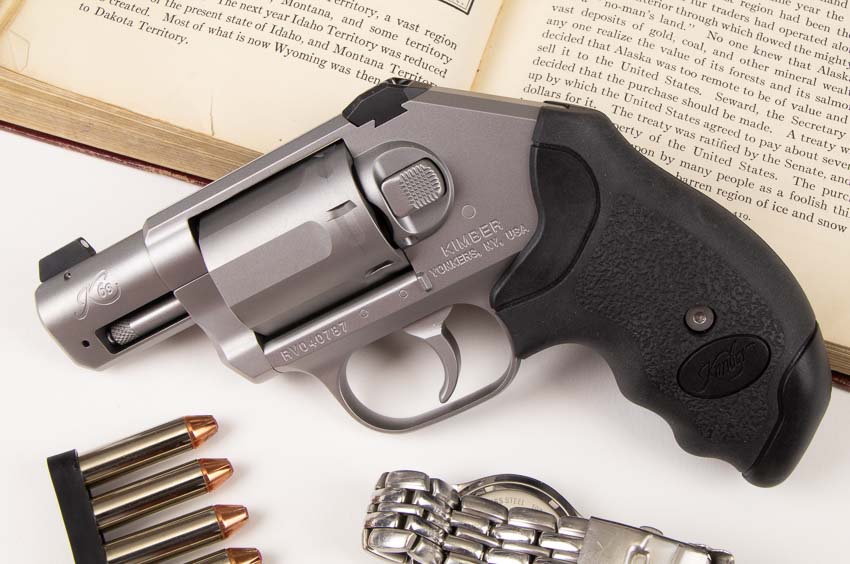
That is the elevator pitch. The longer answer is more interesting.
What the Kimber K6s Actually Is
If I were designing a defensive revolver from a blank sheet of paper, the K6s would be very close to what I drew up. Kimber introduced the line in January 2016, and the company has since expanded it into more than a dozen configurations. The current lineup includes the K6s Stainless, the K6s Stainless with night sights, the K6s Stainless with a laser grip, the K6s DCR (Deluxe Carry Revolver), several double-action/single-action variants like the K6s DASA and the K6s Target, and the K6xs, which is a lightweight .38 Special version. Suggested retail starts around $878 for the base K6s Stainless and climbs from there.
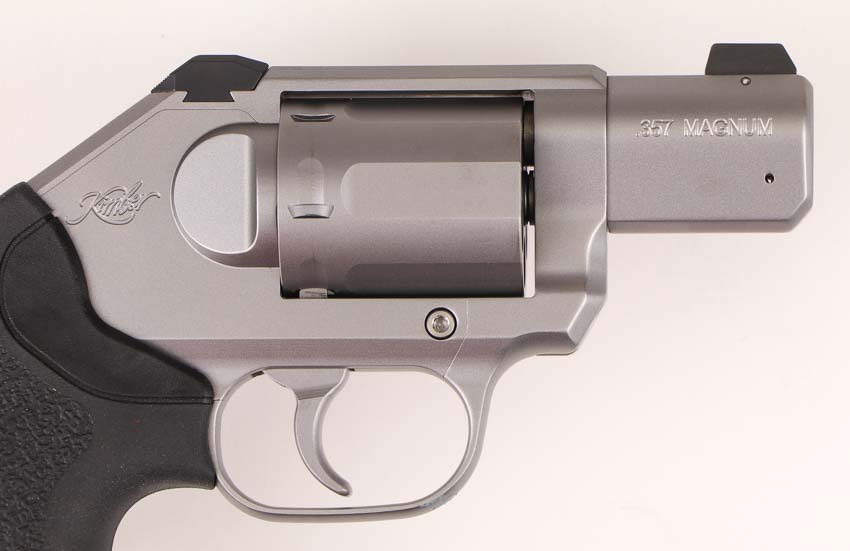
What ties the family together is the combination of a six-round .357 Magnum cylinder in a package about the size of a five-shot J-frame, an internal hammer on the DAO versions, and a near-dodecagonal exterior shape that shaves down the high points to reduce snagging on cover garments. Everything on the gun is machined from stainless steel.
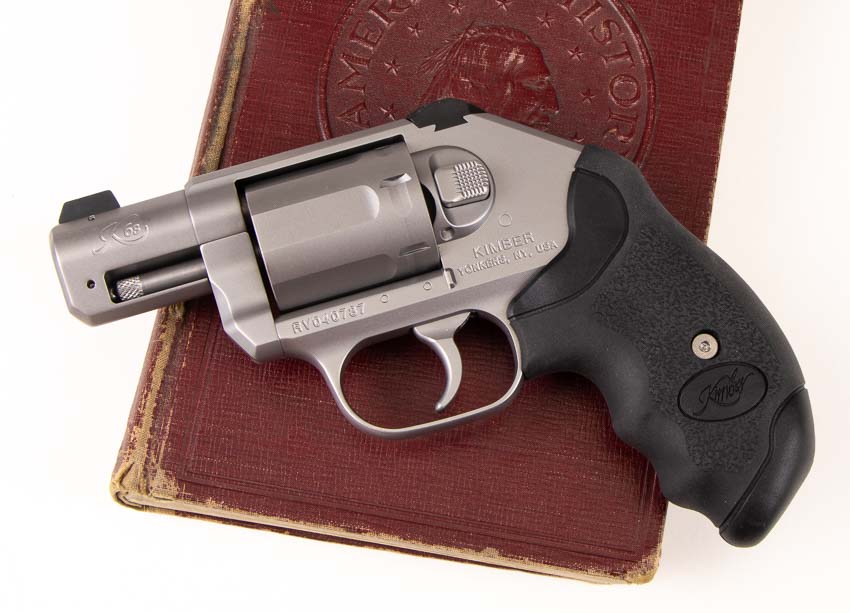
The trigger deserves its own paragraph. Kimber went to the trouble of fitting a smooth, match-grade trigger that breaks consistently throughout the double-action stroke. Most factory snub-nose revolvers ship with triggers that range from acceptable to genuinely unpleasant. The K6s breaks cleanly enough that you can shoot it accurately without a trip to a gunsmith.
A Note on Concealment
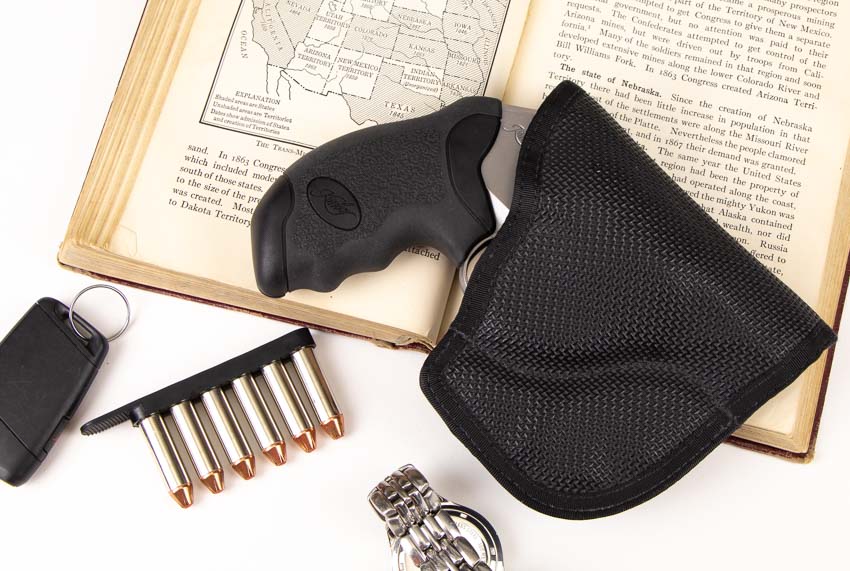
A near-perfectly round-edged exterior matters more than most new revolver buyers realize. The first time you pull a gun out of an ankle holster, a pocket holster or a snug inside-the-waistband rig in front of a real-world threat, you do not want to find out about every snag point. Kimber rounded and blended the edges aggressively on this gun. The result is a revolver that draws cleanly from concealment and indexes naturally in the hand.
Why That Sixth Round Matters
Most snub-nose .357 Magnum revolvers in this size class hold five rounds. The Smith & Wesson J-frame family, the Ruger LCR, the Colt Cobra and most of the rest of the segment all top out at five in the cylinder. Kimber’s engineers found a way to fit a sixth round into roughly the same footprint, and that one extra cartridge is a bigger deal than the spec sheet makes it look.
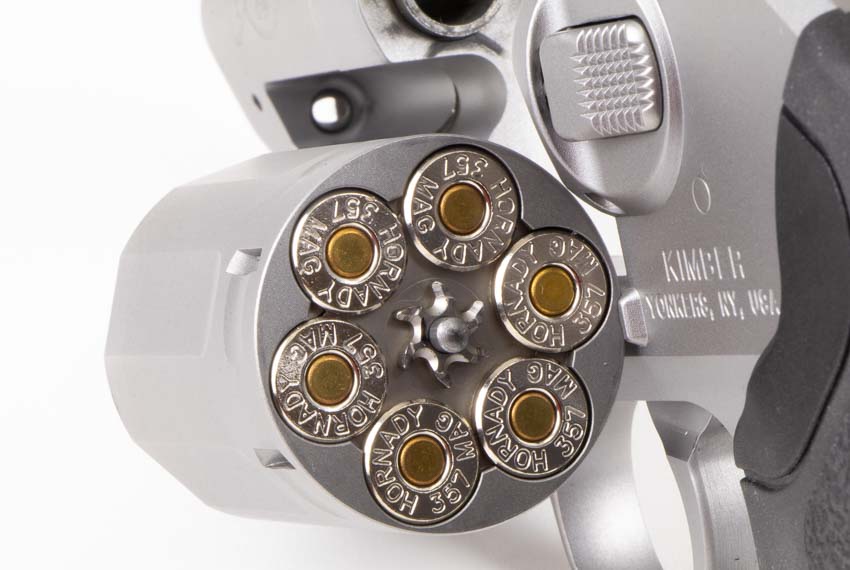
Here is the math that matters. Going from five rounds to six is a 20 percent increase in onboard capacity. On a service-size 9mm carrying 15 in the magazine, one more round barely registers. On a defensive revolver with no quick reload option for most carriers, that one round is the difference between running dry after a five-shot string and still having one in the cylinder when the situation does not resolve on schedule.
Real-World Defensive Scenarios
FBI and other published shooting data tell us the average civilian defensive encounter involves fewer than five rounds fired. Averages do not protect anyone, though. Outliers exist, and the outliers are exactly the situations that go wrong.
Multiple attackers are not rare. Home invasions and parking lot ambushes frequently involve two or more assailants, and a five-shot revolver leaves you with only two rounds per attacker before you are empty in a three-person encounter. A six-shot cylinder gives you two per attacker plus one in reserve. That is not a theoretical edge. It is the difference between an empty gun and a gun that can still solve a problem.
The other factor is hit probability. Shooting under stress in low light, at moving threats, from awkward positions, your hit rate is going to be worse than it is at the range. Police hit rates in actual gunfights have historically been documented somewhere in the 20-to-30 percent range depending on the study. Civilian numbers are generally better, but no honest trainer pretends real-world hits come easy. Carrying one extra round acknowledges that misses happen.
What You Are Not Giving Up
The compelling part of the K6s pitch is that the sixth round does not cost you anything in size. The cylinder measures 1.39 inches in diameter, which is dimensionally close to a standard J-frame cylinder. The frame is small enough to disappear in the same pocket holsters, ankle rigs and inside-the-waistband setups that fit five-shot competitors. Weight runs 23 ounces in stainless steel, which is heavier than a polymer-framed LCR but right in the ballpark of an all-steel S&W 640.
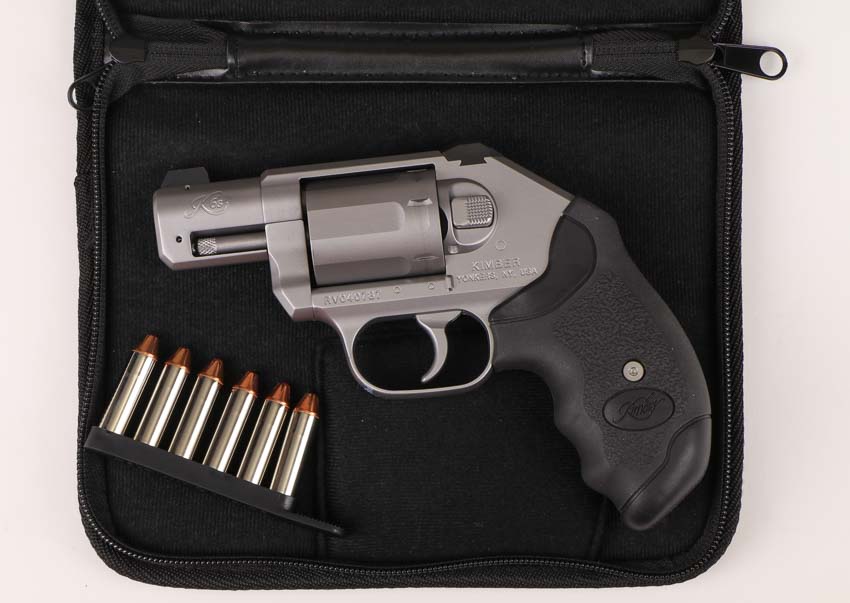
In other words, you carry the same gun. You just have one more round in it. For a defensive tool where every shot may matter and the reload is slow under the best conditions, that is not a small thing.
The Reload Reality
Speaking of reloads, this is where the six-shot cylinder earns its keep a second time. A revolver reload, even with a speedloader, is slower than a magazine change on an autoloader. Most armed citizens do not carry a speedloader at all. Many of the ones who do carry one have not practiced the reload enough to perform it quickly under stress.
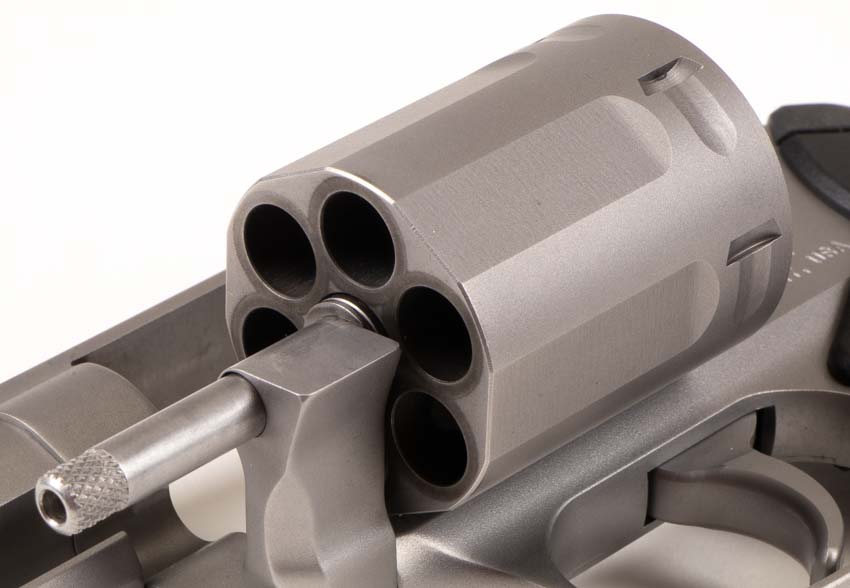
If you accept that your snub-nose is realistically a six-round fight for most carriers, six rounds beats five every time. That is the practical case for the K6s in one sentence.
Barrel Length: 2-Inch vs. 3-Inch
Kimber offers the K6s with a 2-inch barrel and a 3-inch barrel, and your carry method is going to drive that decision more than ballistics will.
The 2-inch model is the natural pocket carry choice. It also disappears better in an ankle rig or a deep concealment setup under a tucked shirt. If you primarily carry inside the waistband, on the belt or in a purse holster, the 3-inch version is worth a long look. You pick up a meaningful chunk of velocity from a 3-inch barrel compared to a 2-inch on .357 Magnum loads, you get a longer sight radius for better accuracy at distance, and you end up with a slightly easier-shooting handgun because more weight sits out front.
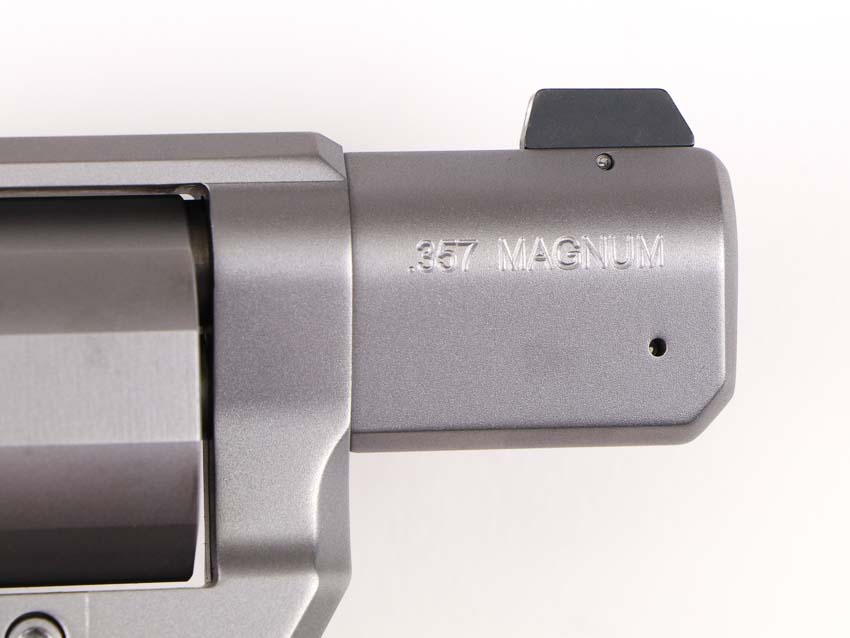
For most armed citizens carrying inside the waistband, I would lean toward the 3-inch. For pocket carry, ankle carry or backup duty, the 2-inch makes more sense.
Sights: A Genuine Upgrade
The standard K6s ships with a white 3-dot sight setup. Compared to the typical snub-nose, where the rear sight is a notch cut into the topstrap and the front sight is a simple ramp, this is a real improvement. The dots are visible in normal light, and the rear blade gives you something to actually align with the front.
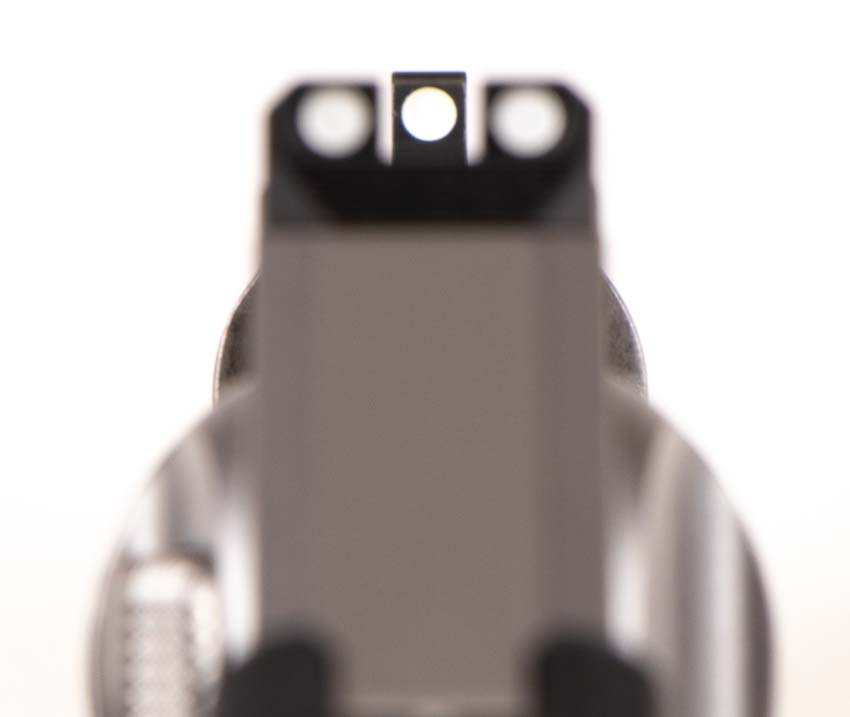
Up front, the sight is pinned. A friction-fit dovetail holds the rear blade. If you want to swap to a tritium night sight or a fiber-optic front, the work is straightforward, and several aftermarket options exist. Kimber also offers factory variants with night sights or fiber-optic fronts already installed if you prefer to skip the swap.
Range Time: How It Shoots
To find out whether the K6s lives up to its reputation, I took it to the range with .357 Magnum and .38 Special ammunition, plus two of the most obvious competitors in this segment: the Ruger LCR in .357 Magnum, and the Smith & Wesson 640 J-frame.
Over the course of two hours, I worked through cylinder after cylinder with each gun. Some observations carried through every string of fire.
Felt Recoil with .357 Magnum
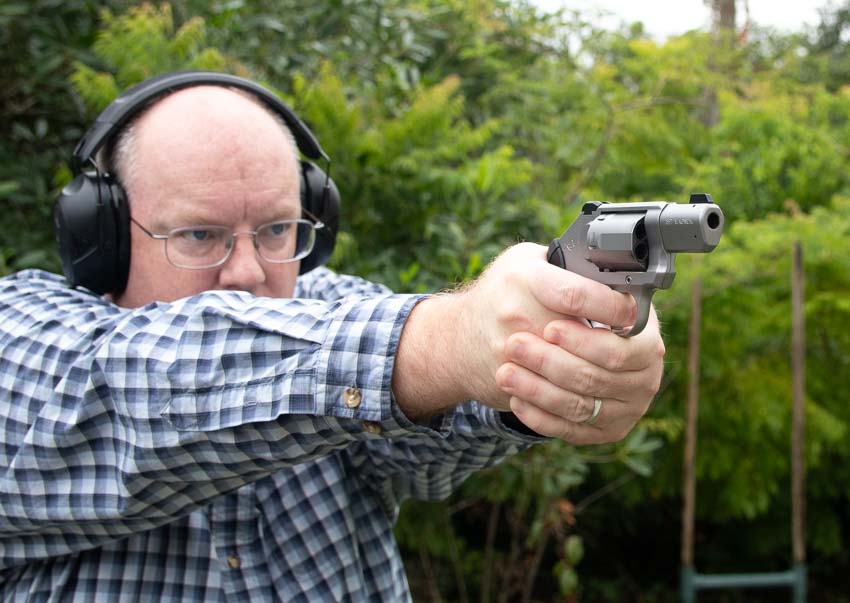
Shooting modern self-defense loads in the 125-grain hollow-point category, the K6s felt closer to a stout .38 Special +P than a full-power Magnum. The muzzle blast and rise are still there. You will not confuse this gun with a service-size 9mm. What you also will not do, and this is the point, is dread the next round.
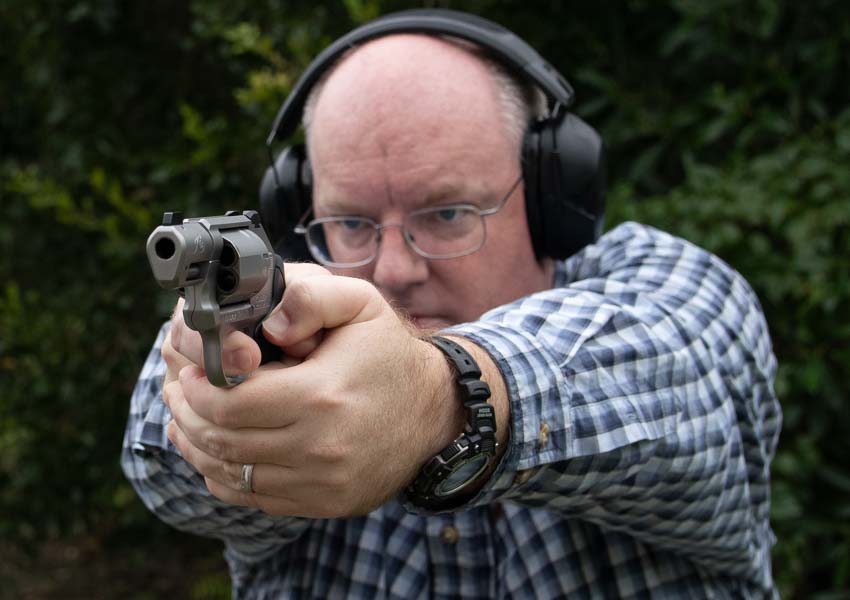
Kimber’s engineering attenuates the Magnum impulse. It does not erase it. That distinction became obvious when I switched to 158-grain Magnum loads. Heavier bullets at full power are notoriously rough through any short-barreled .357, and the K6s is no exception. They are still manageable, and they will still group, but they are best handled by shooters who already have solid recoil management fundamentals. Newer shooters should run lighter loads while they build skill.
K6s vs. Ruger LCR
The Ruger LCR is a legitimate competitor and a gun I have a lot of respect for. Its Hogue Tamer Monogrip is excellent and does a real job of softening the force that reaches your hand. Where the LCR falls behind the Kimber, in my hands, is muzzle rise. Because the LCR grip is shorter, you get less control over the front end of the gun during the recoil cycle. Splits between shots took noticeably longer with the LCR. The K6s recovered faster onto the target.
K6s vs. Smith & Wesson 640
Smith & Wesson’s 640 is the gun I grew up thinking of as the benchmark steel-frame, all-stainless snub-nose .357. Its grip length is roughly the same as the Kimber’s. What differs is how much of the frame the grip covers. The 640’s stock grip does not fully wrap the backstrap, so a deliberate high grip for maximum control puts the steel frame against the web of your shooting hand. After a couple of cylinders of Magnum loads, you feel it. The K6s wraps the backstrap completely, and the hand stays comfortable through long range sessions.
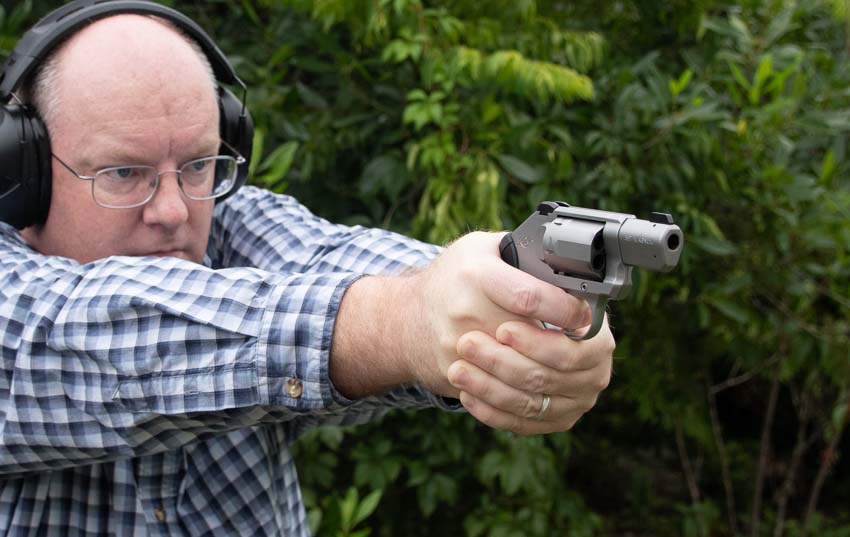
I will say flatly that the Kimber K6s offered the best combination of recoil attenuation and muzzle control of the three guns I tested.
For additional information on these other guns, see my article on the Ruger LCR vs. Smith & Wesson 640.
.38 Special: A Different Animal
Every .357 Magnum revolver also shoots .38 Special, which is part of the practical case for owning one. Lower-cost practice ammunition, lower recoil, and the option to load softer .38 +P self-defense rounds if Magnum loads feel like too much.
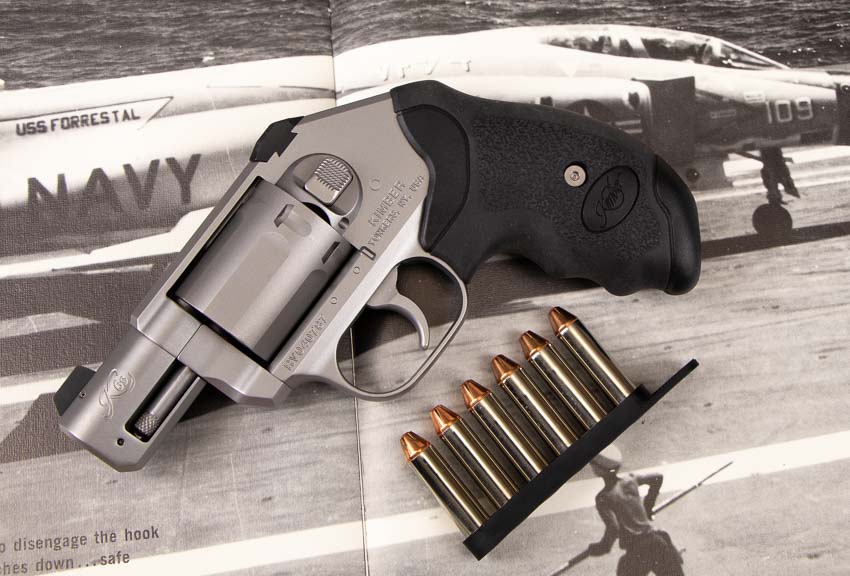
All of the .38 Special loads I ran felt soft in the K6s. Muzzle rise was minimal, and recovery between shots was fast. Hornady’s 90-grain Critical Defense Lite was the standout. That load is engineered specifically for reliable expansion with reduced recoil, and in the K6s it shot so softly that I caught myself laughing at the contrast with the 158-grain Magnum cylinder I had run a few minutes earlier. That kind of load makes the K6s a viable option for shooters who want the Magnum option in reserve but plan to carry .38 +P for everyday use.
Accuracy
Accuracy was good across the board. Full-power Magnum loads grouped around 1.75 to 2.25 inches for unsupported, rapid-fire five-shot strings at 7 yards. Lighter .38 Special loads tightened up to 1.25 to 1.50 inches at the same distance. That is more than adequate for any defensive role I can imagine, and better than most off-the-shelf snub-nose revolvers I have shot in the same conditions.
Ammunition Testing Data
| .357 Magnum Load | Velocity | Energy | Accuracy |
|---|---|---|---|
| Federal Personal Defense 158-grain JHP | 1,119 fps | 439 ft-lbs | 2.28″ |
| Hornady Critical Defense 125-grain FTX | 1,164 fps | 376 ft-lbs | 1.71″ |
| SIG SAUER V-Crown 125-grain JHP | 1,162 fps | 375 ft-lbs | 1.95″ |
| .38 Special Load | |||
| Federal Hydra-Shok 129-grain JHP +P | 834 fps | 199 ft-lbs | 1.24″ |
| Hornady Critical Defense 110-grain FTX | 860 fps | 181 ft-lbs | 1.08″ |
| Winchester Train & Defend 130-grain JHP | 788 fps | 179 ft-lbs | 1.47″ |
Velocity figures are averages of five rounds, measured 15 feet from the muzzle with a chronograph. Accuracy figures are the best five-shot group at 7 yards, fired unsupported.
Pros and Cons
Strengths I noted during testing:
- Six-round cylinder in a frame the size of a five-shot J-frame
- Smooth, consistent double-action trigger out of the box
- Real, visible 3-dot sights instead of the typical snub-nose afterthought
- All-stainless construction for durability and corrosion resistance
- Rounded exterior that draws cleanly from concealment
Things to consider before buying:
- 158-grain Magnum loads are still rough in any 23-ounce .357
- MSRP runs well above other entry-level snub-nose options
- Internal hammer on the DAO models means no single-action option for slow-fire practice (look at the DASA variants if that matters to you)
- At 23 ounces, it is heavier than aluminum-framed competitors like the LCR
Specifications
- Caliber: .357 Magnum
- Barrel length: 2 inches
- Overall length: 6.6 inches
- Weight: 23 ounces
- Cylinder capacity: 6 rounds
- Action: Double-action-only (DAO) on standard K6s; DASA available on select variants
- Sights: 3-dot, white outline (pinned front, dovetail rear)
- Grips: Hybrid rubber
- Frame and barrel: Stainless steel
- Finish: Brushed satin
- MSRP: $899 (base K6s Stainless starts at $878; varies by configuration)
Who Should Buy the Kimber K6s?
This gun lands cleanly in the wheelhouse of a few specific buyers.
Concealed carry permit holders who want a six-shot wheelgun and have been frustrated by five-shot J-frames will find the cylinder capacity hard to ignore. Anyone who has carried a snub-nose Magnum and given up on practicing with full-power loads because the recoil was punishing should shoot a K6s before writing off the platform entirely. Off-duty officers and armed professionals looking for a high-quality backup gun with serious terminal performance in a small package will find what they need here. And experienced revolver shooters who simply want a better-built, smoother-triggered snubbie than what the rest of the market is offering will recognize the K6s for what it is.
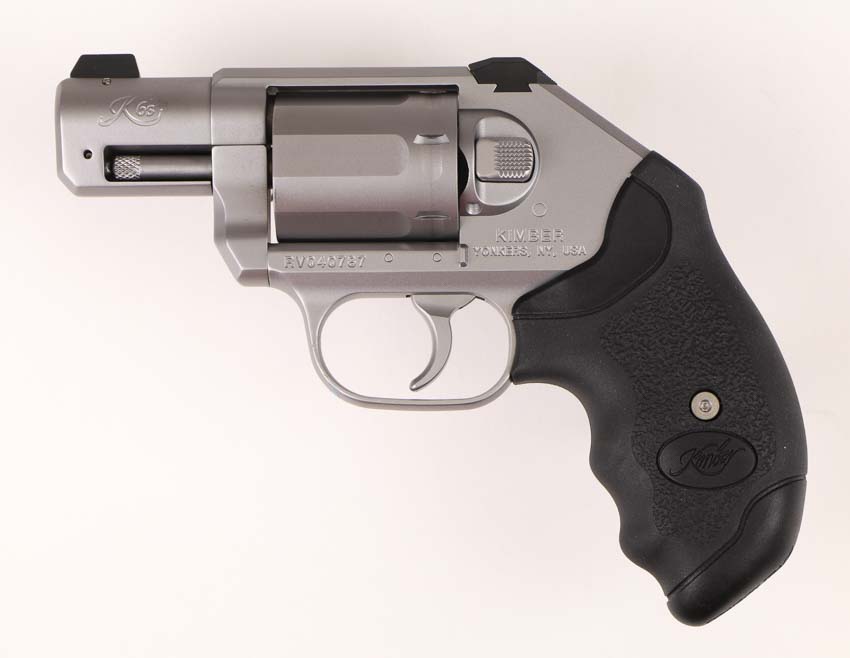
If your top priority is the absolute lightest possible carry weight, the polymer-framed Ruger LCR still has the K6s beat on the scale. If you want a single-action option for slow-fire range work, look at one of the K6s DASA variants instead of the standard DAO. Otherwise, this gun checks most of the boxes a serious defensive revolver should check.
For more handgun coverage, our gun reviews section has full write-ups on direct competitors and adjacent options. If you are still working through carry gear, the holster roundups page is the best place to start.
Final Thoughts
Back to the dynamite. The single biggest reason armed citizens give up on snub-nose .357 Magnums is that the recoil makes them miserable to train with, and the lack of training shows up the day it matters most. Kimber did not erase that problem with the K6s. Physics still applies. What Kimber did do, between the grip design, the trigger work and the rounded exterior, is take enough of the sting out of the platform that a small-frame Magnum becomes a gun you can actually shoot well under stress.
If you want a snub-nose .357 Magnum, the Kimber K6s belongs on your short list. If you want the softest-shooting one currently on the market, I think it is the one to buy.