
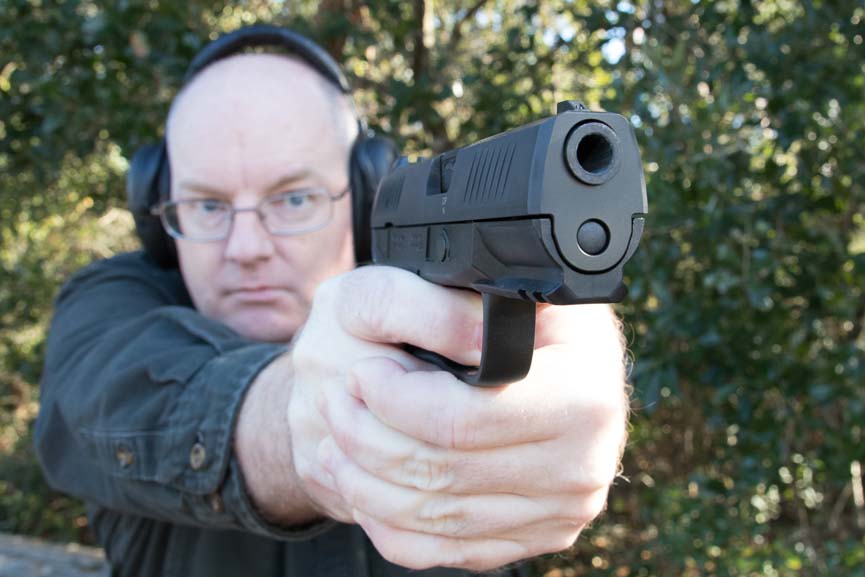
Editor’s note: The pistol featured in this Walther Creed review was provided to the author as a loaner by Walther Arms for the purpose of testing and evaluation. The manufacturer had no input into the content, conclusions or final verdict of this review, which reflect the author’s independent findings alone.
The right to defend your own life does not amount to much when you are face down in a gutter, bleeding, with a cheap pistol locked up tight in your fist. A sidearm that quit on you in the one second you needed it most. I have spent a working lifetime digging slugs out of test media and pulling jammed guns off the firing line, and I will give it to you straight: the boneyard of personal protection is paved with bargain hardware that looked just fine in the display case and went belly-up in the field.
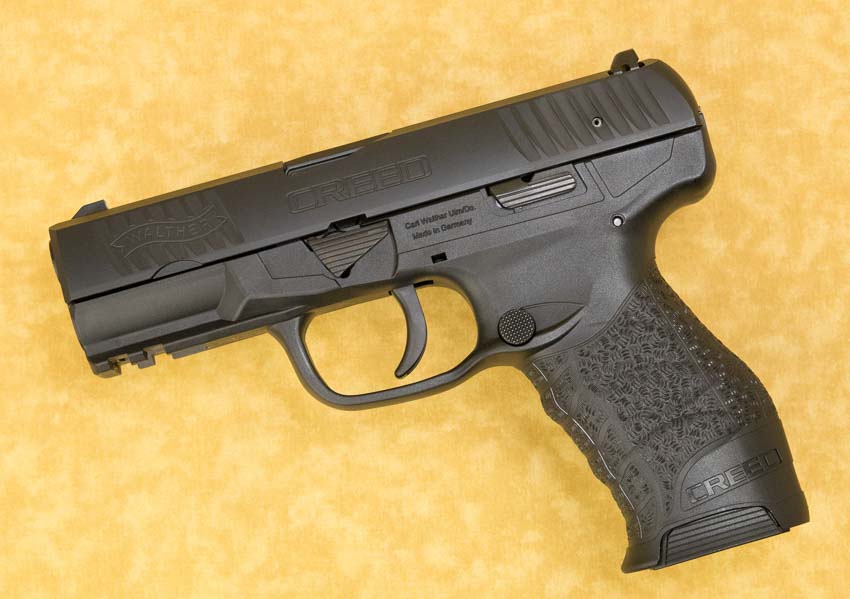
So when Walther Arms slid a 9mm across the counter at $399 and called it a serious defensive handgun, I did what I have always done with a new contender. I hauled it down to the range and gave it the third degree. This Walther Creed review is the say-so I came back with, and I will tell you up front, the gun surprised me.
The Right Tool for a Dangerous Job
Every man, woman and grandmother in this country owns the right to defend their own skin. The founders understood it, wrote it down, and codified it in the Second Amendment because they had a healthy distrust of both a predatory government and the lone cutthroat working a dark street. Arms in the hands of the citizen were the answer to both.
Here is the cold truth underneath all of it. Man is a tool user, not issued claws, tusks or venom. A firearm is a force multiplier, the great equalizer that lets the elderly widow or the fellow with a bad hip stand up to a younger, stronger predator and walk away. Take the tool out of the equation and the contest goes to the brute every time.
That makes the price tag a life-and-death matter, not a hobbyist’s footnote. The people who need a reliable sidearm the most, the ones living where the streetlights stay broken, are very often the ones who can least afford one. I have never bought, and I will never recommend, a poor gun. A cheap tool, whether it is a socket set or a service pistol, almost always costs you more down the road. The trouble is that with handguns, quality and price tend to run together, especially down on the bargain rack. There are exceptions, but I am comfortable saying there are more dependable self-defense handguns to be found north of $400 than there are below it.
That is the gap Walther set out to close. Lean on modern manufacturing, trim the fat that does not earn its keep, and field a reliable, full-size 9mm for a working person’s money. On paper it is a fine ambition. The question is whether the gun lives up to it once the smoke clears.
Enter the Walther Creed
Announced late in 2016, the Creed is a full-size 9mm that Walther priced aggressively at $399. Now, Walther does not build junk. The company has a long bench of well-made pistols to its name, which is exactly why that number caught my eye. Could an outfit with that pedigree turn out a handgun good enough to stake your life on at a price that low? Walther sent me a production gun, not some hand-fitted show pony, and I set out to find the answer the only way I know how.
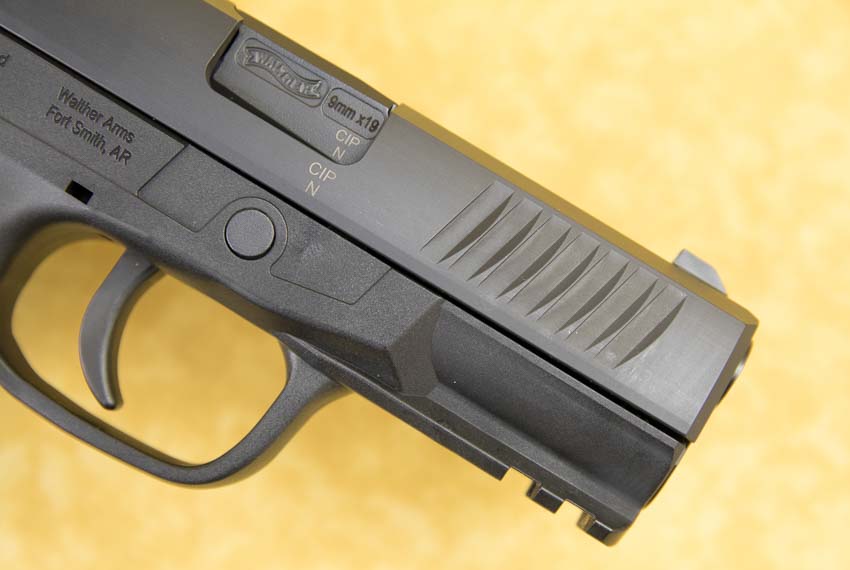
Start with the cartridge, because the cartridge tells you who this gun is for. The 9x19mm Parabellum is a solid, sober choice for personal defense. Yes, there are differences in performance among the popular handgun rounds, but quality 9mm hollow points have proven themselves on the street and in the test lab time and again. The men in blue figured this out the hard way. After two decades chasing the .40 S&W and other heavier numbers, a long list of police agencies has migrated right back to the 9mm, the FBI among the loudest of them. Better capacity, faster follow-up shots, less recoil for the average officer to fight, and terminal performance that gives up next to nothing. That is not a fad. That is a course correction.
There is a dollars-and-cents angle here too, and it dovetails with the whole point of the Creed. The 9mm is the least expensive centerfire pistol round you can buy. For a shooter on a budget, the cost of practice ammunition decides how often the gun comes out of the safe, and trigger time is the difference between owning a defensive pistol and actually being able to run one. Cheap fodder means more reps. More reps mean a better-prepared citizen. Walther understood the assignment.
Walther Creed Specifications
- Caliber: 9mm
- Barrel length: 4 inches
- Overall length: 7.3 inches
- Weight (unloaded): 27 ounces
- Grips: polymer
- Sights: 3-dot
- Action: pre-cocked DAO
- Finish: Tenifer black
- Capacity: 16+1
- MSRP: $399
A Hammer in a Striker’s World
Here is where the Creed gets interesting. Walther went hammer-fired in an age when nearly everybody, Walther included, has gone striker. They had their reasons, and after a week of running this gun, I think they were good ones.
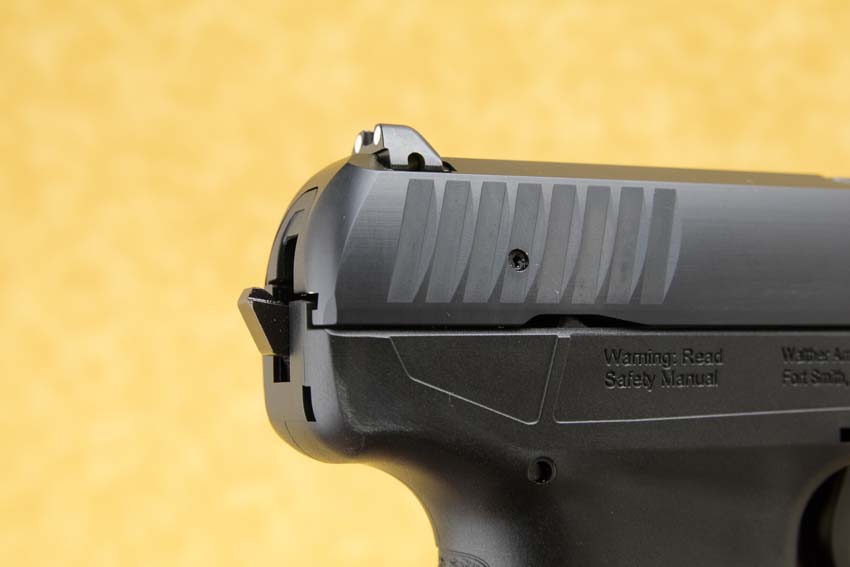
The hammer is small and tucked down inside the rear of the slide, almost entirely out of sight. That is no accident. A bobbed, shrouded hammer will not snag on a cover garment when you clear leather in a hurry, which matters if you decide to press the Creed into concealed carry duty. I will be honest, the gun runs a touch large for everyday concealment, but with the right holster and a little thought about your wardrobe, a fellow could absolutely carry it.
Work the trigger and the hammer rolls back, then drops on the firing pin. You will never see much of it. And here is the part the curbside experts get wrong: you cannot thumb-cock this hammer into single action even if you try to pinch it and drag it back. There is no single-action mode to find.
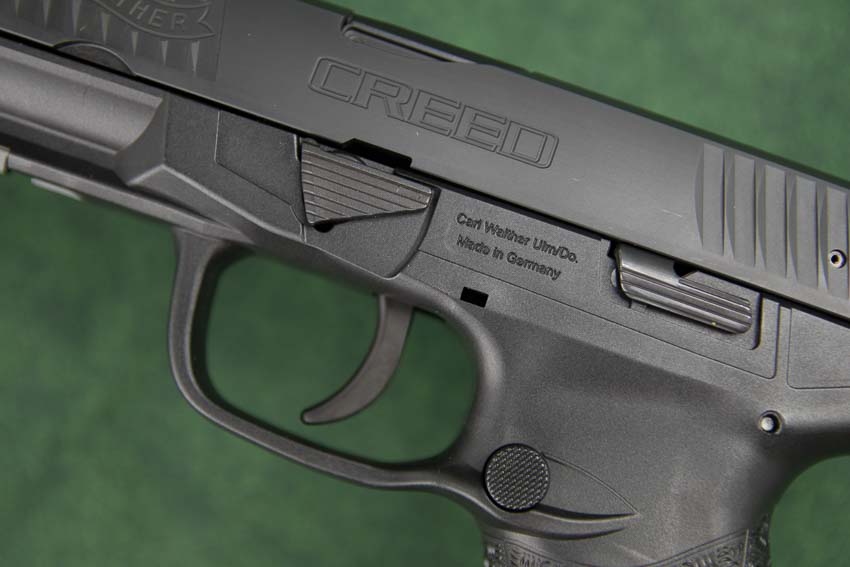
Like the Walther PPX before it, the Creed runs a pre-cocked, double-action-only trigger to work that hammer. Do not let the DAO label scare you off, because this is not your grandfather’s heavy, stacking double-action pull. The Creed gives you a light, smooth stroke with a clean, crisp break. You do not have to let the trigger run all the way forward to reset it. The reset is not what I would call short, but it is not long either. What you end up with is the silky pull of a traditional DAO married to the light, predictable feel of a good striker gun. For a defensive pistol, that is a fine place to land.
Easy to Run, Built to Last
The first thing I noticed about the Creed, before I ever fired a shot, was how easy the slide is to rack. My wife noticed it the same instant. She is no slouch behind a pistol, but as a smaller woman she does not have my upper-body strength, and she will run a stiff slide if she has to while telling you plainly she would rather not. A great many shooters are cut from that same cloth, and an easy-racking slide is not a luxury for them. It is the doorway to running the gun at all.
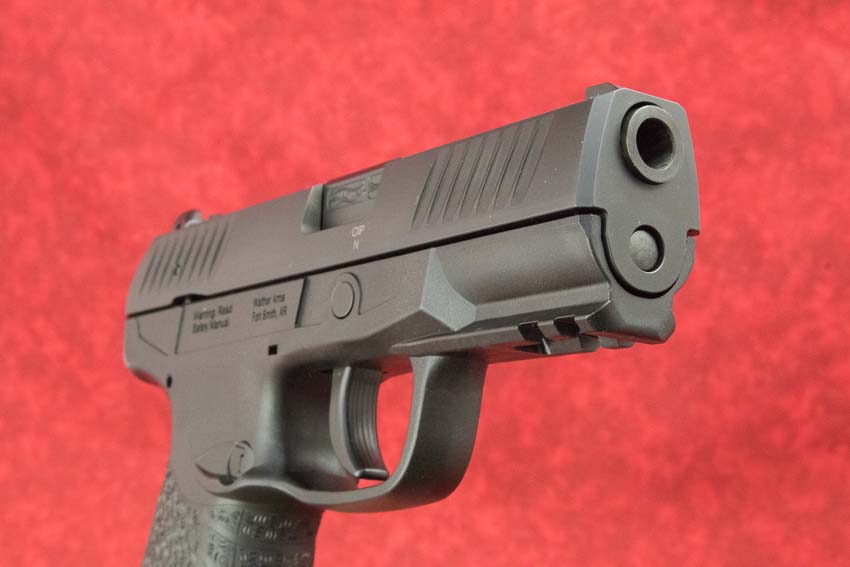
The magazines hold 16 rounds, and in a smart move, Walther uses the very same magazine that feeds the PPX. That means spare mags are already out there in good supply. Your local gun shop has likely got a few on the shelf right now, no special order required. The bottom of the grip is cut away in a generous scoop, and each magazine wears a tall base plate that tapers up into a little pyramid. That textured slope seats into the frame cutaway and gives you something real to grab if you ever have to rip a stubborn magazine out of the gun to clear a stoppage. It is big enough to seize with a gloved hand, the way you would in cold weather or under stress.
Walther did not cut corners on the metalwork. The slide and barrel are both Tenifer treated and finished in a businesslike matte black. Tenifer, for those who have not run into it, is a salt-bath ferritic nitrocarburizing process that hardens and seals the steel so it shrugs off holster wear and corrosion. My review gun showed no flaws in the finish anywhere, and it felt good in the hand, which counts for something on a gun built to a price.
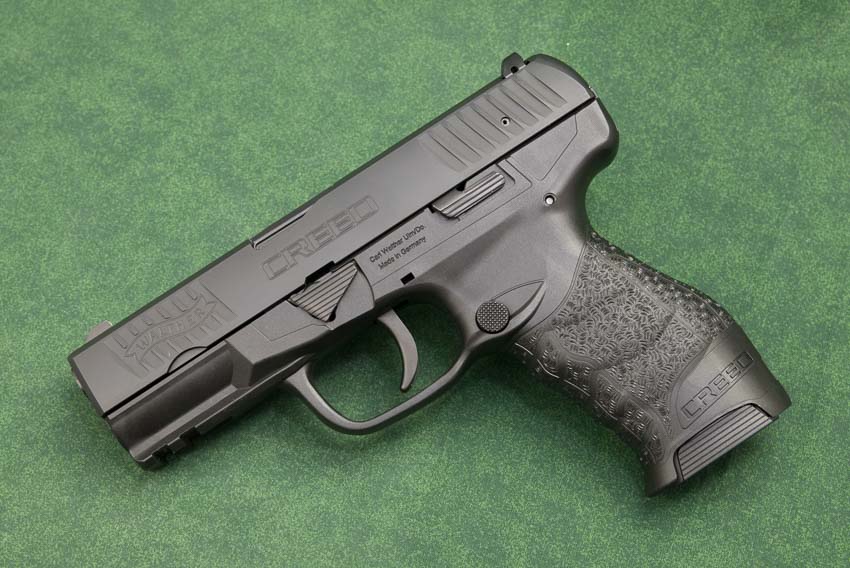
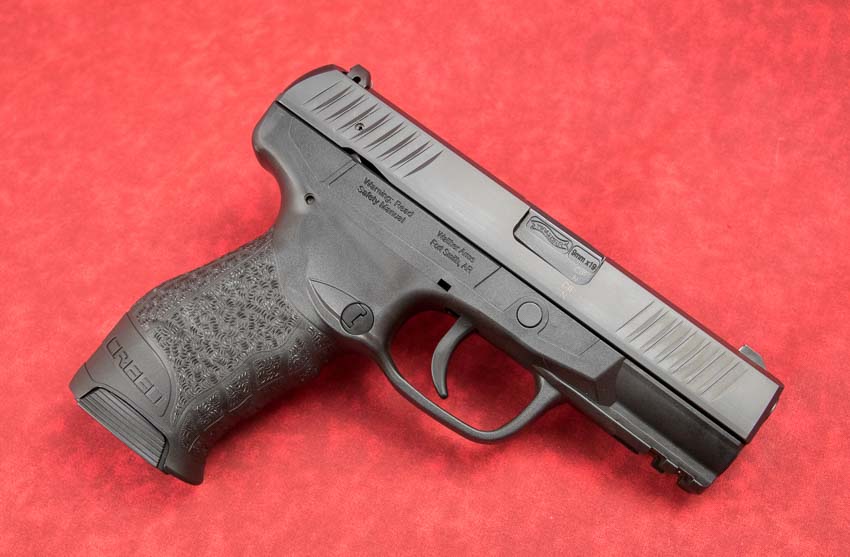
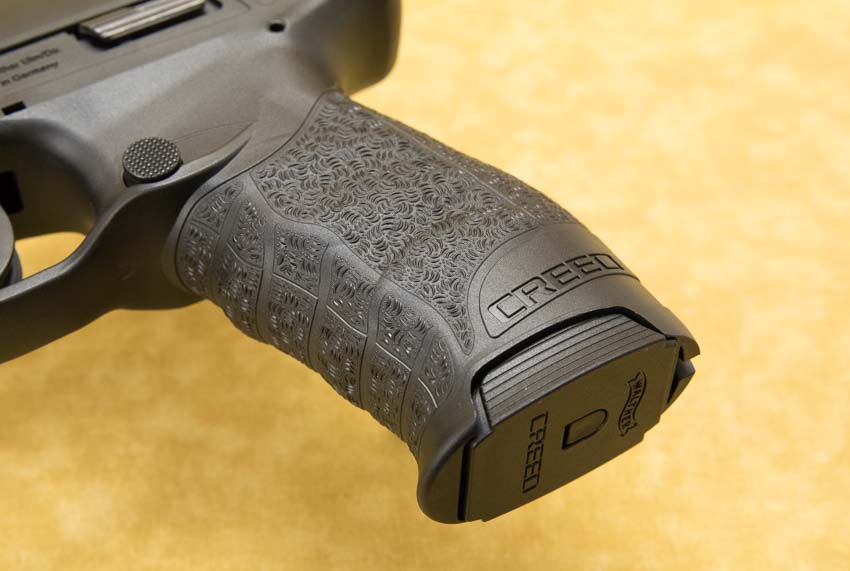
The frame is polymer, as you would expect. Plastic-frame pistols have a track record now pushing 50 years, so nobody needs to clutch their pearls about it. The grip wears Walther’s signature cross-directional texture, which locks the gun into your palm without chewing your hand raw. Even with a double-stack magazine aboard, the grip feels slimmer than a lot of its competition. My small-to-medium hands wrap it solidly and my trigger finger lands square on the face of the trigger, pressing straight to the rear the way it ought to. There is an odd-looking bump at the base of the backstrap that I cannot say I love to look at, but I will be hanged if it does not drop right into the meat of my palm.
Where Walther Found the Savings
So how does a company with Walther’s reputation sell a gun this good for under $400? Walther has not laid it all out on the table, but a man who has been at this a while can make some educated guesses.
First, the controls are not ambidextrous. The magazine release is reversible, but the slide stop is not. If you are a right-hander, or a southpaw who came up shooting right-handed guns like most of us did, this will never cross your mind on the range.
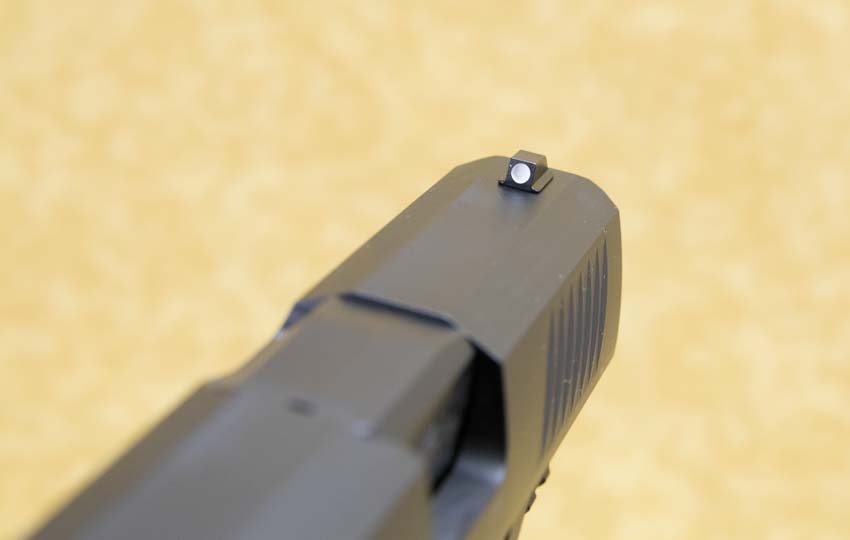
Second, there are no interchangeable backstraps. Sister pistols like the PPQ M2 give you swappable backstraps, and they do help fit a gun to an odd-sized hand. But you do not need them when the gun already fits, and that is the whole ballgame. Get your hands on a Creed at the counter before you buy. If your trigger finger does not address the trigger properly, walk away and look at something else. My strong hunch, though, is that a lot of folks will find this grip suits them just fine right out of the box.
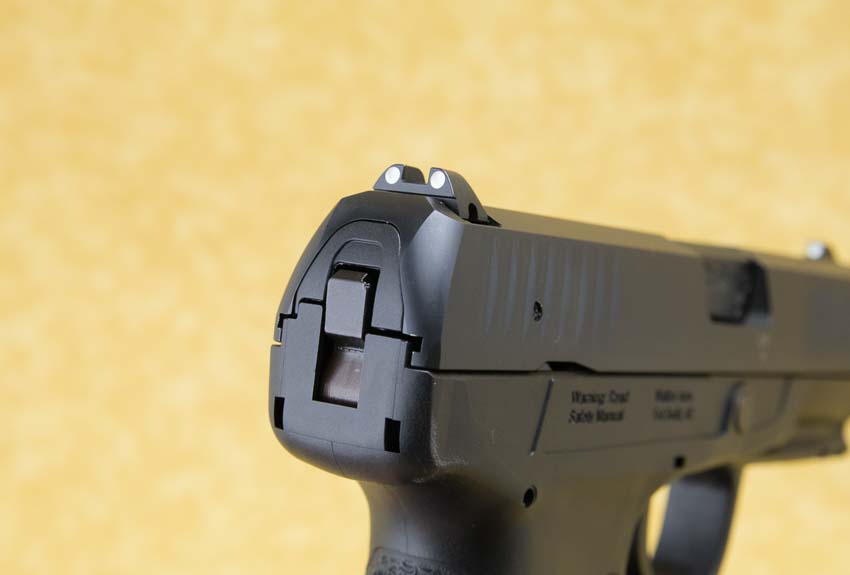
Last, there is a stack of manufacturing tricks that shave production cost without laying a finger on reliability or durability. The machining on the Creed’s slide, for one, is plainly less involved than what you find on the pricier PPX. That is a cosmetic difference, not a functional one. The gun looks a little plainer and does not shoot a lick worse for it.
Range Time: The Part That Actually Matters
Let me plant my flag right here before I say one more word. Based on the production gun I tested, the Walther Creed is a reliable, accurate firearm that is fully fit for self-defense work. That is the headline, not the price.
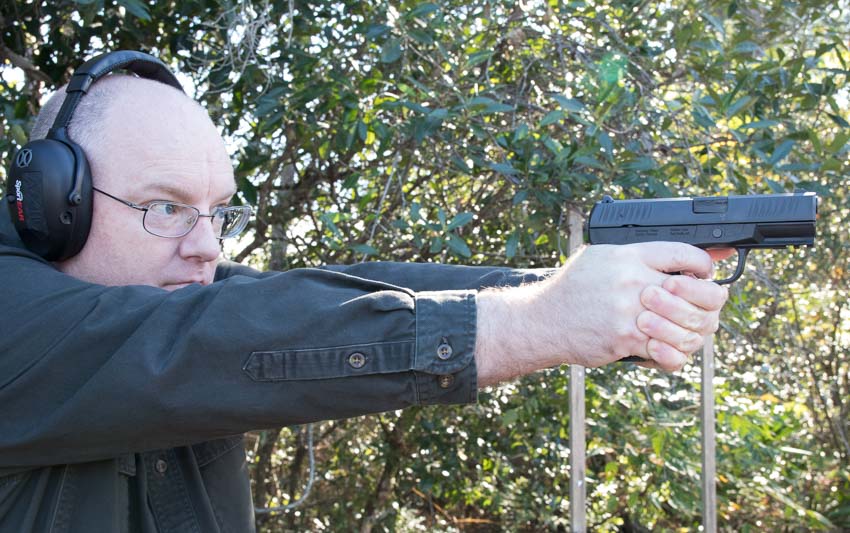
For a defensive pistol, I insist on reliability above all else. Accuracy, recoil, hand fit, the works, all of it matters. But if the gun will not run, it has no business riding on your hip, no matter what it costs. The Creed cleared that bar and kept right on going.
I put a little better than 1,000 rounds through this gun and had not one malfunction. Not a single bobble, stovepipe or failure to feed. I ran 13 different loads spanning the whole 9mm catalog, from a hyper-velocity 50-grain hollow point down to lumbering 147-grain subsonic fodder, and the Creed digested every last one of them without complaint. That is excellent service at any price. At this price, it is a small miracle.
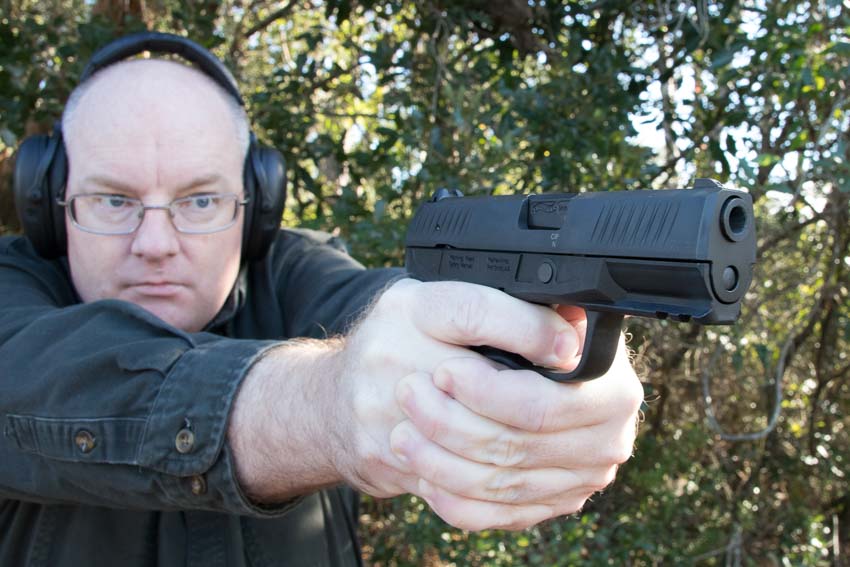
I warmed up with 150 rounds of SIG Sauer 115-grain full metal jacket practice ammo to see where the sights were sending things, followed by another 150 rounds of 124-grain ball. Then I got down to the real business and started feeding it a buffet of personal-protection loads.
SIG’s 115-grain V-Crown hollow point is a standard-pressure round, soft on recoil, that still clocked a zippy 1,162 fps average over my chronograph. It printed good groups too, though my aging eyes and increasingly arthritic hands did not do the load the justice it deserved. If you are sensitive to recoil and muzzle blast, this is a load worth a hard look. The velocity and bullet design should be plenty to drive expansion through heavy clothing and into the kill zone, and the kick is downright gentle.
Now for the oddball of the bunch, the speed freak. The Liberty Ammunition 50-grain Civil Defense load is loaded to +P pressure and slings a nickel-jacketed copper hollow point out of the Creed at nearly 2,000 fps. You would expect a hot +P round to thump your palm, but the felt recoil was so light I would not have believed I was shooting a 9mm if I had not thumbed the rounds into the magazine myself. The trade-off comes in noise and flash, both of which run louder and brighter than the rest of the field. That is a real consideration if you ever touch one off indoors.
Ammunition Testing
| Load | Velocity | Energy | Accuracy |
|---|---|---|---|
| Blazer Brass 124-grain FMJ | 1,113 fps | 341 ft-lbs | 1.020″ |
| Federal BPLE 115-grain JHP +P+ | 1,262 fps | 407 ft-lbs | 1.124″ |
| Federal HST 124-grain JHP +P | 1,161 fps | 371 ft-lbs | 0.987″ |
| Hornady American Gunner 124-grain XTP | 1,108 fps | 338 ft-lbs | 0.751″ |
| Hornady Critical Defense 115-grain FTX | 1,118 fps | 319 ft-lbs | 0.998″ |
| Liberty Ammunition Civil Defense 50-grain +P | 1,997 fps | 443 ft-lbs | 1.117″ |
| L-Tech 124-grain CuHP | 1,017 fps | 285 ft-lbs | 1.530″ |
| SIG Sauer 115-grain FMJ | 1,178 fps | 354 ft-lbs | 1.232″ |
| SIG Sauer 115-grain V-Crown JHP | 1,162 fps | 345 ft-lbs | 0.980″ |
| SIG Sauer 124-grain V-Crown JHP | 1,182 fps | 385 ft-lbs | 1.087″ |
| SIG Sauer 147-grain V-Crown JHP | 915 fps | 273 ft-lbs | 1.096″ |
| Speer Gold Dot 124-grain JHP | 1,097 fps | 331 ft-lbs | 1.103″ |
| Winchester PDX1 124-grain JHP +P | 1,169 fps | 376 ft-lbs | 1.002″ |
Velocity is an average of five shots, measured by a chronograph 15 feet in front of the muzzle, in feet per second. Accuracy is listed in inches for a five-shot group at 7 yards, shot off-hand.
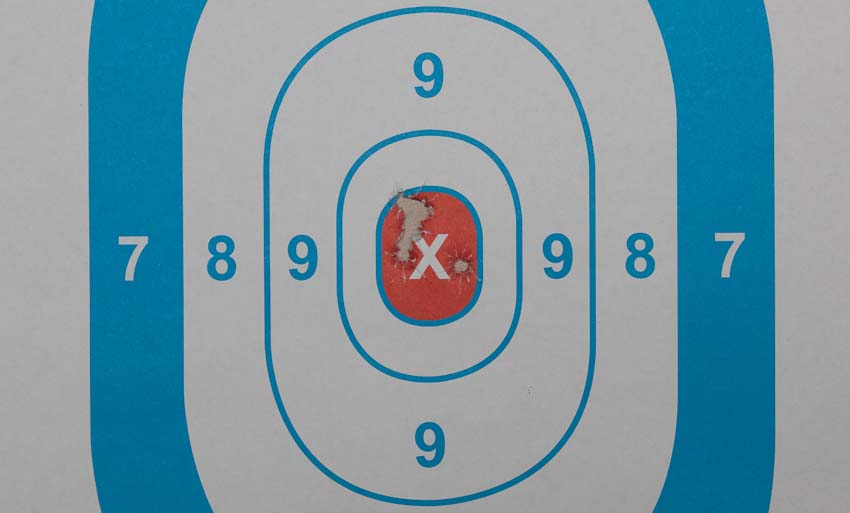
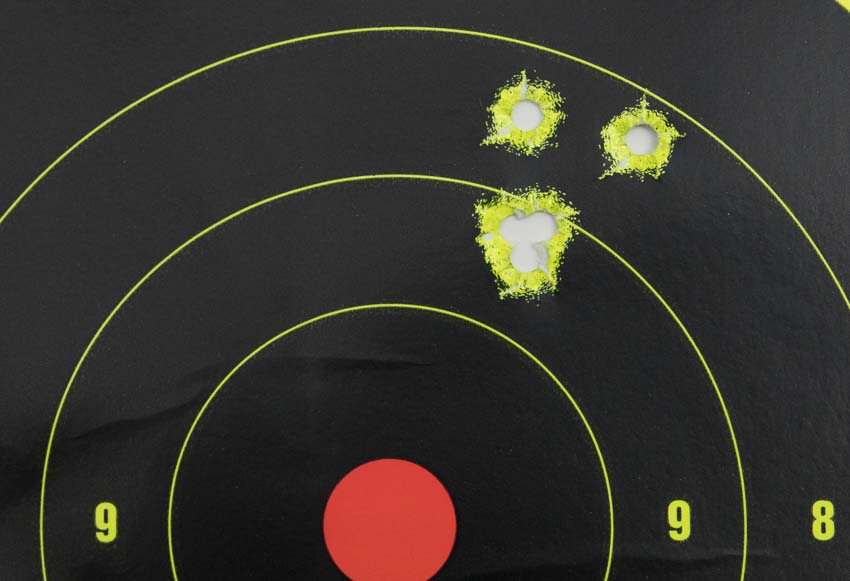
Accuracy held up across the board. At 7 to 10 yards I dumped rounds into a 6-inch circle just as fast as I could work the trigger, the kind of combat accuracy that puts hits center-mass when the clock is running and the adrenaline is up. Slow it down to deliberate, aimed fire and five-shot groups around an inch were there for the taking. The tack-driver of the test was the 124-grain Hornady American Gunner, built around the XTP hollow point, a bullet I have found to be reliably accurate in every caliber and weight I have run it in. My best five-shot group with that load measured right at three-quarters of an inch. From a budget gun, off-hand, that will make you sit up.
The Verdict
The talking point on the Creed is always going to be the price, and I understand why. But for me the bottom line is the bulletproof reliability. As I have said, for personal protection I demand a gun that runs when it is called on, every time, no excuses. The Creed proved itself there over a thousand rounds and 13 loads without a hiccup. That it also shoots soft and prints tight groups only sweetens the deal.
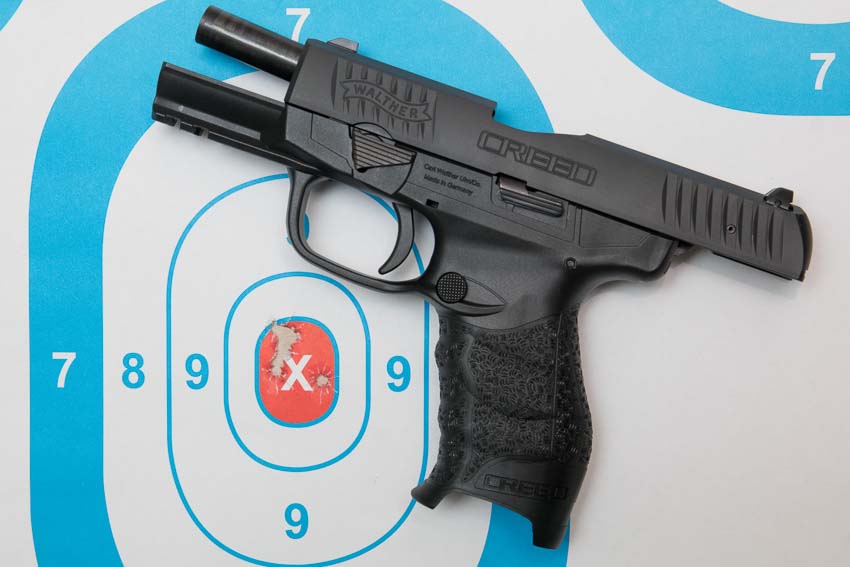
A sub-$400 price tag means more decent people will have a good gun within reach when evil comes knocking. That is not a marketing gimmick. That is the right tool getting into the right hands, and Walther deserves a tip of the hat for pulling it off. If you are shopping for your first defensive 9mm, or you are a department officer pricing out what your people can afford to buy and feed, the Walther Creed has earned a long, hard look. It came in for the third degree and walked out with its head up.