
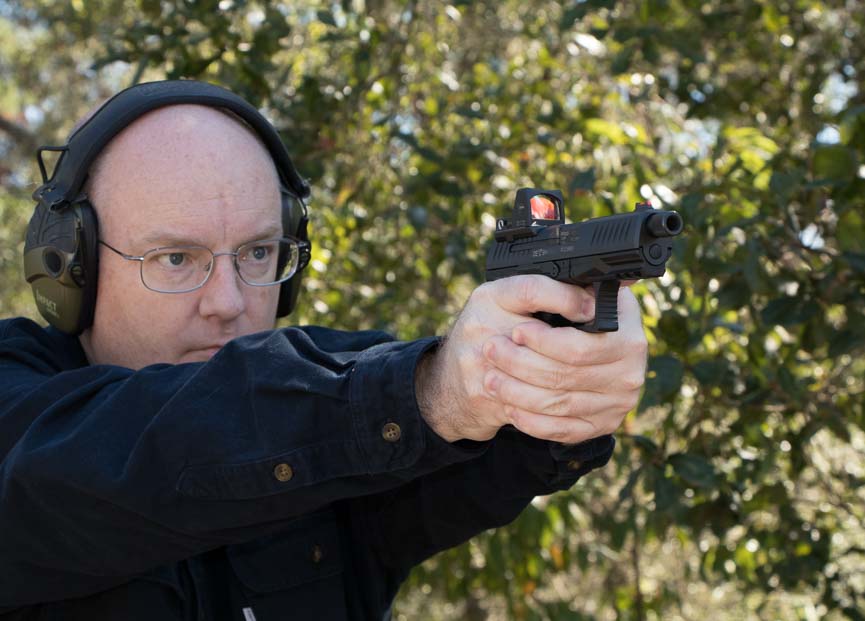
Editor’s note: The pistol featured in this Walther Q4 TAC review was provided to the author as a loaner by Walther Arms for the purpose of testing and evaluation. The manufacturer had no input into the content, conclusions or final verdict of this review, which reflect the author’s independent findings alone. The Q4 TAC is a variation of the Walther PPQ 9mm handgun.
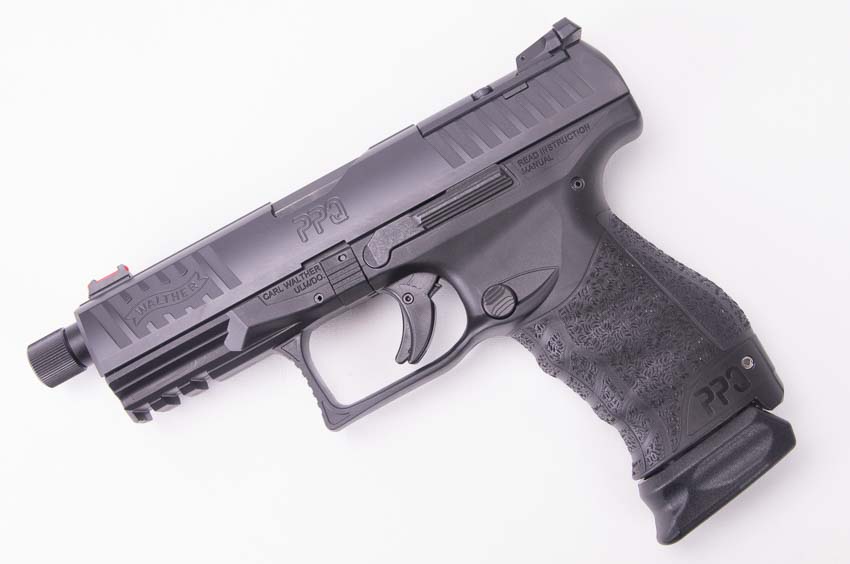
The defendant came to my range wearing black Tenifer and a German accent, polymer-framed, barely past a pound and a half empty, and cocky enough to wear a threaded muzzle like a man daring you to swing first. I have hauled a lot of striker-fired hopefuls into the interrogation room over the years, sat them down under the lights, and asked the only questions that matter to a working cop: Will you stop a man? Can an average officer run you in the rain? Are you safe around the innocent? And can a department afford a whole fleet of you? The Walther Q4 Tac sat there and did not blink. By the time I had dug better than 500 rounds of evidence out of the backstop, I had my verdict … and it is not the one the cheap seats were expecting.
Walther’s Long Road from the Silver Screen to the Squad Car
For most of the public, the name Walther still conjures one image: a slim little PPK riding under the dinner jacket of a certain British agent with a license to kill. That pistol made the company famous on the back lots of Hollywood, and it moved a lot of magazines in its day. But fame and field performance are two different animals, and the truth is that the modern iron coming out of Walther Arms earns its reputation the hard way, on the range and in the holster. From the trim PPS M2 that hides under a windbreaker to the wallet-friendly Creed, today’s Walther lineup delivers ergonomics, reliability and accuracy that will stand toe to toe with anything the competition trots out.
The pistol that anchors the family is the PPQ, Walther’s flagship duty gun and the owner of what a lot of serious shooters call the finest trigger ever bolted into a striker-fired handgun. Strong words. I will back them up later. Several of the company’s guns are built on the PPQ’s bones, and the newest of the litter is the one in the dock today: the Walther Q4 Tac. Make no mistake, this is a state-of-the-art combat handgun, and it answers a couple of trends that have quietly rewritten the rules of the duty pistol game.
Walther Q4 TAC Specifications
- Caliber: 9mm
- Barrel length: 4.6 inches
- Overall length: 7.8 inches
- Weight (unloaded): 26 ounces
- Grips: polymer
- Sights: red fiber-optic front, plain black rear notch
- Action: striker-fired
- Finish: black, Tenifer
- Capacity: 17+1, 15+1
- MSRP: $749
What the Walther Q4 Tac Actually Is
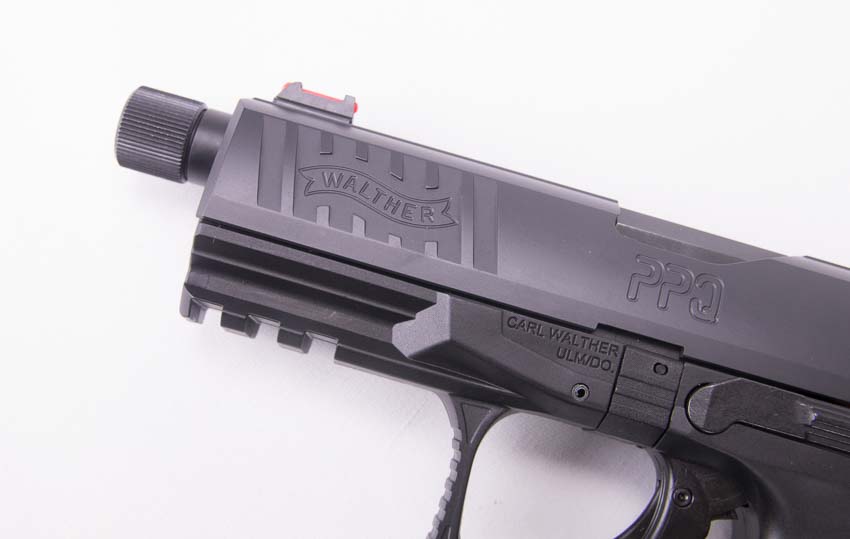
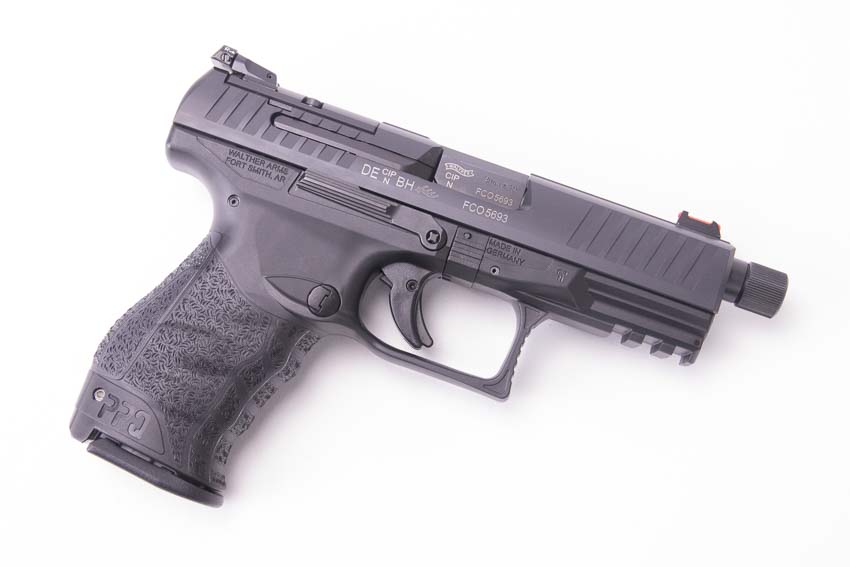
Strip away the showmanship and the Q4 Tac is a forward-looking design that takes the best of the proven PPQ platform and bolts on two features the modern market has been hollering for: a threaded barrel for sound suppression and a slide cut to wear a red-dot optic. That combination is what makes this 9mm a genuine triple threat, equally at home guarding the hallway of a sleeping house, riding in a patrol rig, or stacked up behind a SWAT shield on a hostage call.
Let’s take the headline features one at a time, because each one earns its keep for a different reason.
Threaded Barrel: A Muffler for the Man in Blue
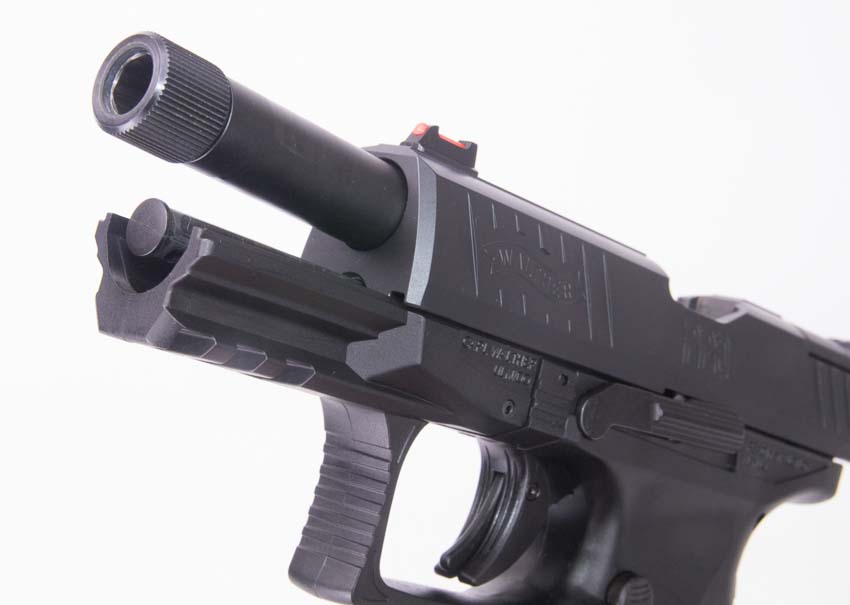
That fat threaded muzzle up front is an open invitation to spin on a sound suppressor, the gadget the old timers still insist on calling a silencer. Let me set the record straight, because Hollywood has lied to generations of moviegoers about this: no suppressor on earth turns a gun into a whisper. What a good can does is work like a muffler on a hot rod, bleeding off and slowing the expanding gas so the muzzle blast lands on your ears as a heavy thud instead of a skull-rattling crack.
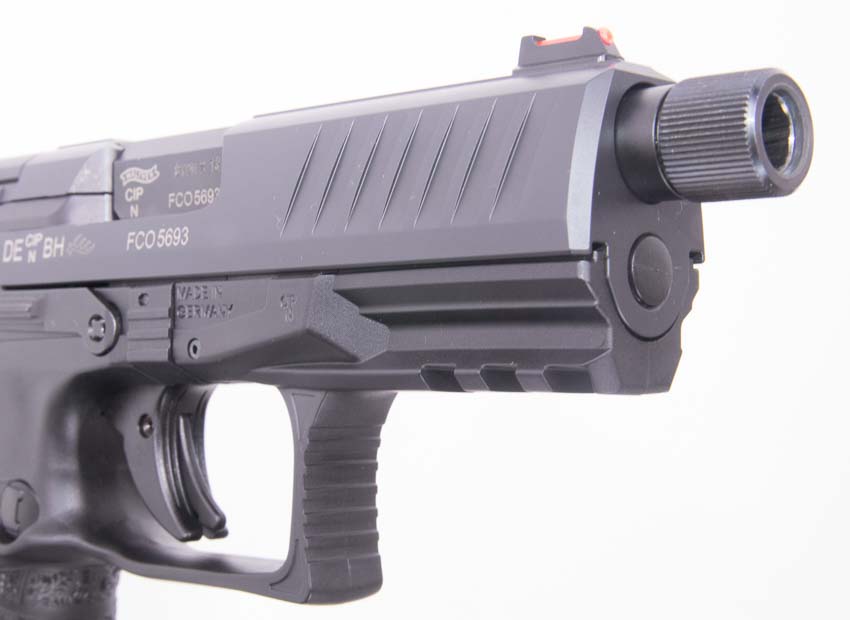
Here are the numbers that ought to matter to you. The report of an unsuppressed 9mm runs in the neighborhood of 160 decibels. The threshold where impulse noise starts doing permanent, immediate damage to human hearing sits right around 140 decibels. A quality suppressor will knock 20 to 35 decibels off the top, and that is the whole difference between a sound that merely hurts and a sound that leaves a permanent ring in your skull for the rest of your days.
Now run that through a cop’s eyes, the way I always do. A homeowner forced to touch off a defensive round inside the four walls of his own bedroom, with no muffs and no warning, can walk away temporarily deaf, sometimes permanently. In the worst minutes of that man’s life, his hearing is the very sense he needs most, and a thunderclap in a hallway robs him of it. Knock that report down and he can still hear responding officers identify themselves … which may be the thin margin that keeps a frightened citizen from being mistaken for the threat, or from mistaking a cop for one.
For an entry team flowing into a structure on a rescue, suppressed fire means an officer can still hear a partner’s warning shouted over his shoulder after the first shot breaks. And for the taxpayer footing the bill, every officer who keeps his hearing is one the department does not have to carry on a long-term disability line. That is real money, and it is real safety.
Optic-Ready Slide: The Red Dot Comes to the Pistol
A threaded barrel alone does not a new gun make. The other half of the Q4 Tac’s modern resume is a slide machined to accept a red-dot optic. For the uninitiated, a non-magnifying reflex sight, what most folks call a red-dot or holographic sight, floats a bright aiming point over the target inside your sight picture. That dot, usually a sharp red point of light, is not thrown downrange like a laser. It lives inside the glass of the sight itself. It can ride alongside your iron sights or replace them outright.
The red dot already won its war on the rifle. The United States military settled that argument years ago, and today you will find a reflex sight bolted to the top of nearly every serious fighting carbine in the country, from the patrol rifle in the cruiser’s rack to the AR a homeowner keeps by the bed. Whether the same revolution fully takes the pistol world is a fight still being refereed in training circles.
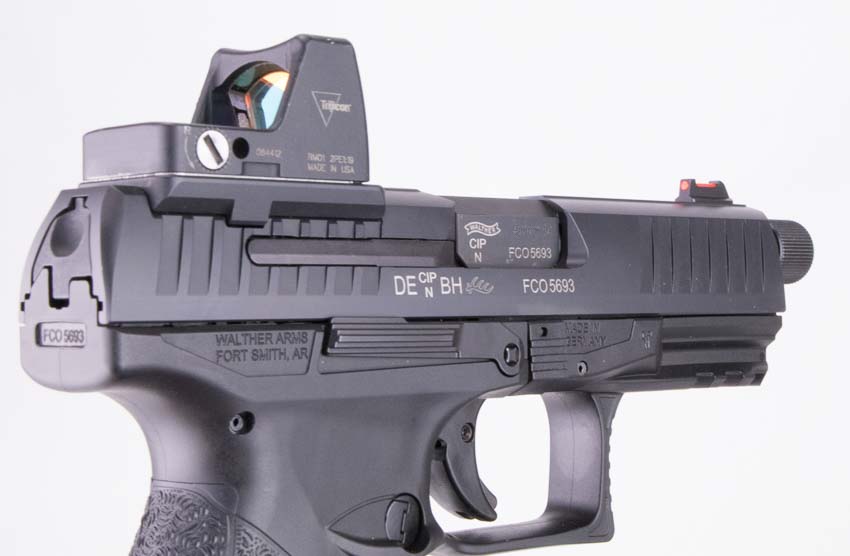
There is live debate about how much a dot helps a shooter under stress, and there is the plain fact that most optics are still too bulky to ride a deep-concealment pocket gun. But on a full-size sidearm carried openly by security, by the men in blue, or staged for home defense, the current crop of pistol optics is a fine size match. My say-so: the dot is here to stay on the duty-size gun, and the Q4 Tac is built to meet it head-on.
The Supporting Cast
The Q4 Tac does not stop at the two marquee features. There is an accessory rail up front for a weapon light or a supplemental aiming laser, because a sidearm you cannot aim in the dark is only half a sidearm. The slide stop is ambidextrous out of the box, and the magazine release will move to either side of the frame for the southpaws in the squad. Walther ships the gun with a flush-fit 15-round magazine and an extended 17-rounder, so you have 16 or 18 rounds of 9mm on tap before you ever reach for a reload.
How I Ran the Gun
I am not a man who takes a factory press release on faith, so the Q4 Tac got the full third degree. Everything in this Walther Q4 Tac review came off my own range, not a spec sheet. I put better than 500 rounds of 9mm downrange through it, drawn from five different ammunition makers and spanning bullet weights from a light and lively 115 grains up to a heavy, slow-rolling 147.
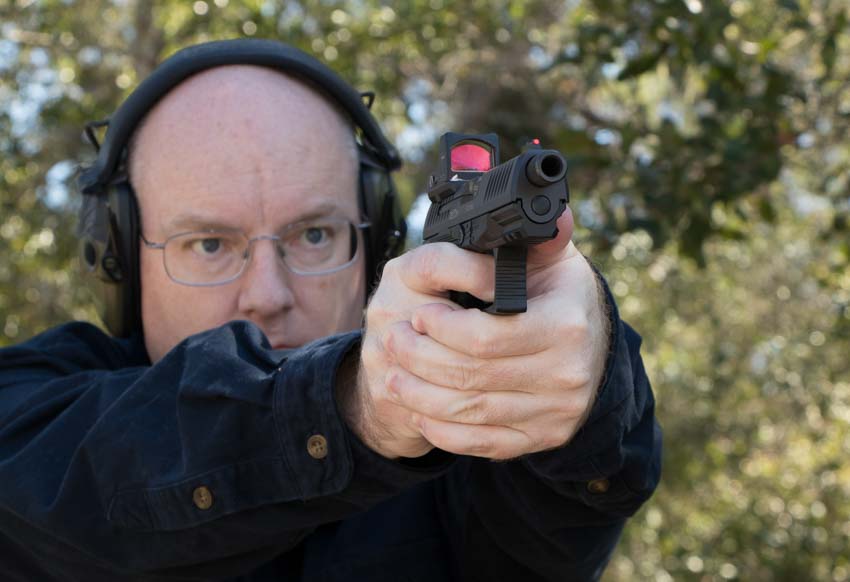
I shot it first with its factory irons, then pulled the rear sight and ran it with a red dot for the back half of the test. I chronographed representative loads 15 feet in front of the muzzle, worked it for groups at 7, 15 and 25 yards offhand, and ran long, fast strings to see whether the thing would squirm, choke or quit. It did none of the three.
The Grip: A Tailored Glove
The Walther grip fits my hand like a glove cut by a Savile Row tailor. I will say flat out that Walther builds the best-feeling grip in the business, and the shape delivers a natural point of aim so close to perfect that the front sight is sitting on target almost before I tell it to. The interchangeable backstrap system lets you size the grip to your own paw, and that matters more than the spec-sheet crowd admits when you are trying to fit one pistol to a whole department’s worth of hands, big and small. If you have ever liked the feel of a PPQ or a Creed, you already know how the Q4 Tac is going to ride.
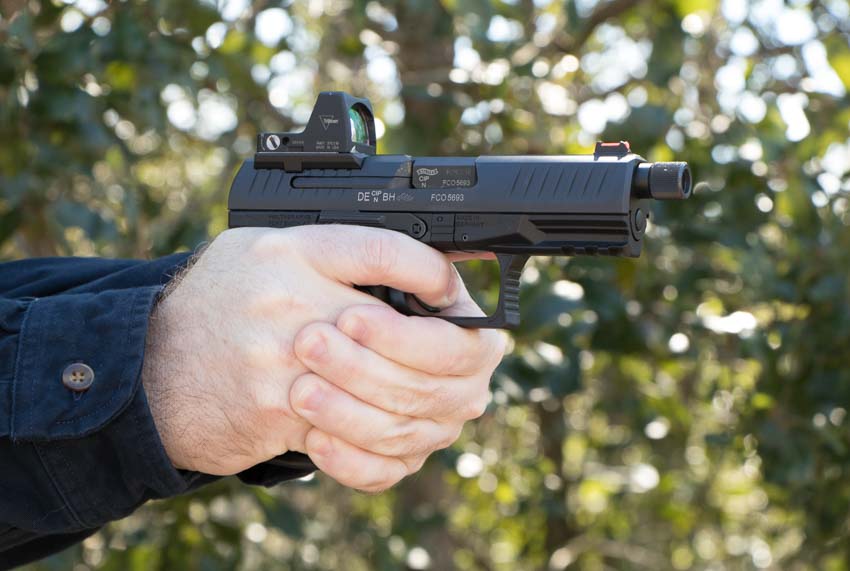
Texture is the other half of holding onto a gun when the situation goes sideways. A little sweat is all it takes to turn a smooth grip into a bar of wet soap, and a pistol that squirms under recoil is a pistol that is slow to the next shot. Walther fights that with a cross-directional grip texture that bites the hand without chewing it raw. Combined with the shape, I find it flat-out effective. Through the longest, hottest strings I fed it, the Q4 Tac sat rock solid and never once tried to walk in my hands.
Sights and the Optic Swap
Out of the box, Walther fits a red fiber-optic front sight against a fully adjustable plain black rear notch. It is a sound, fast system. The front dot glows bright in nearly any light, and it is easy to pick up and drive onto a target in a hurry. Plenty of shooters will be perfectly happy to run it as is.
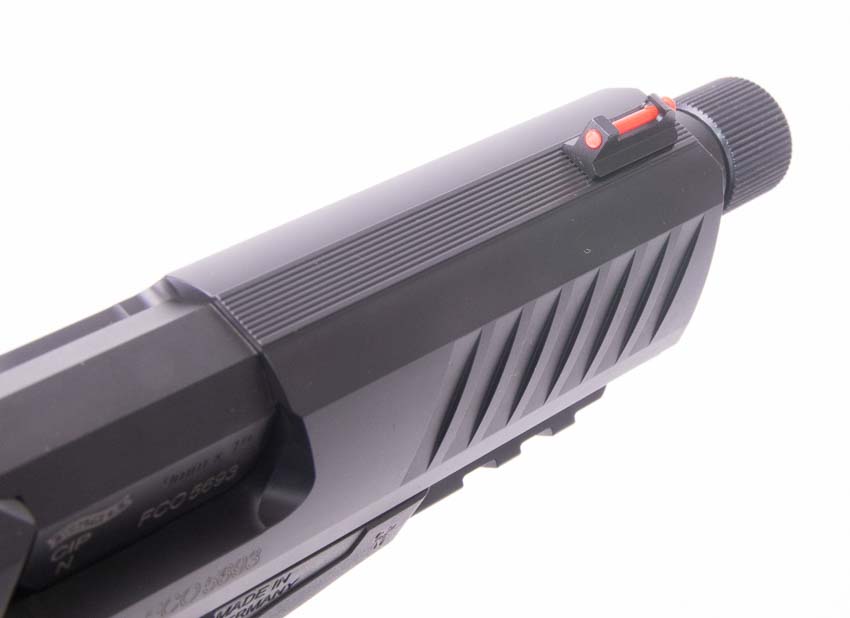
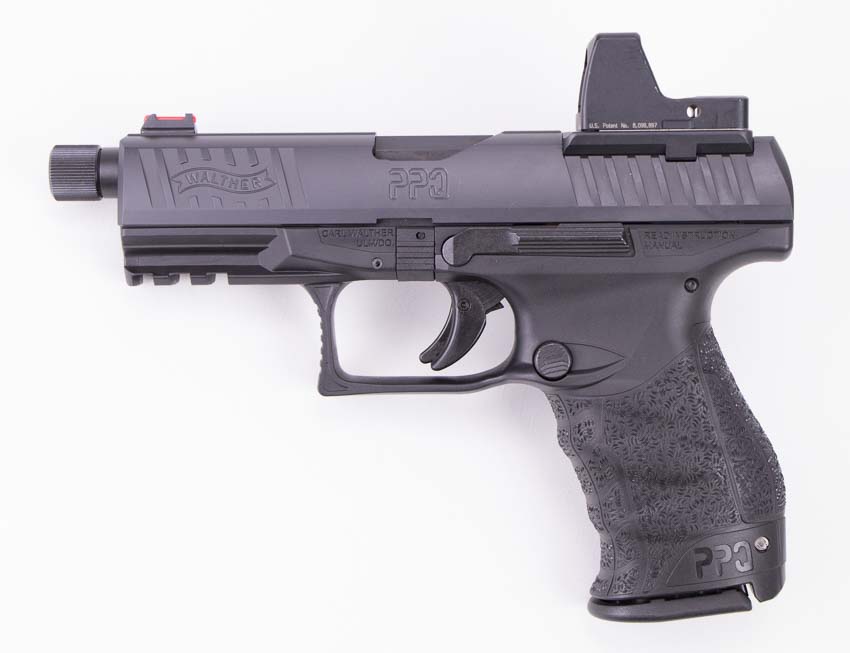
But let’s be square about why this gun exists. Few buyers are going to lay down their money for the Q4 Tac on account of its iron sights. They want it for the trick up its sleeve: pull that rear sight and drop a red-dot optic into its place in minutes.
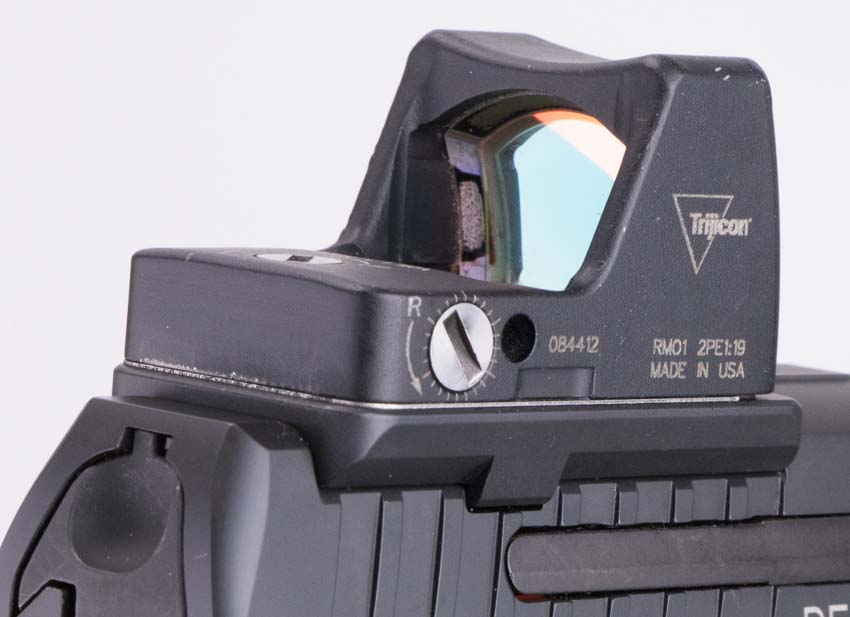
One of the heavyweight names in pistol-mounted dots is Trijicon, and its RMR has a reputation as a rugged little tank of a sight that shrugs off whatever abuse a shooter can dish out. Walther includes the mounting plate for the RMR, along with plates for the Leupold DeltaPoint and the Docter, so it was a foregone conclusion that I would hang an RMR on this gun. I leaned on a friend with a drawer full of spare Trijicons and borrowed one for the duration.
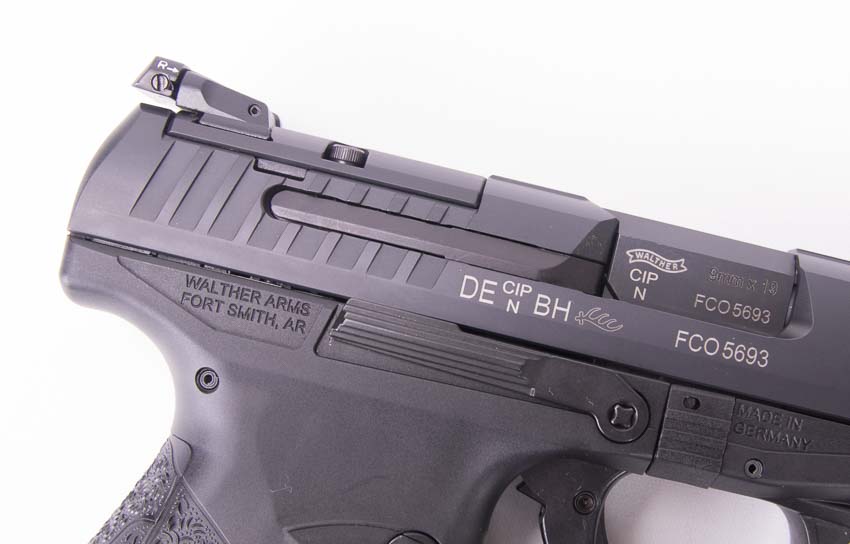
The RMR went on easy. With the supplied plate, it took me all of five minutes to pull the factory rear sight and torque the optic down to the slide. I will confess I skipped the thread locker just to see what would happen. After more than 500 rounds of pounding I checked the base and the sight and could not find a hair of looseness. I kept shooting. It never backed out. That is no delicate piece of jewelry. The RMR is a rock you can grab to run the slide, and I have watched shooters charge the gun by hooking the optic on a table edge. Trijicon builds the thing to absorb an unreasonable amount of punishment, and in all my years I have not yet watched one fail.
The Trigger and the Dot at Distance
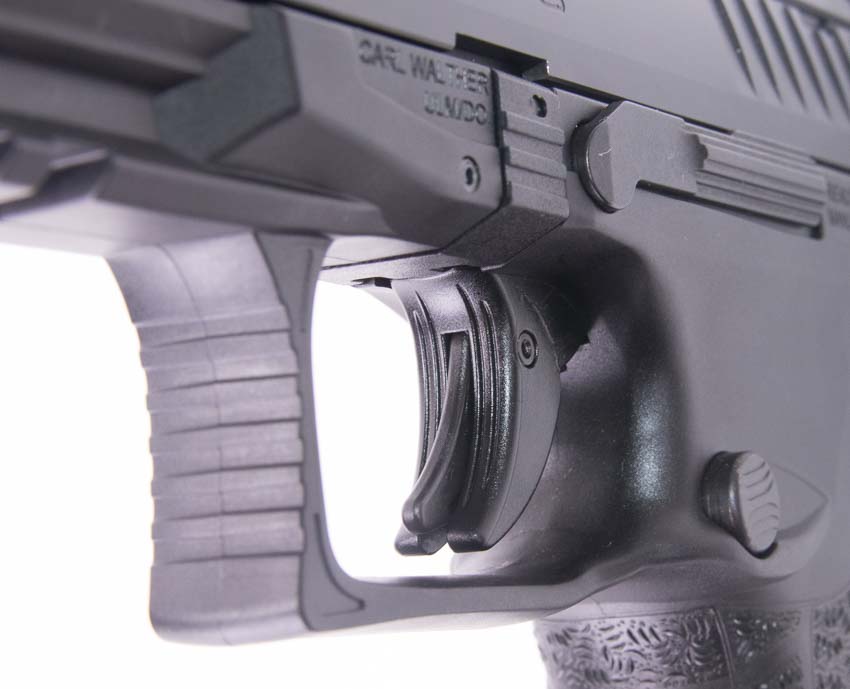
For all the talk about glass and threaded muzzles, never forget what this gun is underneath: it is a Walther, and that means it wears one of the best triggers money can buy. The factory pegs the pull at 5.6 pounds with a short stroke and a lightning reset, and the trigger on my sample lived up to every word. The take-up was smooth, the break was clean and crisp without being heavy enough to drag the gun off target, and the reset was so short you could feel the next shot waiting for you. I have no doubt that trigger flattered my shooting, and I will take all the help I can get.
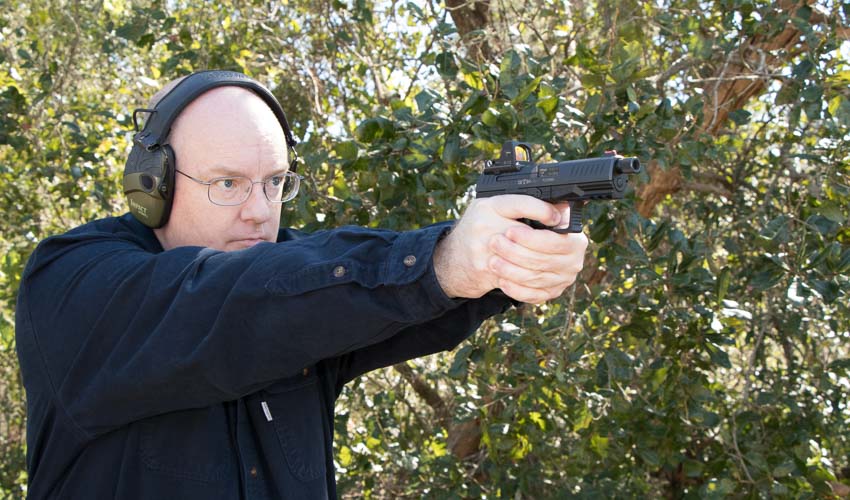
Running the RMR turned out to be the most natural thing in the world. Instead of chasing the front sight, I simply put my eyes on the target, let the red dot float up over the spot I wanted to punch, and pressed. Once I dialed the dot in, and it printed a touch low and left when I first mounted it, the rounds went exactly where I sent them. At 7 yards the dot and the irons were a dead heat for accuracy. But back the target up to 15 and 25 yards and the dot pulled ahead, letting me wring out noticeably tighter groups. The reason is simple: at distance my eye reads that floating dot as finer than the front blade covering the same target, and a finer aiming reference buys a more precise shot. Better yet, precision usually costs you speed, and yet I was landing tighter 25-yard groups with the dot faster than I could shoot looser ones with the irons at the same line. That is the whole promise of the pistol optic, delivered!
Reliability: 100 Percent, No Excuses
I have run every centerfire pistol Walther makes, and a healthy number of the ones I own personally have turned in 100 percent reliability over the long haul. The Q4 Tac kept the streak alive. Across that broad menu of five manufacturers, light bullets and heavy, flat-nose target stuff and the serious hollow-points, it never once stuttered.
Not a single failure to feed, fire or eject in the whole test. And I am not talking about plinking fodder alone. The gun digested top-shelf defensive loads like the Federal HST and the Speer Gold Dot without complaint, and it ate them whether the iron sights or the Trijicon were riding up top. When the chips are down at 2 a.m. in a dark hallway, that is the only specification that truly counts.
What the Chronograph and the Targets Said
Here is the cold evidence, pulled straight off the chronograph screen and the target frames. Velocity is the average of five shots clocked 15 feet ahead of the muzzle, listed in feet per second. Accuracy is a five-shot group fired offhand at 7 yards.
| Load | Velocity | Energy | Accuracy |
|---|---|---|---|
| Federal HST 124 gr +P | 1,248 fps | 429 ft-lbs | 1.25″ |
| Hornady Critical Defense 115 gr FTX | 1,203 fps | 370 ft-lbs | 1.00″ |
| SIG Sauer 147 gr V-Crown | 1,059 fps | 366 ft-lbs | 0.87″ |
Velocity is an average of five shots, measured by a chronograph 15 feet in front of the muzzle, in feet per second. Accuracy is listed in inches for a five-shot group at 7 yards, shot off-hand.
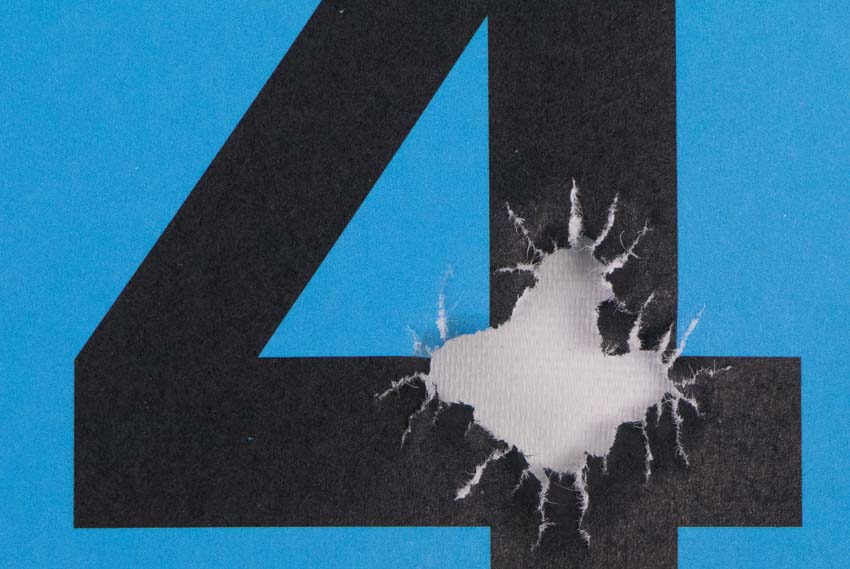
Read those groups again. Sub-1.5-inch clusters offhand at 7 yards, with the slowest, heaviest 147-grain load actually printing the tightest of the bunch at well under an inch. For a service pistol straight out of the box, that is the kind of accuracy that ends arguments.
Bottom Line for the Man Writing the Check
There is no shortage of excellent striker-fired pistols on the market today. I have shot damn near all of them and own more than I care to admit to my accountant. The Walther Q4 Tac does not just keep that company. By my testing it stands at the head of the class, better than most and arguably better than all. Picking the right gun is always a stew of variables, but the Q4 Tac checks a long row of the boxes I want checked in a home-defense pistol, and as a former officer I can see it riding in a duty holster without a single reservation.
Now square it against the standard. The orthodox move for an agency that wants a dot and a can has been to buy a base duty gun and then pay a gunsmith to mill the slide and thread the barrel after the fact, stacking labor and downtime on top of the purchase price. Walther skips that whole detour by handing you an optic-ready, suppressor-ready pistol straight out of the box for a suggested retail of $749. For a department trying to field enough guns to matter without raiding next year’s budget, that math is hard to argue with. The taxpayer gets more capability per dollar, and the officer gets a sidearm he can grow into.
My sample was utterly reliable and plainly accurate. It fit my hand like it was built for it, the trigger was a joy, and the ability to bolt on a dot and a suppressor without a trip to the gunsmith puts it on a very short list. Will it be the right gun for you? Maybe, and maybe not. That is a decision only your hands, your mission and your wallet can make. But the next time you are standing at the counter of your local gun shop, do yourself a favor and ask to handle one. At $749 for an optic- and suppressor-ready pistol of this quality, the Walther Q4 Tac is one of the real bargains on the wall today.