
The Charter Arms Bulldog .44 Special revolver has always occupied a unique, almost cult-like niche in the American handgun lexicon. It is chambered in a cartridge for someone who understands that velocity is a fickle mistress, but a large-diameter, heavy projectile is a constant you can bank on.
For years, I held a specific affinity for this caliber. It provides a relatively mild shooting experience while throwing a significant chunk of lead downrange. Furthermore, as a reloader, I’ve always appreciated how the cavernous .44 Special case allows for tailored performance, provided you stay within the pressure limits of the platform.
My fascination with the Charter Arms Bulldog started early. In my youth, the idea of a compact .44 tucked into a waistband for personal protection seemed like the ultimate solution for self-defense. At the time, I didn’t fully grasp the ballistic nuances between a “Special” and a “Magnum,” but years of professional experience and range time have confirmed my initial instinct.
This Charter Arms Bulldog review explores a big bore firearm that remains an efficient “manstopper”. While the Bulldog has seen various iterations since its introduction in the 1970s, the core design remains a staple for those who prioritize bore diameter over magazine capacity.
Quick Summary: The Charter Arms Bulldog at a Glance
Before we dive into the technical nuances, here is a high-level assessment of the Bulldog based on my extended testing and carry experience.
Key Strengths
- Caliber-to-Weight Ratio: At 21 ounces, it is remarkably light for a .44 caliber handgun.
- Mechanical Simplicity: The Charter design uses fewer moving parts than traditional side-plate revolvers.
- Ergonomics: The full-sized rubber grips provide excellent purchase and recoil control.
- Affordability: It remains one of the most accessible entry points into the world of big-bore revolvers. Suggested pricing ranges from $465 – $630 depending on the variant. All but one variation is priced at less than $520.
Key Limitations
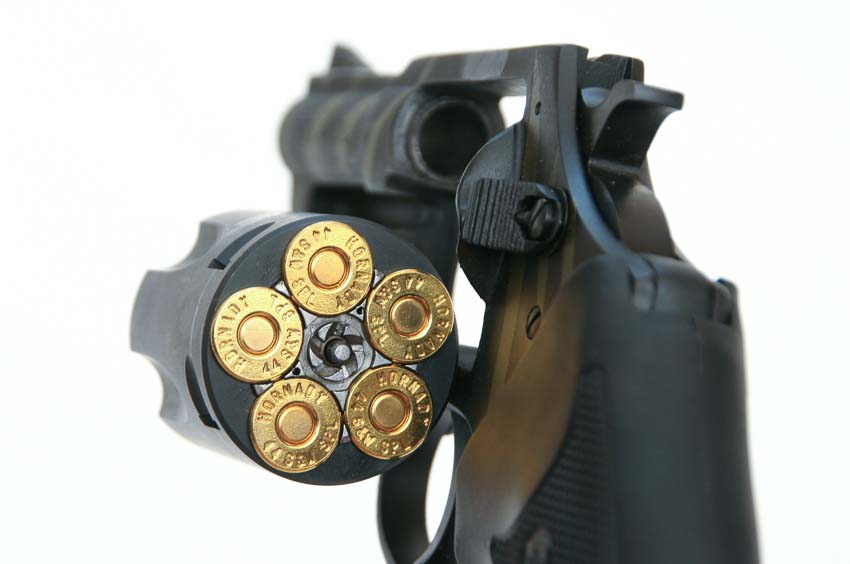
- Capacity: You are limited to five rounds in a world of high-capacity semi-automatics.
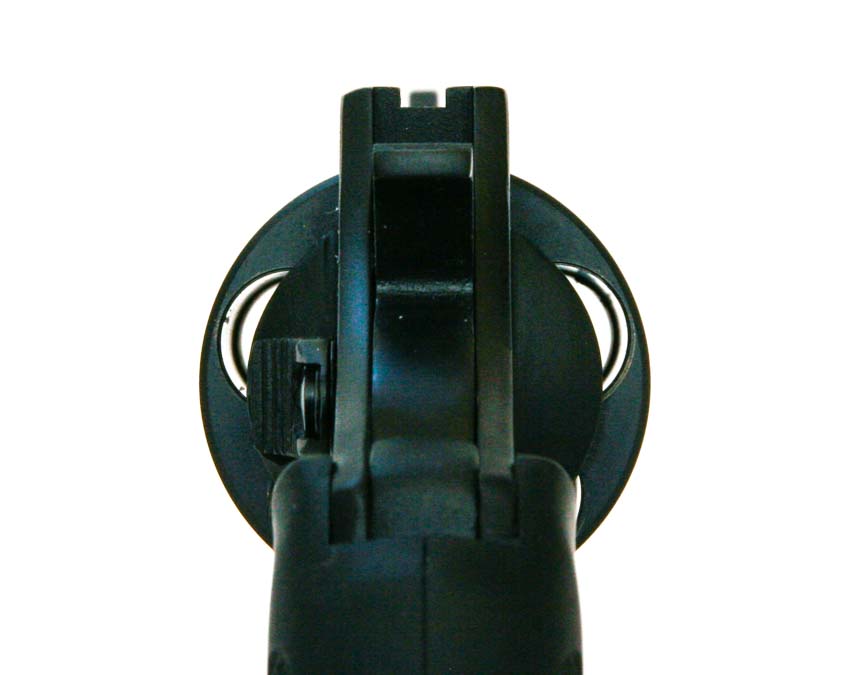
- Sight Visibility: The fixed black sights can be difficult to pick up in low-light environments.
- Recoil: While manageable for experienced shooters, the “snap” is significant with high-performance defensive loads.
Verdict
The Charter Arms Bulldog is a specialized tool. It isn’t a high-volume range toy, nor is it a primary duty weapon. However, as a dedicated “get off me” gun for the professional who values simplicity and a massive permanent wound channel, it remains an excellent choice.
What is the Charter Arms Bulldog?
The Charter Arms Bulldog is a traditional double-action/single-action (DA/SA) revolver designed specifically around the .44 S&W Special cartridge. Unlike many revolvers that are “downsized” versions of larger frames, the Bulldog was engineered from the ground up to be a compact big-bore.
The design history is worth noting. Charter Arms was founded in 1964 by Doug McClenahan, a former engineer for Ruger and Colt. His goal was to create a revolver that was lighter and more durable than the competition by simplifying the internal lock-work. The Bulldog, which debuted in 1973, became their flagship model. It filled a gap in the market that Smith & Wesson and Colt had largely ignored: a snub-nosed revolver that offered the “thump” of a .44 without the massive weight of a N-frame or a Single Action Army.
Over the decades, the Bulldog has seen “Generations” of production quality, but the modern version produced in Shelton, Connecticut, represents a return to form. It features a stainless steel frame, cylinder, and barrel, ensuring that the gun can withstand the corrosive environments common to concealed carry without sacrificing structural integrity.
Key Features and Technical Specifications
When you examine the Bulldog, you see a design focused on utilitarian efficiency. There are no unnecessary flourishes; every component serves a specific purpose in the self-defense equation.
| Feature | Specification |
| Caliber | .44 S&W Special |
| Capacity | 5 Rounds |
| Barrel Length | 2.5 inches |
| Overall Length | 6.7 inches |
| Weight (Unloaded) | 21 ounces |
| Frame Material | Stainless Steel |
| Grip Type | Full-size finger-groove rubber |
| Action | DA/SA |
| Sights | Fixed; Serrated ramp front, notch rear |
The “Charter Three-Point” Lockup
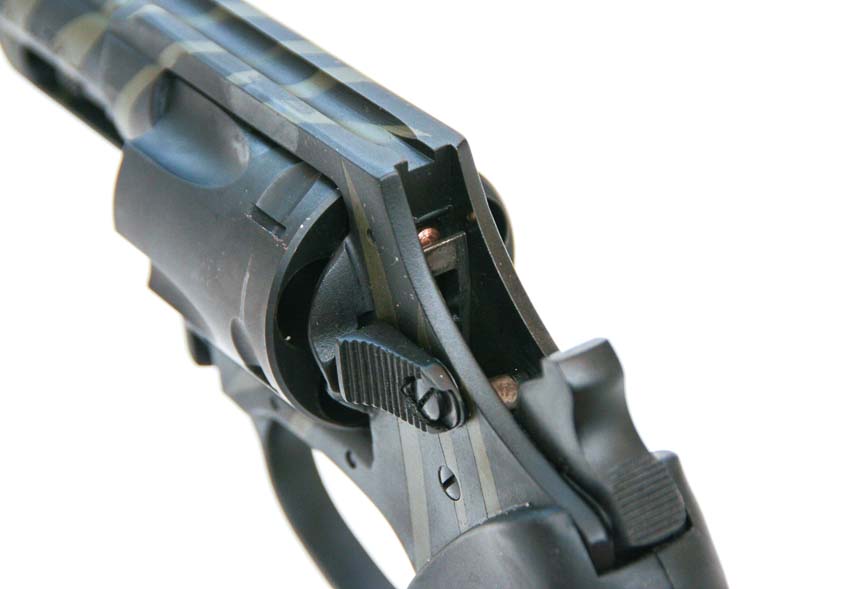
One of the most significant mechanical features of the Bulldog is its lockup system. Unlike S&W revolvers that lock at the rear of the cylinder and the tip of the extractor rod, the Charter Arms design locks the cylinder into the frame at the rear and at the crane itself. This creates a very rigid lockup that contributes to the gun’s surprisingly good accuracy and long-term durability.
Barrel and Shroud Design
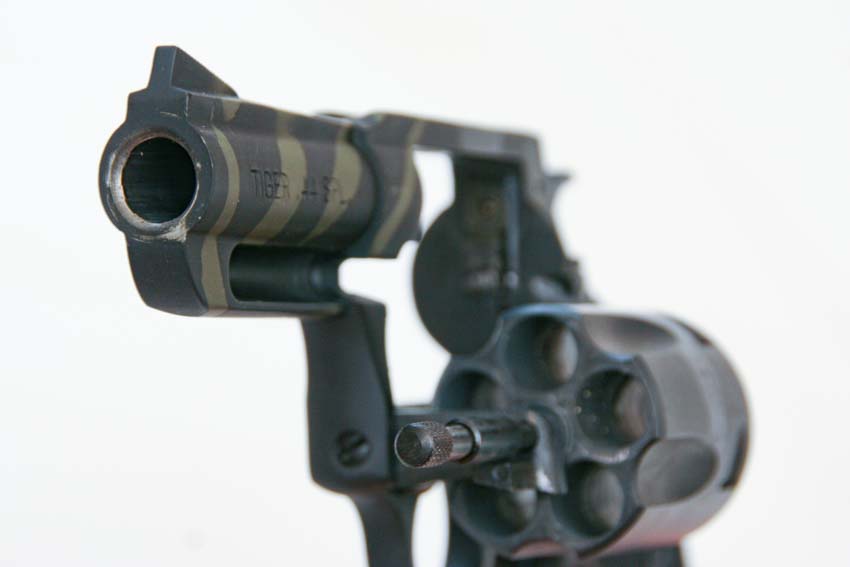
The 2.5-inch barrel features a full-length under-lug. This lug serves two critical functions: it protects the extractor rod from being bent during hard use, and it adds a bit of “ballast” to the front of the gun. This weight distribution is vital for a 21-ounce .44, as it helps mitigate muzzle flip and allows for faster follow-up shots.
How the Bulldog Functions: A Practitioner’s Perspective
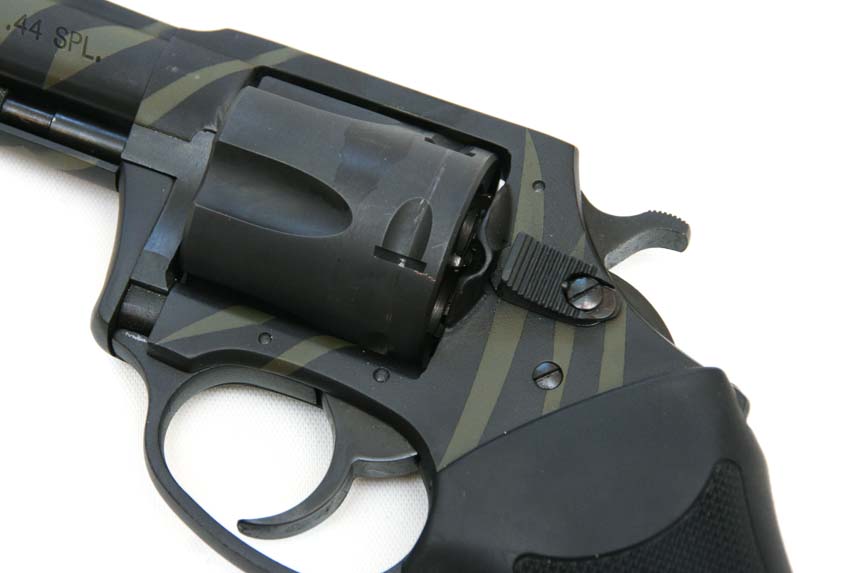
Operating a Bulldog is a study in classic revolver manual of arms, but with a few distinct “Charter-isms.” To load the cylinder, you pull back on the cylinder release which is the opposite of the S&W “push”.
Trigger Performance
The double-action trigger pull on my Bulldog is surprisingly smooth. It doesn’t have the “stacking” feel you often find in cheaper revolvers. It’s a straight, consistent pull back to the break. In single-action mode, the trigger is crisp, with almost zero take-up. On the range, I found that the single-action break was light enough to allow for precise “head-box” shots at 15 yards, though for defensive use, I strictly train with the double-action pull.
Sights and Target Acquisition
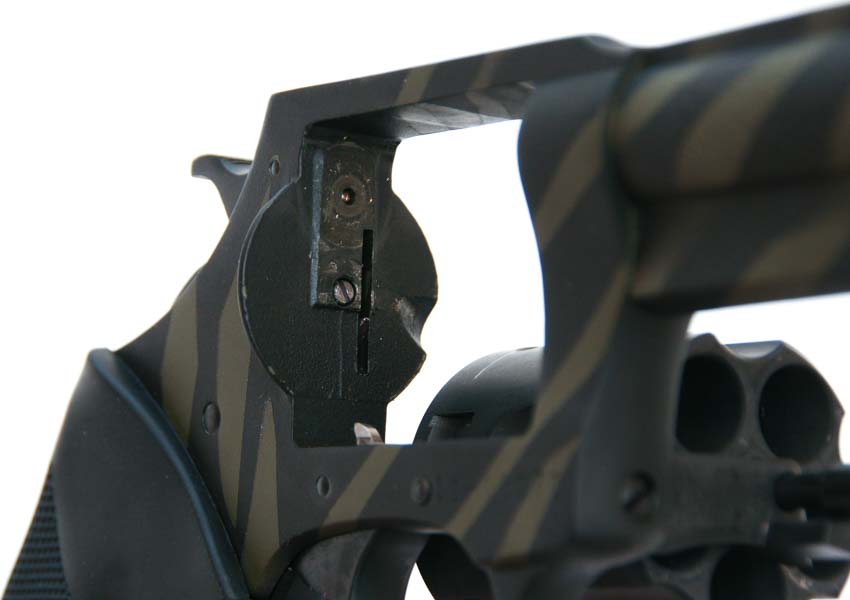
The sights are where the Bulldog shows its age. They are fixed, consisting of a serrated black front ramp and a notch milled into the top strap. While the serrations help reduce glare, the lack of contrast makes them very difficult to use in dim alleyways or other low-light indoor environments.
If this were my primary carry piece, I would likely apply a dab of high-visibility neon orange paint to the front ramp to assist with rapid acquisition. I’ve done this with other guns like my S&W 642. It isn’t perfect, but it helps.
How I Use the Bulldog: Range Report and Performance
I’ve had my current Bulldog for several months, and I’ve put it through a rigorous testing cycle. My goal wasn’t to see if it was a target pistol, but to see if it was a reliable life-saving tool.
Reliability and Extraction
Reliability was 100% across nearly 500 rounds. This included factory FMJ “cowboy loads,” high-performance hollow points, and several batches of my own handloads.
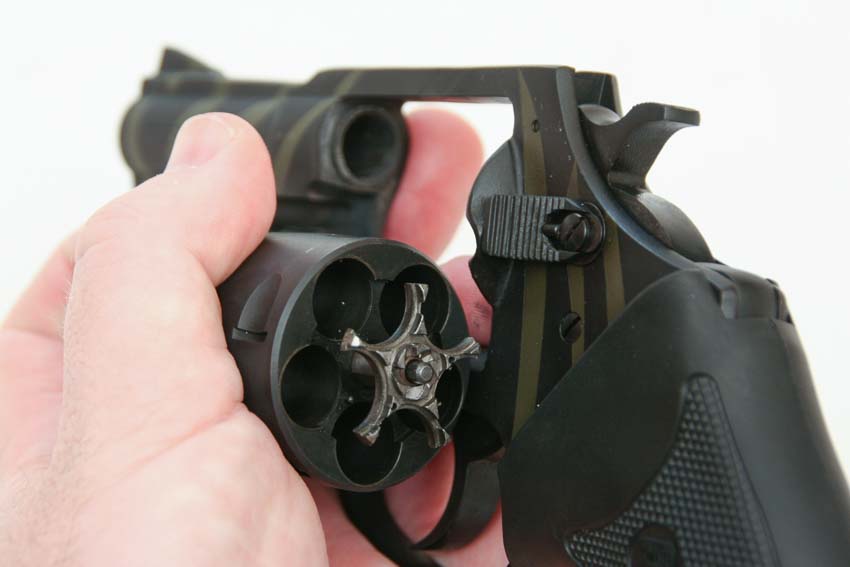
One thing I specifically looked for was “sticky extraction”—a common issue in lightweight revolvers where the brass expands and becomes difficult to eject. The Bulldog handled this well; every time I struck the extractor rod, the spent casings dropped cleanly.
There were no light strikes or other issues.
Accuracy Testing
I didn’t bother bench-resting the Bulldog. That’s not what this gun is for. Instead, I shot it from a standing, two-handed grip at 7 and 15 yards.
- At 7 yards: I was able to put five rounds into a single, ragged 2-inch hole.
- At 15 yards: Keeping all rounds within the 9-ring of a standard B-27 silhouette was effortless.
Conclusion: The mechanical accuracy of the 2.5-inch barrel far exceeds the practical accuracy most shooters will achieve under stress. This is true for most guns, but its always important to confirm that -you- shoot the gun well. The Bulldog works for me.
Recoil Management
Physics is a harsh, unyielding master. When you fire a 200-grain bullet out of a 21-ounce gun, you’re going to feel it. However, the Bulldog handles this better than a J-frame .357 Magnum. The recoil is more of a “push” than a “sting.”
I think that the full-size rubber grips are the unsung hero here. They fill the palm and prevent the gun from shifting in the hand during recoil.
Practical Use Cases for the Modern Defender
In an era of 13+ round micro-compact 9mms, why carry a 5-shot .44? The answer lies in the specific tactical context.
The Close-Quarter Defensive Tool
The .44 Special is a “low-pressure” cartridge that throws a large chunk of lead. It’s a big, slow-moving bullet that does its work through mass and diameter rather than raw velocity. Many believe that it is more effective than lighter bullets that
In a self-defense situation inside a vehicle or a small room, the muzzle blast and flash from a .44 Special with a short barrel will likely be significant. In fairness, most short-barreled handguns will do the same. However, the .44 Special does seem to produce a bit more than others.
Deep Concealment
While it’s a bit too chunky for most people to ankle carry, the Bulldog excels in a high-quality IWB (inside-the-waistband) holster or a classic shoulder rig. Its rounded profile lacks the sharp corners of a semi-auto slide, making it very comfortable for all-day wear.
I’ve found it to be an excellent “woods gun” as well, providing enough power to handle aggressive four-legged pests without the weight of a dedicated hunting revolver. I wouldn’t consider this a bear gun, but for most other dangers, it should serve well.
Home Defense
For those who prefer the simplicity of a “point and shoot” interface, the Bulldog is a viable nightstand gun. It is easy to verify its status (just look at the cylinder), and there are no safeties or slide-racking maneuvers to fumbling with in the dark.
Pros and Cons of the Charter Arms Bulldog
Pros
- Stopping Power: The .44 caliber starts where most defensive rounds hope to expand to.
- Durability: The stainless steel construction is rugged and corrosion-resistant.
- Trigger: Good SA/DA trigger for a gun in this price bracket.
- Simplicity: No magazines to fail, no slide to cycle, and no complex safeties.
Cons
- Capacity: 5 rounds is a significant disadvantage if facing multiple attackers.
- Slow Reloads: Even with speedloaders, a revolver is inherently slower to get back into the fight than a semi-auto.
- Sight Contrast: The all-black sights are poor for low-light engagements.
- Ammo Cost: .44 Special is significantly more expensive than 9mm or .45 ACP.
- Accessories: No attachment rail for a white light.
Comparison to Alternatives
If you’re in the market for a big-bore snubbie, there aren’t many direct competitors that match the Bulldog’s footprint and price point.
- S&W Model 396 Night Guard (3″ Barrel): This is a 5-shot .44 Special L-frame. It uses a pinned front night sight with a target rear sight. It is a beautiful, tank-like gun, but still weighs only 23.4 ounces. It uses a scandium frame to keep the weight down. However, it is much more expensive: $1,269. I believe it is a superior gun across the board, but at a substantial cost. If you have the money, this is a much better choice.
- Ruger GP100 in .44 Special: This is a completely different revolver than the Bulldog. It is a full-size gun with a 5″ barrel and a corresponding higher weight. It’s incredibly durable, but it simply doesn’t compare to the Bulldog in terms of concealed carry. If you are toting the revolver for self-defense, the Charter Arms Bulldog is the superior choice.
- .44 Magnum Revolvers: There are a variety of revolvers available from Smith & Wesson, Ruger and Taurus that are chambered in .44 Magnum. Any of these may be an interesting alternative to the Bulldog. Since they are chambered for the Magnum cartridge, they tend to be bigger and heavier, knocking them out of consideration for many people looking for a CCW firearm.
Who is the Charter Arms Bulldog Best For?
The Bulldog is not for the novice shooter. The recoil requires a firm grip and a foundational understanding of trigger control. It is also not for the “capacity at all costs” crowd.
This gun is best for:
- The Experienced CCW Holder: Someone who wants a reliable handgun shooting a high-disruption round.
- The Revolver Enthusiast: Someone who appreciates the mechanical simplicity and the historical pedigree of the .44 Special.
- The “Flying Ashtray” Believer: If you believe that a large, heavy bullet is the most reliable way to stop a threat, this is your gun.
- Budget-Conscious Professionals: At a street price around $450-500, it provides a lot of defensive power for the dollar.
Final Verdict on the Charter Arms Bulldog
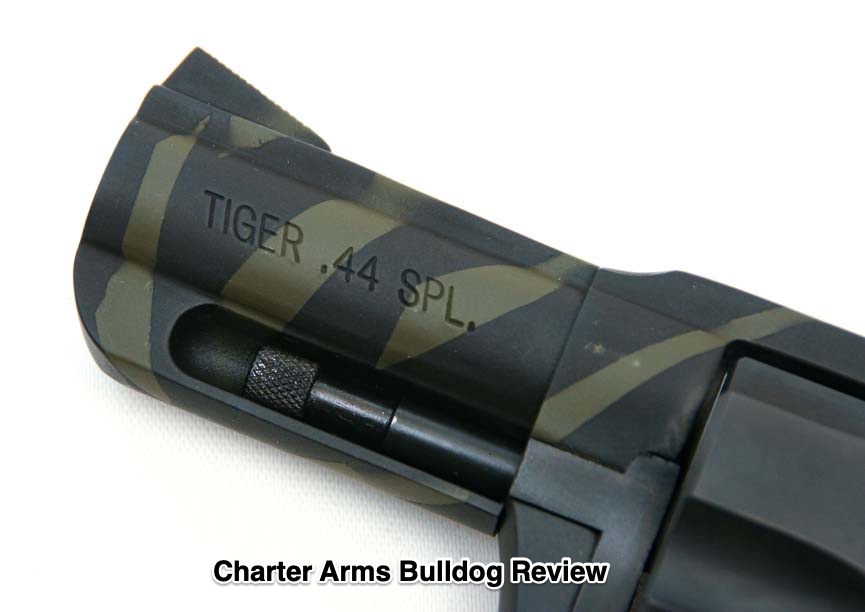
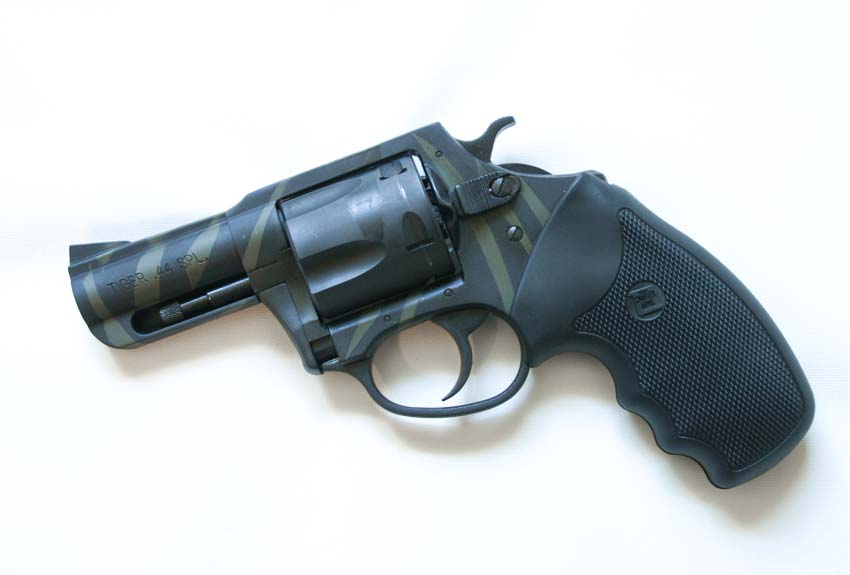
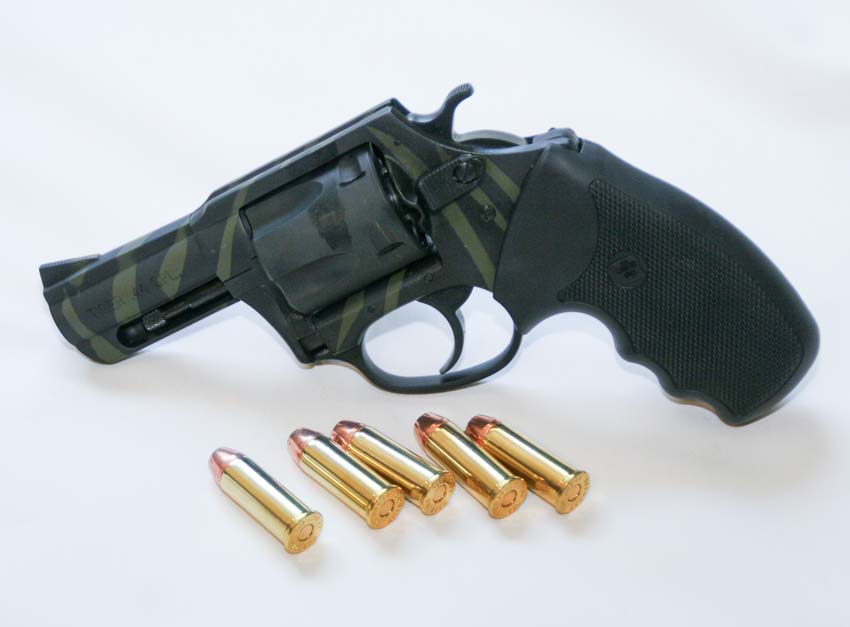
After spending months with this particular Bulldog—the one with the green and black “Tiger Stripe” finish—my opinion has only solidified. This is a “workman’s gun.” It isn’t a showpiece with a high-polish blue finish or intricate engravings. It’s a tool designed to be carried often and used in the worst moments of your life.
The finish on this specific model is a modern take on the classic Vietnam-era camouflage. While I’m usually a “stainless or blued” traditionalist, the pattern looks surprisingly sharp and has held up well to holster wear. More importantly, the gun functions flawlessly.
In a market saturated with polymer-framed 9mms, the Charter Arms Bulldog remains relevant because it offers something those guns don’t: the uncompromising authority of a .44 caliber hole. It is fun to shoot, reasonably priced, and provides a level of ballistics-based confidence that is hard to quantify until you feel it in your hand. If you understand the limitations of a five-shot revolver and value the “thump” of the .44 Special, the Bulldog belongs in your collection.