
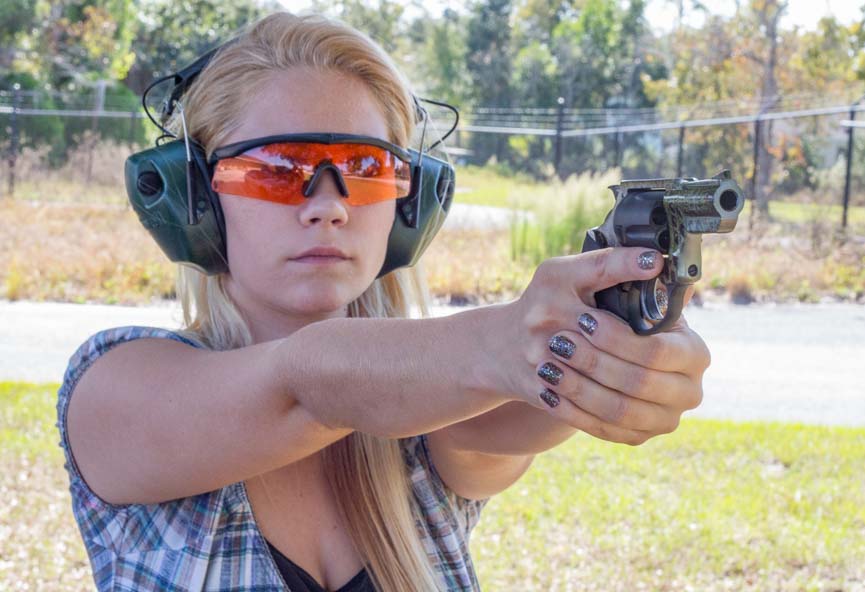
This Charter Arms Undercover review starts with a simple question: does this compact .38 Special revolver offer enough real-world perfrmance to justify carrying it for personal defense?
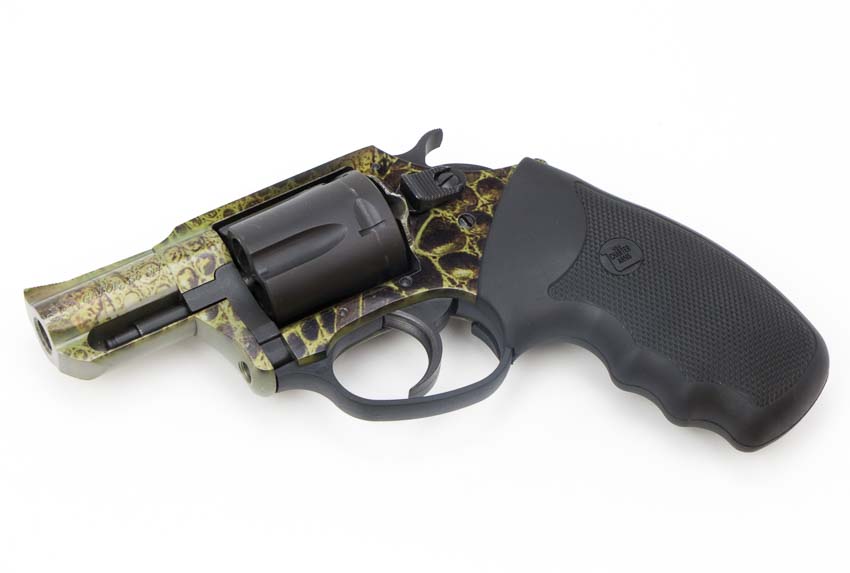
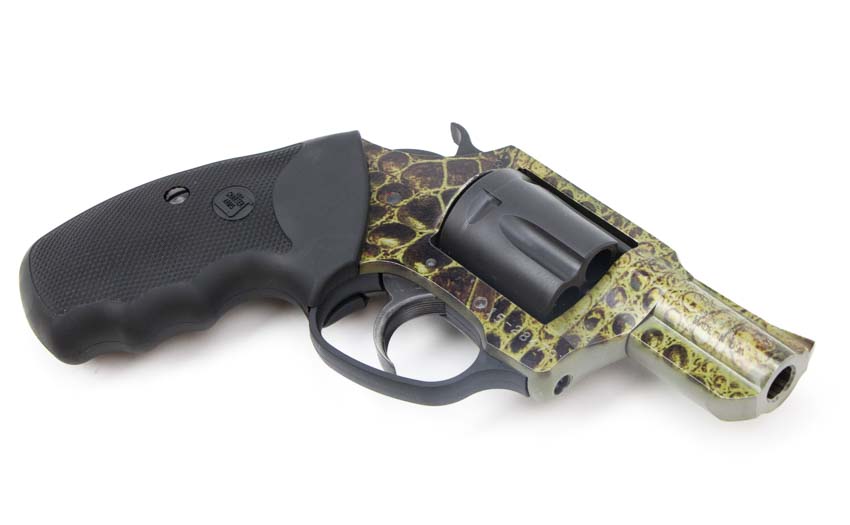
The specific model I tested was the Charter Arms Undercover Gator, a five-shot snub-nose revolver with a 2-inch barrel, exposed hammer, rubber grips and a distinctive alligator-style color-transfer finish. The appearance is what gets attention first, but looks don’t matter much if the gun can’t perform.
- Quick Summary
- What the Charter Arms Undercover Is
- Charter Arms Undercover Specifications
- Key Features and Components
- Getting the Charter Arms Undercover on the Range
- Range Testing and Accuracy
- Recoil and Controllability
- Reloading and Ejection
- Practical Use Cases
- Pros and Cons
- Comparison to Alternatives
- Final Verdict
I put roughly 750 rounds through the Gator over two range sessions. I tested multiple defensive loads, checked accuracy at 7 and 15 yards, chronographed ammunition from the short barrel and paid close attention to the trigger, sights, reloads, grip design and overall handling.
My conclusion is mixed but fair. The revolver worked. It fired every round, showed practical defensive accuracy and became smoother with use. At the same time, the trigger and some of the small mechanical details were rougher than I prefer in a defensive handgun.
Quick Summary
The Charter Arms Undercover Gator is a compact, five-shot .38 Special +P revolver built for concealed carry and personal protection. It is part of the long-running Charter Arms Undercover family, but it adds a decorative color-transfer finish that gives the gun a very different look from a plain black or stainless snub-nose revolver.
Key strengths:
- Reliable during my testing
- Rated for .38 Special +P ammunition
- Light enough for daily carry
- Good grip control for a small revolver
- Excellent single-action trigger
- Cylinder latch did not abrade my shooting thumb
- Lifetime warranty
- Made in the United States
Limitations:
- Heavy, gritty double-action trigger
- Cylinder did not swing out smoothly
- Ejector rod was initially rough
- Grip can interfere with ejecting fired cases
- Too large for practical pocket carry in my hands
- Decorative finish will not appeal to everyone
Short verdict:
The Charter Arms Undercover is a functional, reliable and reasonably priced defensive revolver with some rough edges. I would not call it refined, but I would not dismiss it either. For someone who wants a lightweight .38 Special snub-nose revolver with a distinctive appearance, it is worth considering after careful hands-on inspection.
What the Charter Arms Undercover Is
The Gator is a version of the Charter Arms Undercover, a compact defensive revolver chambered in .38 Special. The Undercover line traces back to the original Charter Arms revolver that helped launch the company in the 1960s. The general concept has not changed much: a lightweight, five-shot wheelgun intended for concealed carry, backup use or close-range personal defense.
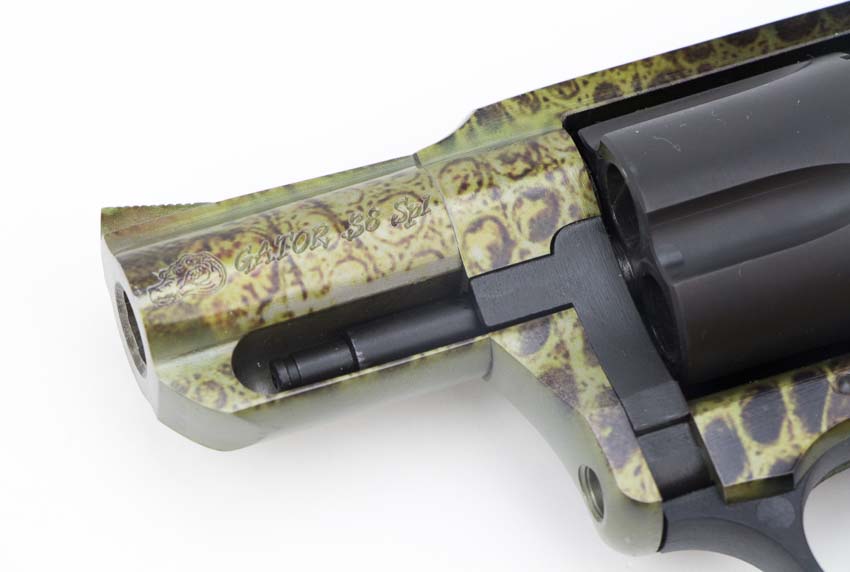
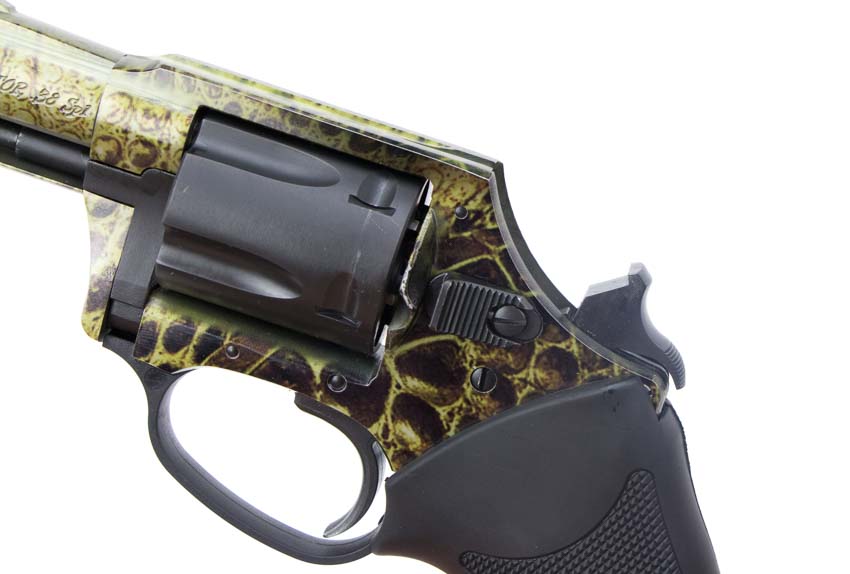
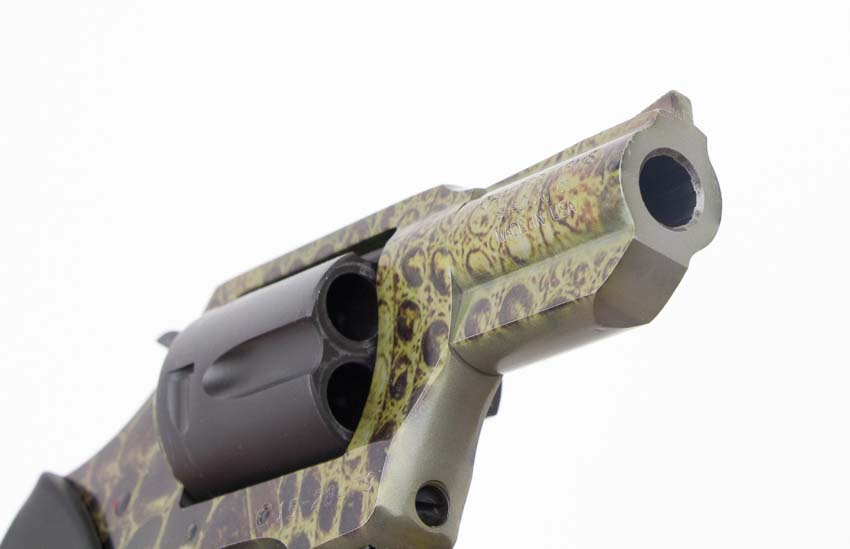
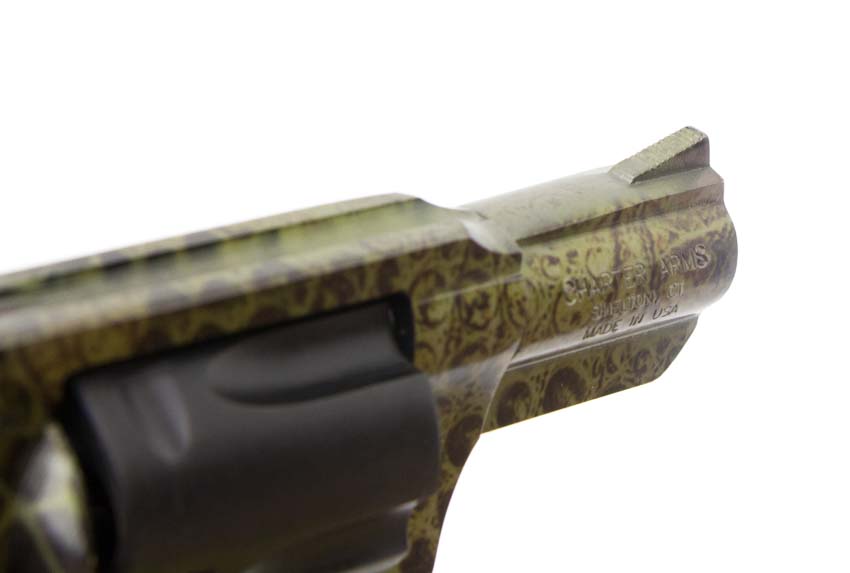
This particular model is called the Gator because of its finish. Charter Arms uses a color-transfer process to apply an alligator-skin-style pattern to the barrel and frame. The cylinder, crane, trigger and hammer are finished in matte black, giving the revolver a two-tone appearance.
The finish is not subtle. Some shooters will like it. Others will reject it immediately. I don’t think either reaction is wrong. Defensive handguns are personal tools, and people have different tastes. Charter Arms has long offered revolvers with nontraditional finishes, including bright colors, patterned finishes and flag-inspired designs. The Gator fits that same philosophy. It’s not my cup of tea, but I get it.
Underneath the appearance, this is still a compact .38 Special revolver. It has a 2-inch barrel, fixed sights, rubber grips, exposed hammer and five-round capacity. It is also rated for +P ammunition, which matters if you intend to carry modern defensive loads.
Charter Arms Undercover Specifications
Here are the basic specifications for the revolver I tested:
| Feature | Specification |
|---|---|
| Caliber | .38 Special +P |
| Capacity | 5 rounds |
| Barrel length | 2 inches |
| Overall length | 6.25 inches |
| Weight | 17 ounces |
| Action | Double-action/single-action |
| Hammer | Exposed |
| Sights | Fixed front ramp, rear frame notch |
| Grips | Rubber |
| Finish (this model) | Gator color-transfer pattern with matte black parts |
| MSRP (all models) | $400-476 |
At 17 ounces, the Gator sits in a useful middle ground. It is light enough to carry comfortably, but it has enough weight to be more shootable than some of the extremely light alloy or polymer-frame revolvers on the market. That matters with .38 Special +P ammunition, especially for shooters who actually train with their carry guns instead of firing one cylinder every few years and calling it good.
Key Features and Components
Five-Shot .38 Special +P Chambering
The Gator holds five rounds of .38 Special. That is standard for many small-frame defensive revolvers. The +P rating is important because many of the better defensive loads in this caliber are loaded to +P pressure.
The .38 Special is not a magic cartridge, but it remains a practical defensive round when loaded properly and placed accurately. In a short-barreled revolver, ammunition selection matters. Some loads designed around longer barrels may lose velocity and expansion potential when fired from a 2-inch snub-nose. That is why actual testing from the gun matters more than box-flap claims.
Exposed Hammer
The Gator has an exposed hammer, allowing the shooter to fire either double-action or single-action.
For defensive carry, I strongly favor double-action shooting. Cocking a small revolver under stress introduces unnecessary complications and can create legal, safety and handling concerns. Nevertheless, the single-action trigger on this revolver was excellent. My sample broke cleanly at 4 pounds, 14 ounces, with no excess movement.
For slow fire, accuracy testing or field use, the single-action option is useful. For close-range defensive work, I would train exclusively in double-action.
Fixed Sights
The sight system is typical of many snub-nose revolvers. The front sight is an integral ramp machined as part of the barrel. The rear sight is a channel cut into the topstrap of the frame.
This arrangement is durable and snag-resistant, but it is not ideal for fast shooting in poor light. With a light-colored target and decent lighting, I had no trouble picking up the front sight. In lower light, the black front ramp can disappear. A simple application of white, orange or fluorescent paint to the front sight would help.
These sights are not target sights. They are serviceable defensive sights.
Rubber Grips
The Gator uses large rubber stocks with finger grooves. I have medium-sized hands, and the grips fit me well. They provided good control during live fire and helped manage recoil.
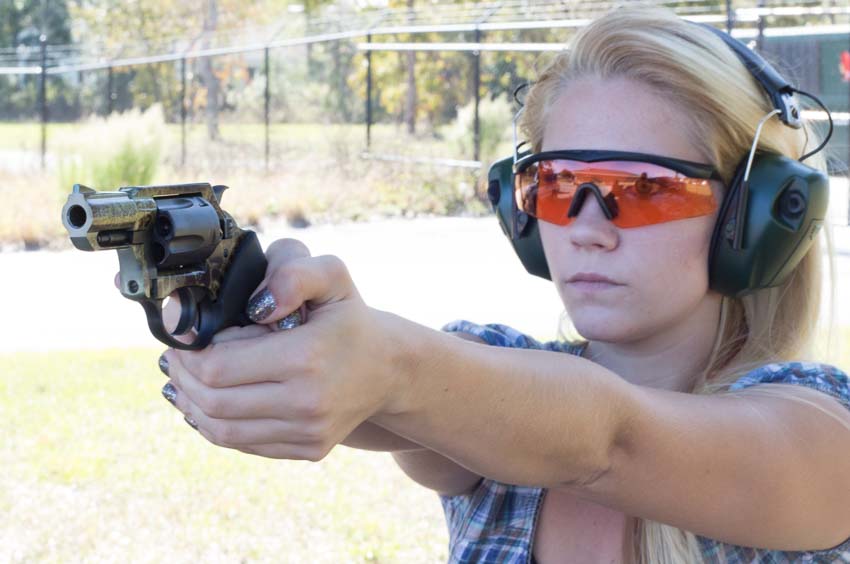
The tradeoff is concealment. The grips are large enough that I would not consider this a practical pocket revolver for me. In a belt holster, inside-the-waistband holster or possibly an ankle rig, the size is manageable. In a front pants pocket, the grip is too large and too likely to print.
I also do not care for finger grooves on most defensive handgun grips. They either fit your hand or they don’t. If they fit, they can feel good. If they don’t, they force your hand into a position that may not be natural. On this revolver, they worked fine for me, but I would still prefer a smoother grip profile.
Cylinder Release Placement
One thing I genuinely like about Charter Arms revolvers is the placement of the cylinder release latch. On some compact revolvers from other manufacturers, the latch can scrape or cut the joint of my shooting thumb during recoil. With enough rounds, that can become more than a minor irritation.
The Gator did not do that. I fired many rounds through the gun and never had the latch tear into my thumb. That may sound like a small point, but it matters if you train with your carry revolver. A defensive handgun should not punish you for practicing with it.
Getting the Charter Arms Undercover on the Range
In actual use, the revolver’s strengths and weaknesses became clear quickly.
The best part of the gun was reliability. Across roughly 750 rounds, every cartridge fired. There were no failures to fire, no cylinder lockup issues and no ammunition-related stoppages.
The less impressive part was the feel of the action. The double-action trigger on my sample was heavy and somewhat gritty out of the box. My Lyman trigger pull gauge maxes out at 12 pounds, and the Gator exceeded that. After about 250 rounds, the trigger smoothed out somewhat, but it never became what I would call good.
That does not mean the gun was unusable. Many defensive revolvers have heavy triggers. A trained shooter can work through them. But there is a difference between a heavy smooth trigger and a heavy gritty trigger. The former is manageable. The latter makes precise shooting harder than it needs to be.
The cylinder release also felt gritty at first, though it improved with use. The cylinder did not swing freely out of the frame. Pressing the latch and tipping the gun sideways was not enough to open it. I had to push the cylinder out manually. That is not unusual with some small revolvers, but this one felt less smooth than I expected.
The ejector rod was also rough when the gun arrived. Cleaning with CLP did not immediately improve it. After additional shooting and cleaning, it suddenly began operating smoothly. My best guess is that some debris or small burr worked itself out of the mechanism, but I cannot prove that.
Range Testing and Accuracy
I fired roughly 350 rounds through the Charter Arms Undercover Gator over two range sessions. My testing included defensive loads and standard-pressure ammunition. I shot for accuracy at 7 yards, off-hand, using five-shot groups.
Here are the recorded ammunition results:
| Load | Velocity | Energy |
|---|---|---|
| CCI Blazer 148-grain HBWC | 622 fps | 127 ft-lbs |
| CorBon DPX 110-grain JHP +P | 994 fps | 241 ft-lbs |
| Federal Hydra-Shok 129-grain +P JHP | 827 fps | 196 ft-lbs |
| Fiocchi 110-grain FMJ | 866 fps | 183 ft-lbs |
| Hornady Critical Defense Lite 90-grain FTX | 921 fps | 169 ft-lbs |
| Hornady Critical Defense 110-grain FTX | 880 fps | 189 ft-lbs |
| Magtech 158-grain LRN | 587 fps | 121 ft-lbs |
| Winchester Kinetic HE 110-grain JHP | 821 fps | 165 ft-lbs |
| Winchester Train & Defend 130-grain JHP | 774 fps | 173 ft-lbs |
| Winchester White Box 130-grain FMJ | 748 fps | 161 ft-lbs |
Velocity was measured with a chronograph positioned 15 feet from the muzzle. Each velocity figure is the average of five shots.
The best-performing load in this revolver was Winchester Kinetic HE, a standard-pressure 110-grain hollow point. It grouped just over 2 inches. The other loads were closer to 3 inches.
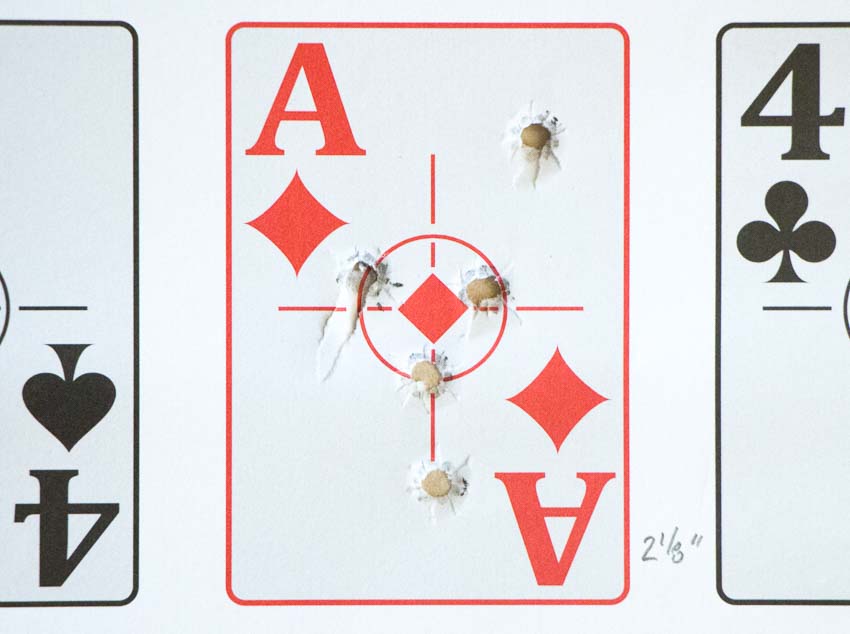
For a snub-nose revolver with fixed sights and a heavy double-action trigger, that is acceptable practical accuracy. It is not exceptional. By comparison, I shot most of the same loads into sub-2-inch groups using a double-action-only Smith & Wesson Model 64 police trade-in with a similar barrel length and fixed sights. That comparison is not perfectly equal because the guns differ in size, weight and action quality, but it does show that the Gator’s trigger likely limited its practical accuracy.
At defensive distances, the revolver was capable of making solid hits. The issue is that the shooter has to work harder than necessary to get them.
Recoil and Controllability
The Undercover was comfortable enough to shoot with standard-pressure loads. With +P ammunition, recoil was sharper but still manageable. The rubber grips helped significantly.
This is one area where I think Charter Arms made a reasonable decision. Smaller grips would conceal better, but they would make the revolver less pleasant to shoot. Since a defensive handgun needs to be practiced with, I generally prefer a grip that allows control over one that merely looks better in a pocket.
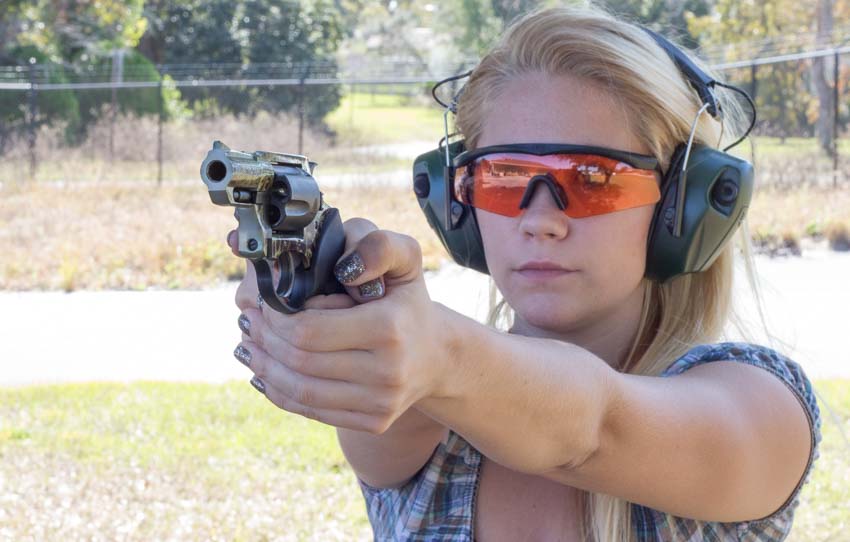
The 16-ounce weight also helps. Lightweight revolvers are easy to carry and often unpleasant to shoot. The Gator is light, but not punishing. I would not want to shoot +P ammunition through it all afternoon, but a few cylinders of carry ammunition during routine practice would not bother me.
Reloading and Ejection
Reloading is one of the weak points of small defensive revolvers. Even with practice, a five-shot revolver is slower to reload than most semi-automatic pistols. That does not make the revolver useless, but it does mean that ejection and reload handling should be as clean as possible.
On the Undercover, I found that the upper edge of the rubber grip sometimes caught one of the fired .38 Special cases during ejection. On a square range, this is an annoyance. In a defensive encounter, it could be a real problem.
If I owned this revolver, I would modify the grip by cutting a small half-moon recess in the upper edge to provide additional clearance for empty cases. Based on my inspection, that modification would not meaningfully reduce grip control. It would simply give the brass more room to clear the cylinder.
The ejector rod is protected by a full-length shroud, which is a useful feature on a carry revolver. An exposed ejector rod can be bent or damaged, especially on a gun carried daily. The shroud adds durability and gives the revolver a more finished profile.
Practical Use Cases
Concealed Carry
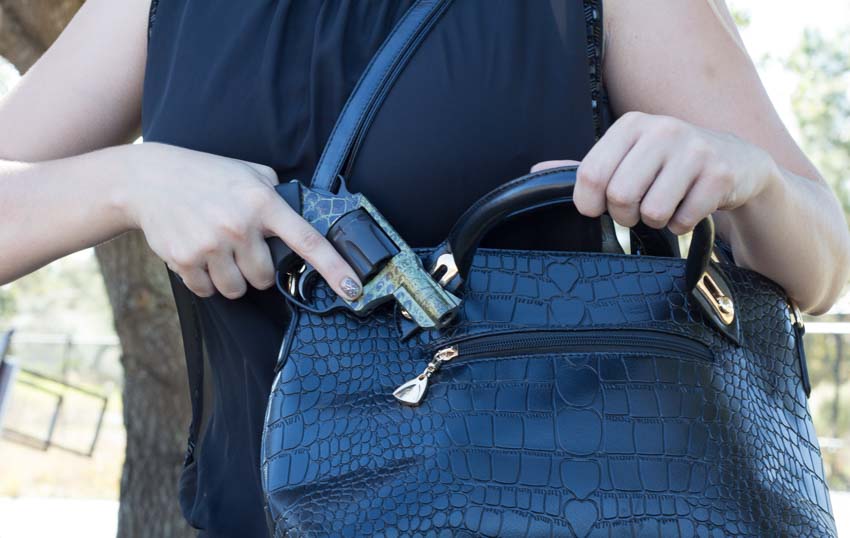
The Charter Arms Undercover can work as a concealed carry revolver, especially in a belt holster. Its 2-inch barrel and compact frame make it easy enough to conceal under normal cover garments.

For me, the grip prevents it from being a good pocket carry gun. The rubber stocks are too large and too tacky for smooth pocket access. A different grip might change that, but with the factory grips, I would treat it as a belt-carry revolver.
Backup Gun
The Undercover could serve as a backup gun for someone who prefers revolvers. Its light weight and simple operation make it suitable for that role, assuming the shooter verifies reliability with carry ammunition and is comfortable with the trigger.
Home Defense
It can also serve as a simple home-defense handgun for someone who wants a revolver rather than a semi-automatic pistol. However, I would not make it my first choice for that role. A larger revolver or modern semi-automatic pistol offers more capacity, better sights, easier reloads and often better shootability.
Pros and Cons
Pros
- Reliable with all ammunition tested
- Compact and easy to conceal in a proper holster
- Rated for .38 Special +P
- Manageable recoil with factory rubber grips
- Very good single-action trigger
- Durable fixed sight system
- Full-length ejector rod shroud
- Cylinder latch placement worked well for my hand
- Lifetime warranty
- U.S.-made parts and manufacturing
Cons
- Double-action trigger was heavy and gritty
- Cylinder release and cylinder movement were rough at first
- Grip can interfere with fired case ejection
- Fixed black sights are not ideal in low light
- Finish is highly subjective
- Practical accuracy lagged behind a comparable Smith & Wesson revolver I tested
Comparison to Alternatives
The obvious alternatives to the Charter Arms Undercover are small-frame revolvers from Smith & Wesson, Ruger and Taurus.
Compared to a Smith & Wesson J-frame, the Charter Arms Gator is generally positioned as a more affordable option. I find that Smith & Wesson revolvers often have better fit, finish and trigger quality, but they also tend to cost more. My own comparison with a Smith & Wesson Model 64 showed better practical accuracy with the Smith, though that gun is not a direct J-frame equivalent.
Compared to a Ruger LCR, the Charter Arms revolver feels more traditional. The LCR has a very different trigger system and a more modern design. In my experience, Ruger’s LCR revolver triggers are smoother than what I felt on this Undercover. The Ruger also tends to have a utilitarian appearance, while the Gator is clearly aimed at someone who wants visual personality in a carry gun.
Compared to budget Taurus revolvers, the Charter Arms competes in the same general value space. The decision may come down to the specific sample in hand, the trigger, warranty confidence, grip fit and whether the shooter prefers the Charter Arms cylinder release system.
Final Verdict
The Charter Arms Undercover is a reliable, lightweight and practical defensive revolver with a distinctive look and some noticeable rough edges. It is not a polished premium wheelgun, and my sample had a heavier, grittier double-action trigger than I like. The cylinder and ejector rod also needed use before they smoothed out.
Even so, the revolver did the most important thing correctly: it fired every round and put shots where they needed to go at realistic defensive distances. The grip made the gun controllable, the cylinder latch did not punish my shooting hand, and the revolver handled a mix of defensive ammunition without functional problems.
For the right buyer, the Charter Arms Undercover is a credible concealed carry revolver. It is best viewed as a working defensive gun with personality, not a refined collector-grade revolver. If the appearance appeals to you, the trigger feels acceptable in your hand and you are willing to train with a five-shot .38 Special, the Gator deserves a serious look.