
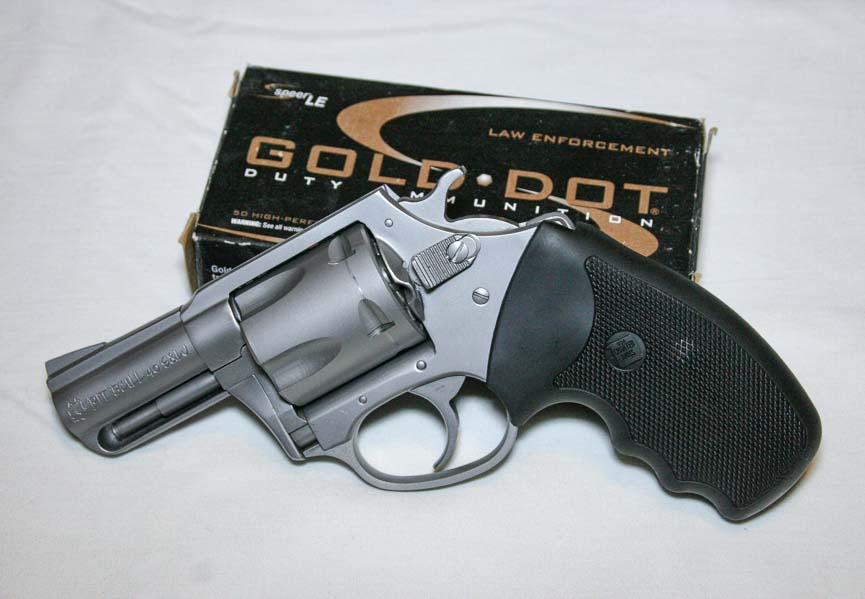
This Charter Arms Pitbull review starts with an unusual premise: a defensive revolver chambered in .40 S&W that does not require moon clips. That alone makes it interesting. Most revolvers are built around rimmed cartridges like .38 Special, .357 Magnum, or .44 Special. The Pitbull goes another direction by using a rimless semi-auto cartridge and a proprietary extraction system designed to hold each round in place without extra hardware.
I like the concept. I also understand why it appeals to people who carry daily and already have .40 S&W ammunition on hand. A compact revolver that feeds common defensive pistol ammunition sounds practical, especially for someone who values mechanical simplicity, load flexibility, and a manual of arms that does not depend on magazine function.
But a defensive handgun has to do more than sound good on paper. It has to load cleanly, fire reliably, extract predictably, carry comfortably, and allow fast, repeatable manipulation under pressure. My experience with the Charter Arms Pitbull was mixed, and that matters.
What the Charter Arms Pitbull Is
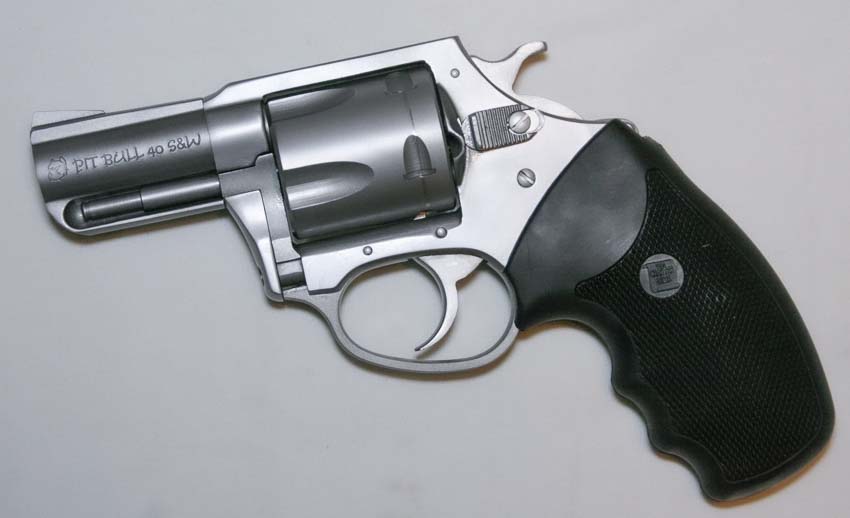
The Charter Arms Pitbull is a compact, five-shot, double-action revolver chambered for 9mm, .40 S&W and .45 ACP cartridges. Unlike a traditional .38 Special or .357 Magnum wheel gun, it is built around a rimless cartridge more commonly associated with semi-automatic pistols.
That makes it something of an outlier.
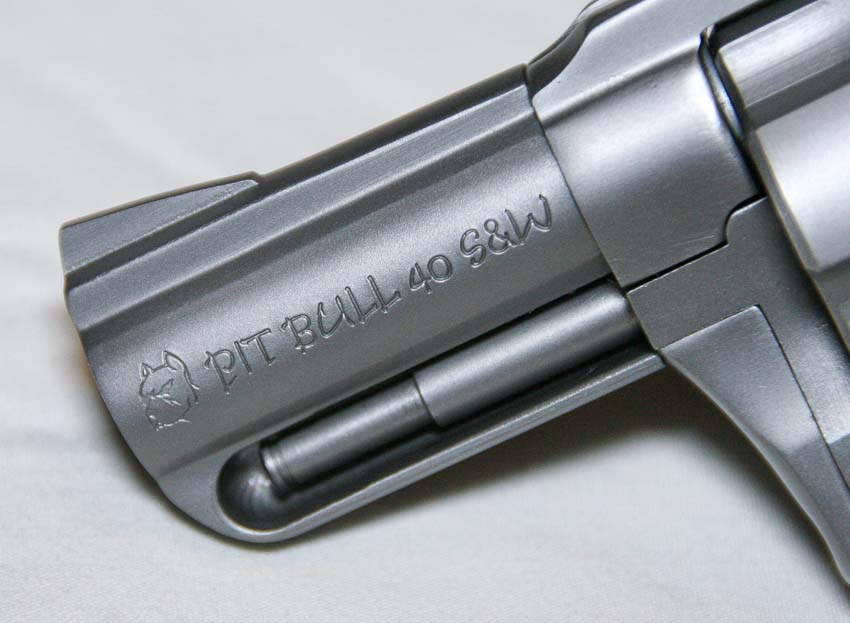
Most revolver cartridges have a pronounced rim at the base of the case. That rim gives the cartridge a surface to headspace against, and it also gives the extractor star something to push against when the shooter ejects spent brass. Rimmed cartridges are part of the reason classic revolvers are so reliable.
Semi-auto cartridges such as 9mm, .40 S&W, and .45 ACP are different. They are usually rimless or semi-rimless and are designed to feed from a magazine, chamber in a semi-automatic pistol, and extract with a hooked extractor. When those cartridges are used in revolvers, the usual solution is a moon clip or half-moon clip.
The Pitbull was designed to avoid that requirement. It lets the shooter load loose .40 S&W cartridges directly into the cylinder and eject them without clipping the rounds into a thin metal carrier first.
The version evaluated here is chambered for the .40 S&W cartridge. The company also offers the Pitbull for the 9mm and .45 ACP cartridges.
Pitbull = Pit Bull
Before going further, we need to talk about the names that Charter Arms uses (and used) for this revolver.
First, the company’s current official name for this gun is Pit Bull. Two words, both capitalized. However, it previously used the name Pitbull. One word.
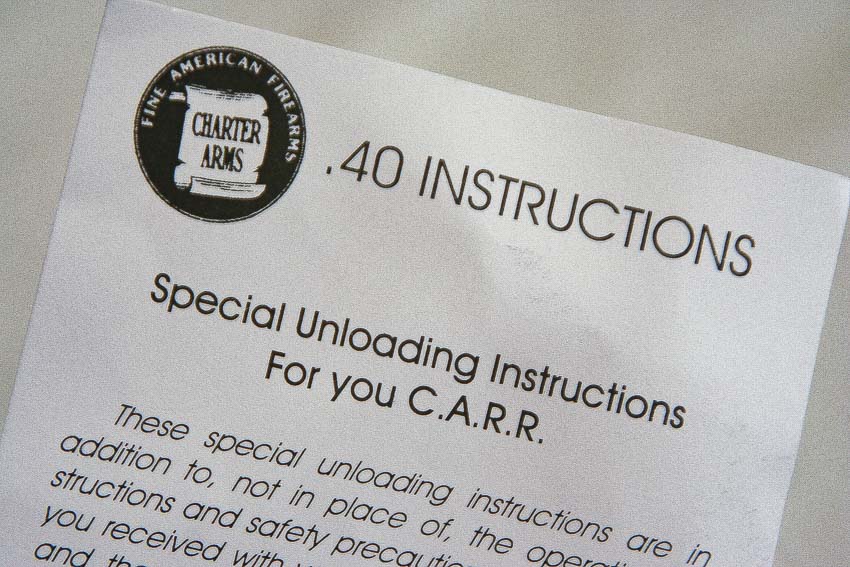
To muddy the waters a bit more, the gun was originally called the Charter Arms Rimless Revolver, or C.A.R.R. You can see in the original manual included with my test gun that the monicker of C.A.R.R. was used even though Pit Bull was clearly marked on the barrel.
Key Features and Specifications
The Charter Arms Pitbull is not a pocket revolver in the smallest sense, but it is clearly aimed at concealed carry. The short barrel, five-round cylinder, rubber grip, and snag-conscious fixed sights all point toward defensive use rather than hunting, target shooting, or competition.
Specifications for the tested model:
| Feature | Specification |
|---|---|
| Caliber | .40 S&W |
| Capacity | 5 rounds |
| Frame | Large Charter Arms frame |
| Frame material | Stainless steel |
| Finish | Stainless steel or BlackNitride+ |
| Grip | Full rubber combat grip |
| Sights | Fixed front ramp and rear topstrap notch |
| Hammer | Exposed standard hammer |
| Barrel length | 2.3 inches |
| Weight | 20 ounces unloaded |
| Listed MSRP | $497 stainless, $532 BlackNitride+ |
.40 S&W Pitbull
The .40 S&W chambering is one of the Pitbull’s defining traits. In a semi-auto pistol, .40 S&W has a reputation for being snappier than 9mm and less of a push than .45 ACP. In a compact revolver, that character remains noticeable.
This is not a magnum revolver, but it is not a soft-shooting .38 Special either. The .40 S&W operates at higher pressure than many traditional revolver carry loads, and in a 20-ounce gun with a short barrel, the recoil impulse is brisk.
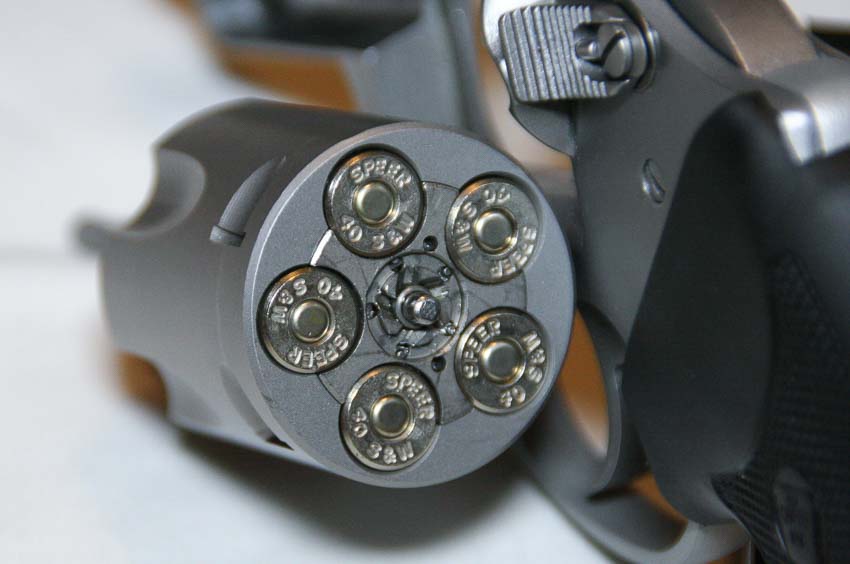
Five-shot cylinder
The Pitbull holds five rounds. That is common for compact defensive revolvers. For concealed carry, five rounds is a tradeoff many revolver carriers already accept.
The more important question is not capacity alone. It is whether the gun allows you to make those five shots count and reload it cleanly if needed.
That is where my concerns begin.
Stainless-steel construction
The stainless-steel frame, barrel, and cylinder give the Pitbull a practical working-gun feel. Stainless resists corrosion better than blued carbon steel, which matters for a handgun carried close to the body in humid conditions or under a cover garment. This is the same frame as used on the Charter Arms Bulldog.
At 20 ounces unloaded, it has enough weight to avoid feeling flimsy, but it is still light enough for belt carry. It is not as easy to forget as an ultra-light alloy-frame revolver, but it is also more pleasant to shoot than many featherweight snubs.
Fixed sights
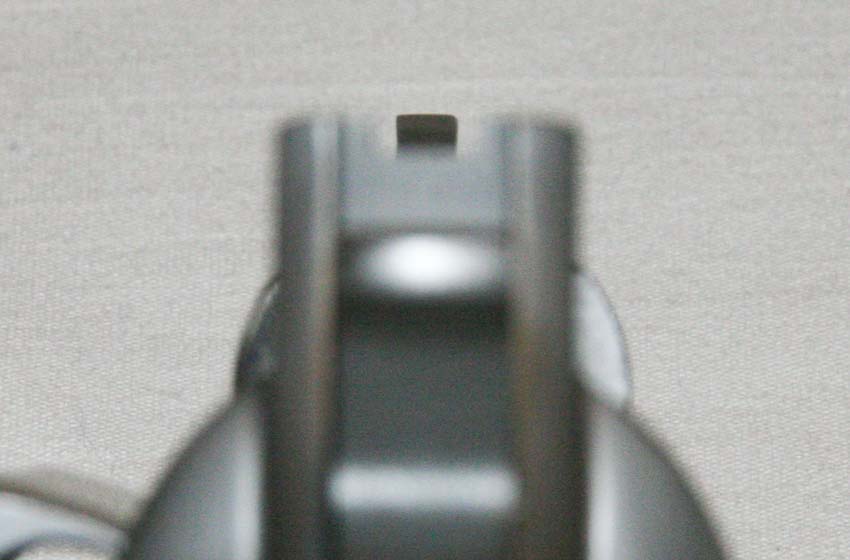
The sights are simple: a fixed rear notch cut into the topstrap and a smooth front ramp. The front sight on the test gun was the same matte silver tone as the rest of the revolver.
That is durable, but not ideal.
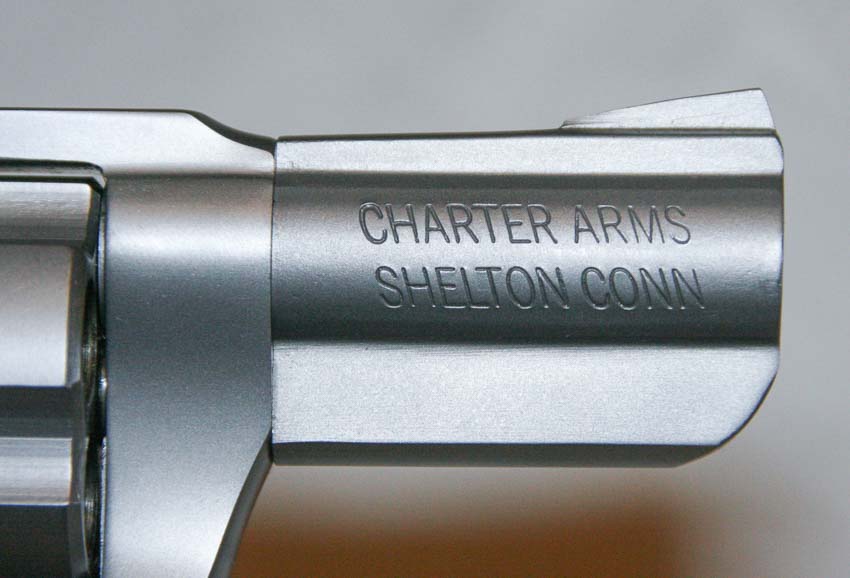
For a defensive revolver, I prefer a front sight that stands out quickly. A black rear notch with a high-visibility front blade is easier for my eyes to track under speed. The Pitbull’s sight picture is serviceable on a square range, but it is not optimal.
Replacing or upgrading the sights is not simple. This is not a dovetailed semi-auto sight system. Any serious sight change would likely involve machining or gunsmith work.
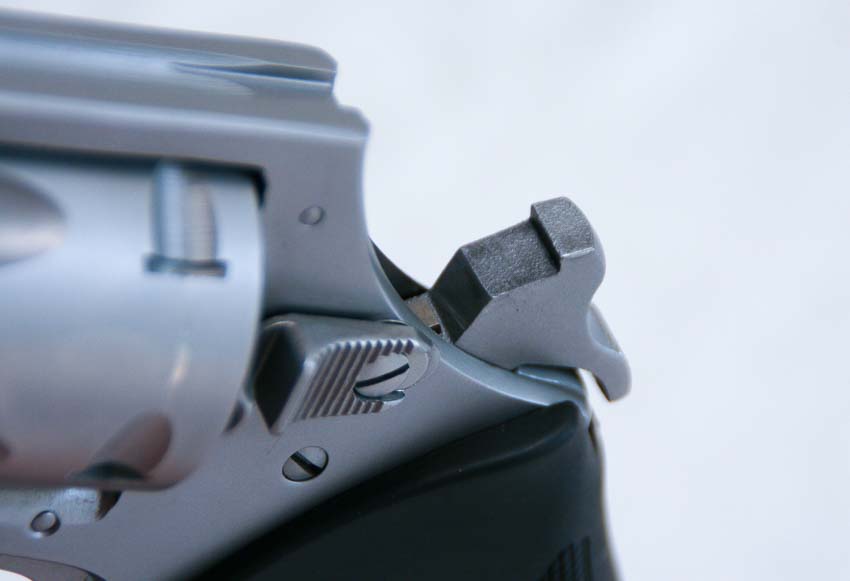
Exposed hammer
The exposed hammer allows both double-action and single-action fire. For defensive use, I spent the overwhelming majority of my time shooting double action. That is how a revolver like this should be evaluated for carry.
The single-action trigger was crisp and clean, but I do not consider single-action fire especially relevant for a close-range defensive revolver. It is nice to have for deliberate shooting, but the real test is the double-action pull.
How the Pitbull Extraction System Works
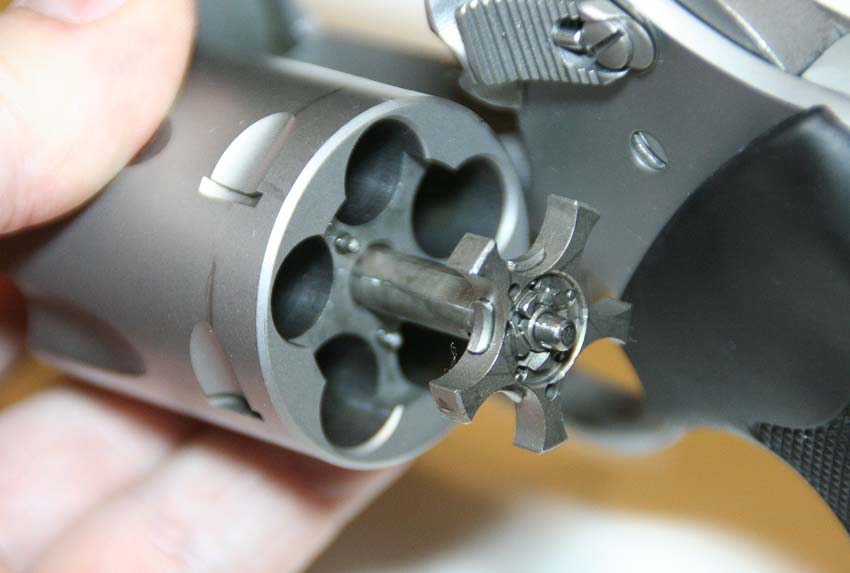
The Charter Arms Pitbull uses a patented retention and extraction system built into the extractor assembly. Instead of relying on moon clips, the revolver uses small spring-loaded retention pieces that engage the extractor groove of each .40 S&W case.
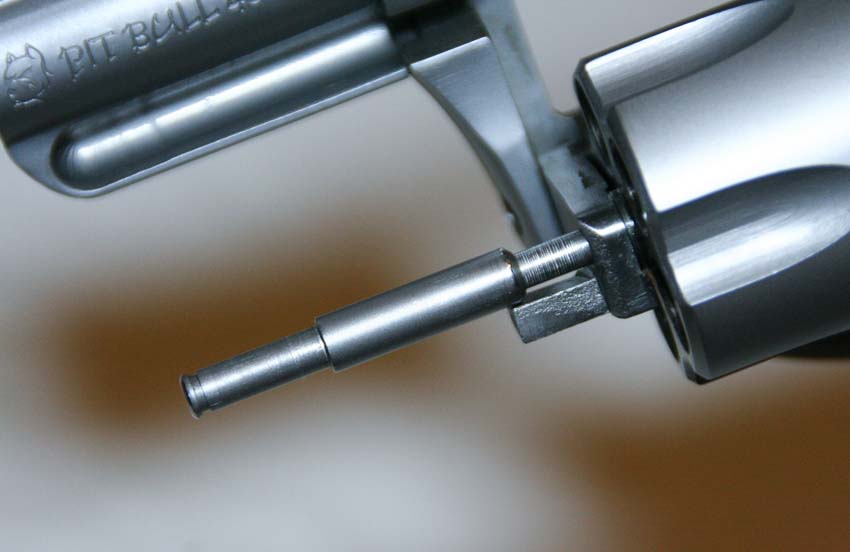
When you insert a cartridge into the chamber, the rimless case pushes past those small spring-loaded nibs. Once the cartridge is seated far enough, the nibs snap into the extractor groove and hold the round in place.
On paper, it is an elegant solution.
It gives the shooter the ability to carry, load, and unload loose .40 S&W ammunition without clips. That means no bent moon clips, no loading tool, no unloading tool, and no need to keep track of separate metal carriers. For someone who already owns a .40-caliber pistol and keeps .40 S&W defensive ammunition on hand, the appeal is obvious.
Extraction is supposed to work like a conventional revolver. Open the cylinder, point the muzzle upward, and press the ejector rod to push the spent cases free.
But the Pitbull adds a wrinkle. The original instructions emphasized that the muzzle should be angled upward without exceeding 90 degrees, and that the ejector rod should be pressed slowly and firmly all the way down. That is more specific than the normal revolver technique of sharply striking the ejector rod while the muzzle is elevated.
With a traditional .38 Special or .357 Magnum revolver, I want positive, energetic ejection. Under pressure, I am not trying to perform a delicate mechanical sequence. I am trying to get empty brass out of the cylinder quickly and get the gun back into service.
The Pitbull’s system asks for more discipline than that.
How I Used and Evaluated the Charter Arms Pitbull
I approached the Charter Arms Pitbull as a practical concealed carry revolver, not as a novelty item. That means I cared less about whether the design was clever and more about whether it worked consistently with realistic defensive handling.
Carry and concealment
Using a belt holster, the Pitbull carried reasonably well on the hip. The 2.3-inch barrel helped keep the revolver compact, and the rounded profile of a revolver is often comfortable against the body.
That said, I did not find it ideal for ankle carry. The weight and cylinder bulk created more leg bulge than I like. Some men can conceal larger ankle guns better than others depending on clothing, build, and holster choice, but for me, the Pitbull made more sense as a belt-carried revolver.
Under an untucked shirt, light jacket, or casual cover garment, it was manageable. In business casual clothing, concealment would depend heavily on the holster and belt. This is not a revolver I would drop into a pocket and forget.
Trigger performance
Out of the box, the double-action trigger was heavy and somewhat gritty. My Lyman digital trigger gauge topped out at 12 pounds, and the Pitbull exceeded that in double action. This is consistent with my experiences with other Charter Arms handguns. Be sure to read my Charter Arms Undercover review, for example, to see how similar this trigger pull was to that one.
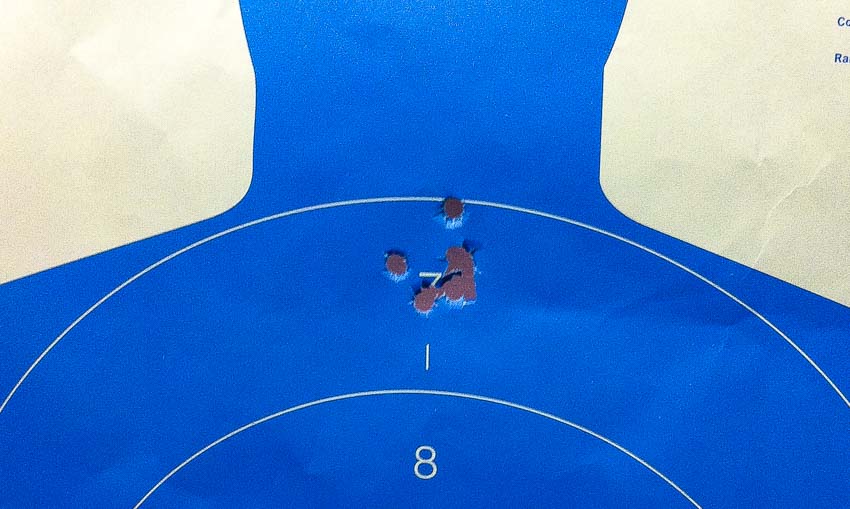
That is not unusual for defensive revolvers in this price class, but it is still worth noting. A heavy trigger can be manageable, but it demands practice. It also tends to expose poor grip pressure, uneven trigger control, and weak follow-through.
The good news is that the trigger improved with use. After dry fire and live fire, it smoothed out noticeably. It never became a custom-grade trigger, but it became acceptable for a defensive revolver.
The single-action trigger was much better. It had no meaningful take-up and broke cleanly. For range use, that is enjoyable. For concealed carry, I still consider double action the standard that matters.
Recoil and control
The recoil was sharper than I had hoped, but not surprising. A compact .40 S&W revolver is going to have some snap. The full rubber grip helped, and the gun never felt uncontrollable.
Compared with a light .357 Magnum snubnose, the Pitbull was easier to manage. Compared with a steel-frame .38 Special, it was more abrupt. Compared with a mid-size .40 S&W semi-auto, the revolver’s recoil felt more concentrated because there is no slide movement absorbing part of the impulse.
This is not a revolver I would hand to someone who dislikes recoil and expect them to enjoy it.
Ammunition Testing
The Pitbull handled every load I fired from the standpoint of ignition and firing. That included practice ammunition and several common defensive loads.
| Load | Velocity | Energy |
|---|---|---|
| Winchester PDX1 Defender 165 grain JHP | 1,113 fps | 454 ft-lbs |
| Hornady Critical Duty 175 grain FlexLock | 957 fps | 356 ft-lbs |
| Winchester White Box 165 grain FMJ | 1,002 fps | 368 ft-lbs |
| Speer Gold Dot 155 grain JHP | 1,138 fps | 446 ft-lbs |
| Speer Gold Dot 180 grain JHP | 977 fps | 381 ft-lbs |
| Liberty Ammunition 60 grain JHP | 1,918 fps | 490 ft-lbs |
Velocity was measured as a five-shot average with a chronograph placed 15 feet in front of the muzzle.
From a practical standpoint, the velocity numbers are useful because they show that the short barrel still produced respectable performance with several .40 S&W loads. The lighter Liberty load was especially fast, while the heavier 175- and 180-grain loads were naturally slower.
Practical Use Cases and Real-World Applications
The Charter Arms Pitbull makes the most sense for a fairly specific type of shooter.
It is not the obvious choice for a new concealed carrier. It is also not the most refined revolver in its class. But for someone who understands revolvers, already owns .40 S&W pistols, and wants a compact wheel gun that shares ammunition with a semi-auto, the Pitbull has a clear niche.
The tradeoff is capacity and reload speed. Five rounds is five rounds. A reload requires opening the cylinder, clearing the empties, and loading fresh cartridges. With the Pitbull, that reload is further complicated by the extraction technique required for the rimless-case system.
That is my main reservation.
In a defensive context, manipulations should be simple and tolerant of imperfect execution. I do not want a carry gun that becomes less reliable if I press the ejector rod too aggressively or rotate the muzzle past a certain angle.
Backup gun
The Pitbull could serve as a backup gun for someone who carries a .40 S&W duty pistol or compact semi-auto. Ammunition commonality is convenient. A revolver also has advantages in certain close-contact scenarios where a semi-auto slide could be pushed out of battery.
Still, as a backup gun, the Pitbull is heavier and bulkier than many alternatives. It is more of a belt or bag gun than an ankle gun for me.
Loading and Extraction: The Main Issue
The most important part of this Charter Arms Pitbull review is extraction.
Loading was straightforward. Cartridges seated into the chambers and were retained by the spring-loaded system. The revolver fired the loads without issue.
Extraction was inconsistent.
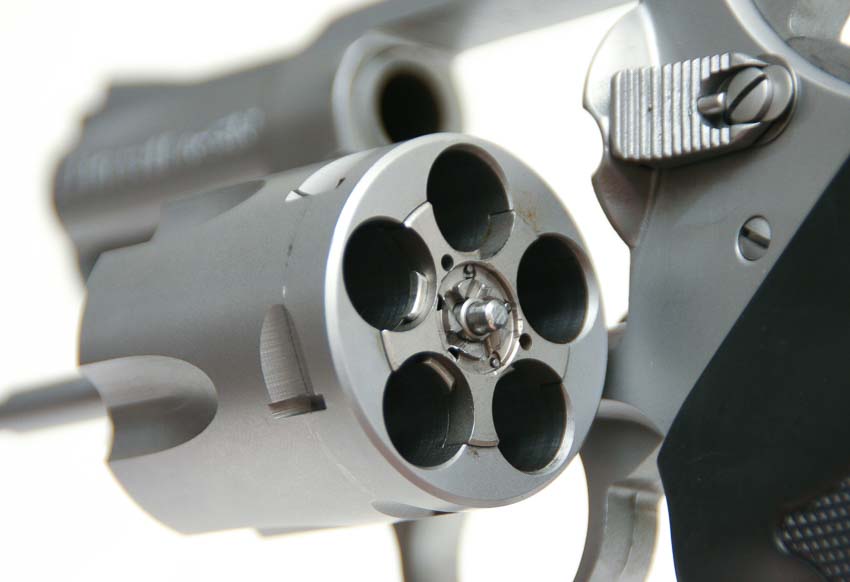
Even when I followed the instructions carefully by keeping the muzzle angle below 90 degrees and pressing the ejector rod slowly and firmly, I still had cases hang up. The most common problem involved the case in the chamber closest to the frame. It would partially extract, then catch under the extractor star.
This did not happen every time, but it happened often enough to matter.
Roughly every third or fourth cylinder, I experienced a case that did not clear cleanly. It was easy to brush away, but that is not the standard I use for a defensive handgun. A small interruption on a calm range can become a serious problem under stress.
A reload during an emergency is not a laboratory procedure. People move too fast, press too hard, fumble angles, and lose fine motor precision. That is normal. A defensive handgun should be forgiving of that reality.
The Pitbull’s extraction system, at least in the sample I tested, was not forgiving enough.
Pros and Cons
Pitbull Pros
The Charter Arms Pitbull has several legitimate strengths.
It fires .40 S&W without moon clips, which is the central appeal of the design. The stainless-steel construction feels practical and durable. The full rubber grip helps manage recoil. The exposed hammer gives the shooter both double-action and single-action capability. The revolver handled a broad range of ammunition without failures to fire. It is also made for shooters who want a simple carry gun chambered in a common defensive pistol cartridge.
I also give Charter Arms credit for trying something different. Firearms design can be conservative, and most companies are content to produce small variations of proven patterns. The Pitbull is not just another .38 Special snubnose.
Pitbull Cons
The extraction system is the major concern. It requires a specific technique and still did not work perfectly in my testing. That alone keeps me from trusting it as a primary defensive revolver.
The double-action trigger was heavy and gritty when new. It improved with use, but it required time and repetition to smooth out. The sights are basic and not easily upgraded. Recoil is snappy enough that some shooters will need regular practice to stay fast and accurate. The five-shot capacity is standard for this type of revolver, but it remains a limitation compared with compact semi-auto pistols.
The Pitbull is also somewhat caught between categories. It is not as light or compact as some small-frame carry revolvers, and it is not as easy to reload quickly as a moon-clip revolver when moon clips work properly.
Final Verdict
The Charter Arms Pitbull is one of the more interesting defensive revolvers I have spent time with. I respect the engineering goal. A rimless-cartridge revolver that does not require moon clips is a smart idea, especially in .40 S&W for shooters who already own pistols in that caliber.
The gun had several things going for it. It carried well on the belt, handled a variety of ammunition, produced respectable velocity from a short barrel, and became smoother with use. The single-action trigger was excellent, the rubber grip helped with recoil, and the stainless construction made sense for a practical carry gun.
But my final judgment comes back to extraction.
The sample I tested did not eject spent cases with the consistency I want from a self-defense revolver. The problem was not catastrophic, but it was frequent enough to undermine confidence. When a case hangs up every few cylinders, even if it clears easily by hand, the gun no longer meets my standard for primary concealed carry.
For a range revolver, conversation piece, or enthusiast’s gun, the Charter Arms Pitbull has real appeal. For daily defensive carry, I would choose a more conventional revolver or a proven compact semi-auto before I trusted this design with my life.