
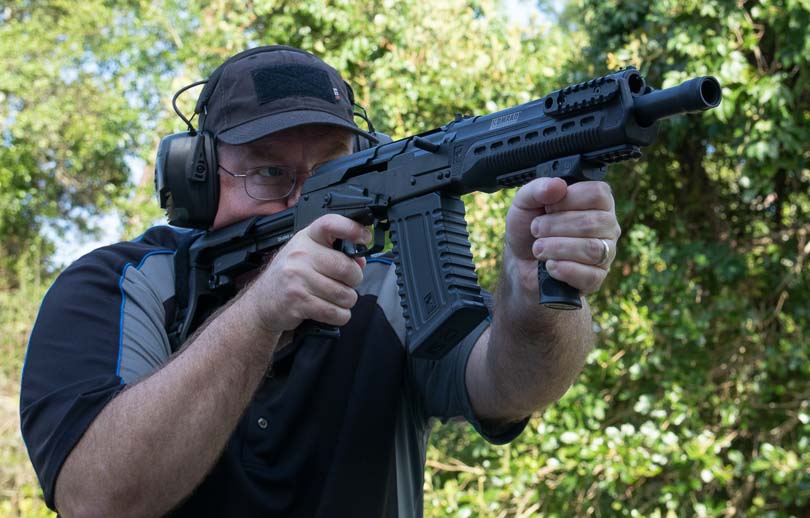
If you’ve been searching for a Kalashnikov Komrad review that goes beyond spec sheets and marketing hype, you’re in the right place. I spent real time with this gun, ran it at the range, and came away with some strong opinions.
The Komrad sits in a strange but fascinating space between a shotgun, a pistol, and an AK-style rifle. That alone made me curious. After shooting it, handling it, and living with it for a bit, I can confidently say this is one of the most interesting 12-gauge firearms I’ve ever tested.
I’ll walk you through what the Komrad is, how it’s built, how it shoots, and who I think it actually makes sense for.
Special note: If you aren’t familiar with the guns, you may want to read about the AK-platform guns here.
What the Kalashnikov Komrad Actually Is
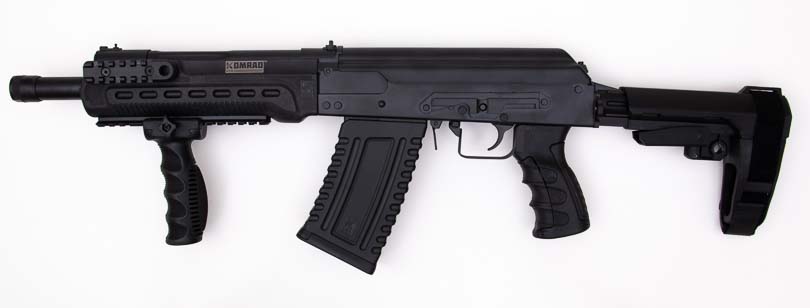
The Kalashnikov Komrad is a semi-automatic 12-gauge firearm with a 12.5-inch smoothbore barrel, feeds from detachable box magazines, and uses an adjustable gas system. Even though it fires shotgun shells, it’s not legally classified as a shotgun under federal law. That means it can have a barrel less than 18″ without invoking the NFA.
There’s something almost poetic about a Russian-inspired firearm named “Komrad” delivering Americans a workaround to avoid extra regulation. Irony aside, the design choices here are intentional and clever.
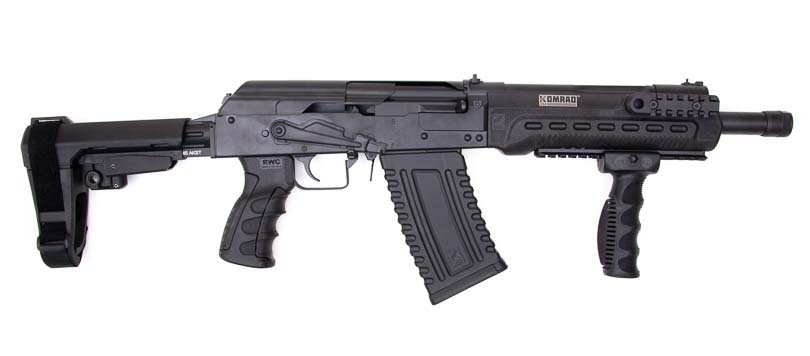
The overall package feels solid and well thought out. At just under eight pounds unloaded, it doesn’t feel heavy in the hands. Instead, it feels compact and balanced, especially for a 12-gauge platform. The short overall length and centered weight distribution make it surprisingly quick to point.
Specifications and Features That Matter
The adjustable gas piston system is a standout feature. There’s a two-position regulator that lets you tune the gun for different loads. You don’t need to field strip it to adjust anything, which I appreciate. Most full-power loads ran fine on the high setting, while reduced recoil shells preferred the low setting.
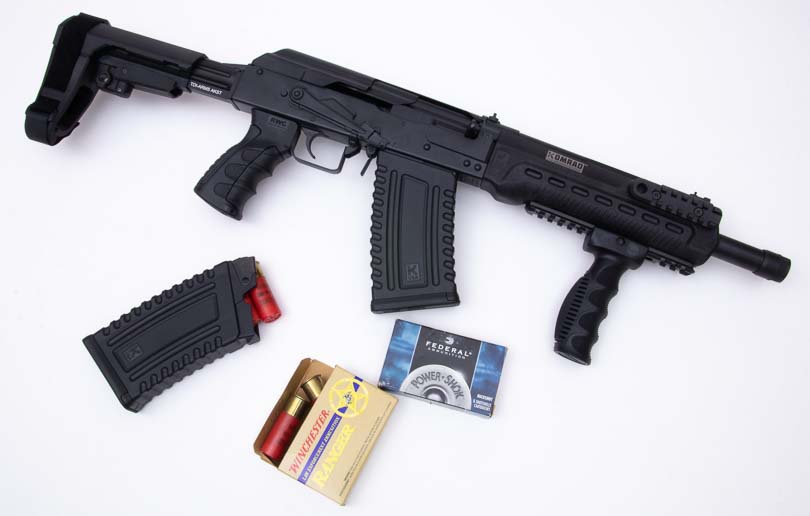
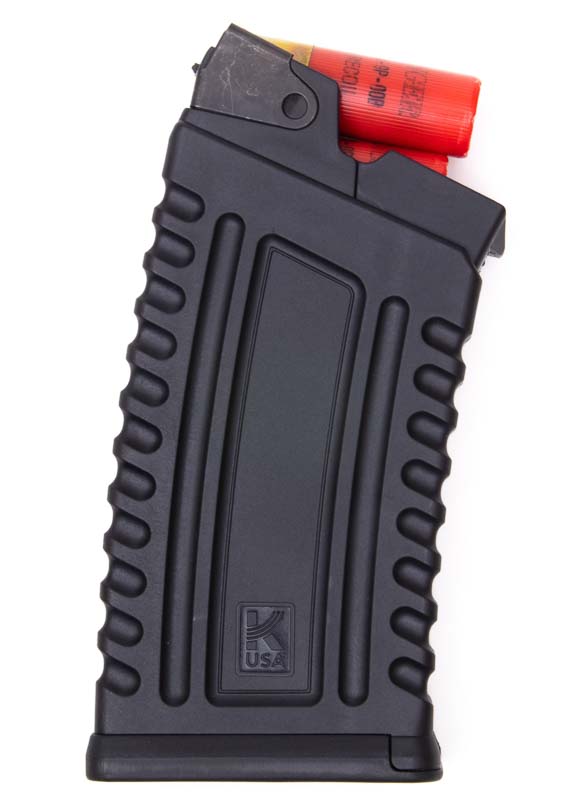
The gun ships with two five-round magazines that rock into place just like any AK-pattern firearm. If you’ve ever handled a Saiga shotgun, this will feel instantly familiar. Both 2.75-inch and 3-inch shells work without issue, as long as your gas setting is correct.
Up top, you get a simple but usable sight setup. There’s a front bead and a U-notch rear. It’s basic, but it works. If irons aren’t your thing, there’s a side-mounted optics rail ready for an optic. Out front, three Picatinny rails give you plenty of room for accessories. A white light makes a lot of sense here, and there’s room for other add-ons if that’s your style.
Komrade Specifications
- Caliber: 12 gauge
- Barrel: 12.5”
- OA Length: 31.5”
- Weight: 7.85 lbs
- Stock: none; SB Tactical SB3 arm brace
- Sights: rifle-style
- Finish: matte black
- Capacity: 5+1
- MSRP: $1,066
One feature I’m genuinely glad they included is the arm brace. The Komrad comes with the SB Tactical SBA3 brace, which is adjustable and secured with a hook-and-loop strap. It’s comfortable, easy to set up, and adds a lot of control. For shooters with limited upper body strength or mobility issues, this is more than just a nice bonus.
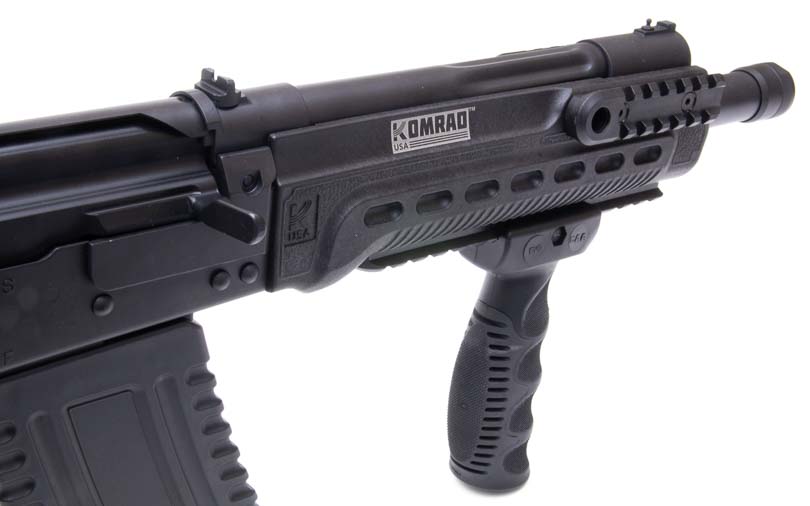
The trigger on my sample surprised me. It broke consistently at just under 3.1 pounds and felt smooth throughout the pull. That’s easily the best trigger I’ve experienced on any Kalashnikov USA firearm so far.
Everything ships in a quality hard case with foam cutouts. You also get a manual, a safety lock, the two magazines, and a wrench for adjusting the gas system. It’s a complete package right out of the box.
This firearm is manufactured by Kalashnikov USA, which states that it has no ties with the Russian company of a similar name.
First Impressions and Handling
The first thing I noticed when picking up the Komrad was how natural it felt. The pistol grip and vertical foregrip filled my hands well, even in the hot, humid conditions here in Florida. Even so, the pistol grip was not ideal for me. Check out my Magpul AK grip review to see the one I would install on my Komrad.
The controls are pure AK, so if you’re familiar with that manual of arms, there’s nothing new to learn.
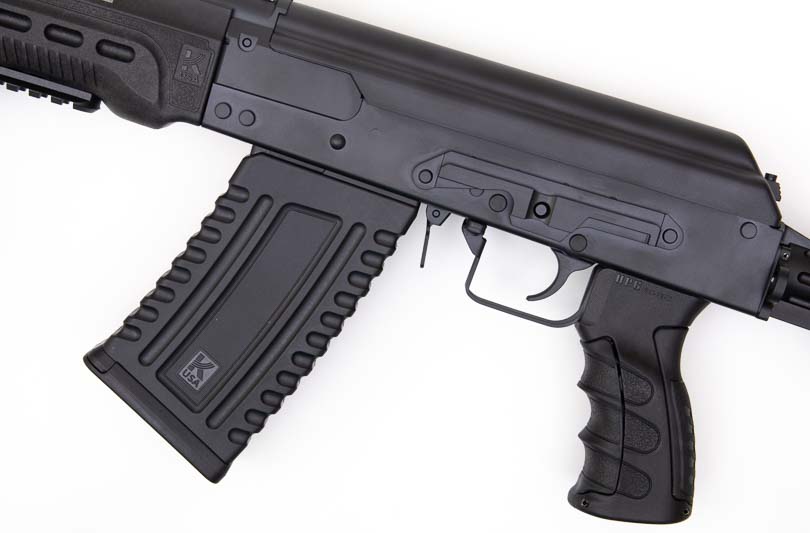
Despite firing 12-gauge shells, the gun doesn’t feel unwieldy. The compact length makes it easy to maneuver, and the balance keeps it from feeling front-heavy. That balance is critical, especially for a firearm perfect for tighter spaces.
I also liked how quickly the gun came on target. It points more like a submachine gun than a traditional shotgun, which is honestly the best way I can describe it.
Range Testing and Ammo Performance
At the range, my main goals were reliability, controllability, and pattern performance. I ran a mix of birdshot and buckshot early on, just to get a feel for how the gun behaved. Once I was comfortable, I focused on three defensive loads: Remington Law Enforcement Reduced Recoil 8-pellet 00 Buck, Winchester Ranger Low Recoil 9-pellet 00 Buck, and Federal Power-Shok 9-pellet 00 Buck.
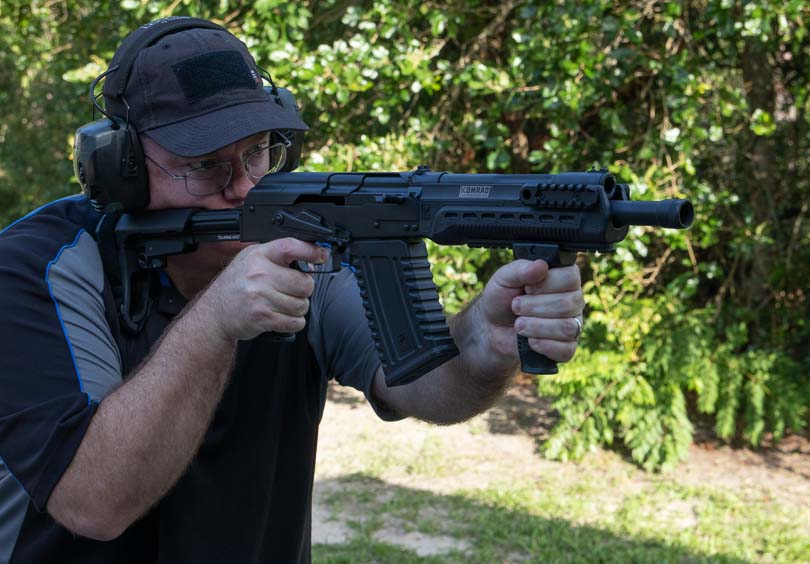
This is where the adjustable gas system really matters. The Remington and Winchester reduced-recoil loads required the regulator to be set to “low” for reliable cycling. The Federal Power-Shok ran perfectly on the high setting. If you don’t take the time to test your ammo and tune the gas system, you’re setting yourself up for problems. Once dialed in, though, the Komrad ran without hiccups.
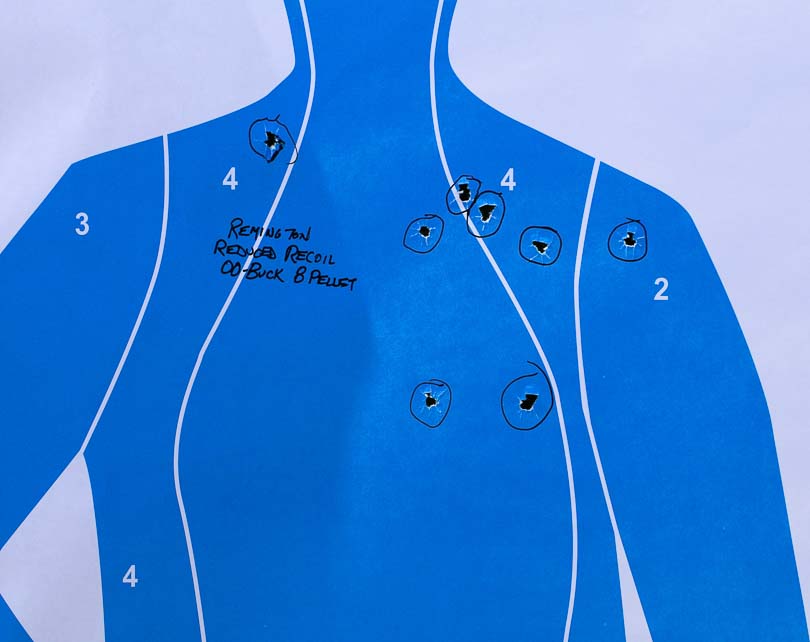
Patterning was the next step. Even though this isn’t a traditional shotgun, it still throws patterns like one. The shorter barrel definitely plays a role here, so I tested at seven and fifteen yards.
| Velocity | 7 Yard Spread | 15 Yard Spread | |
|---|---|---|---|
| Federal Power-Shok 2.75” 9 Pellet 00 Buck | 1307 fps | 3.50“ | 9.75“ |
| Remington LE Reduced Recoil 2.75” 8 Pellet 00 Buck | 1181 fps | 3.25“ | 7.50“ |
| Winchester | 1132 fps | 5.88“ | 11.25“ |
The Remington Reduced Recoil load delivered the tightest patterns by far. That didn’t surprise me, since I’ve used it extensively in the past with great results. At fifteen yards, I was able to keep all pellets in the torso area of a silhouette target with fast follow-up shots.
The Winchester and Federal loads patterned a bit looser, but still kept most pellets on target. A few flyers showed up at fifteen yards, which is expected with this barrel length.
Recoil is real, even with reduced recoil shells. The weight of the gun helps, and the vertical foregrip does a solid job of controlling muzzle rise. The brace adds stability, but it’s still not the same as a traditional stock. That said, the Komrad remained controllable, and I never felt like it was getting away from me.
Both magazines fed smoothly, and I appreciated the textured bodies. Sweaty hands are a fact of life where I shoot, and the extra grip made reloads easier.
What I Liked and What Stood Out
There’s a lot to like here. The build quality is excellent, and the gun feels like it’s meant to be used hard. The adjustable gas system works as advertised, and the trigger is genuinely impressive.
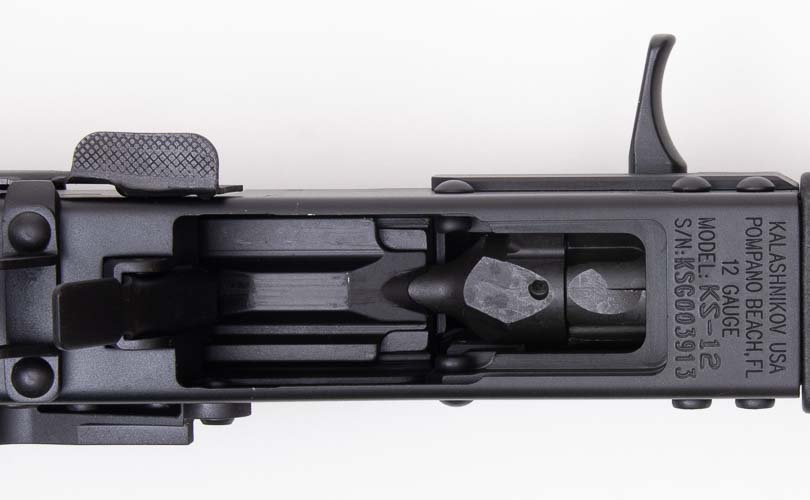
I also love the concept. Getting 12-gauge power in a compact, magazine-fed package is appealing, especially for people who want something more potent than a handgun but easier to maneuver than a full-length shotgun.
The arm brace inclusion is another win. It adds versatility and control without feeling like an afterthought.
Final Thoughts on the Kalashnikov Komrad
After spending time with it, I can say the Komrad is more than just a novelty. It’s a well-built, thoughtfully designed firearm that delivers a ton of range fun and real-world capability. It shines in situations where space is limited and power still matters.
Is it for everyone? Probably not. But if you appreciate AK-style reliability, want a compact 12-gauge option, and enjoy owning something a little different, the Komrad is absolutely worth a look.
For me, it earned its place as one of the most interesting firearms I’ve tested in a long time, and that’s not something I say lightly.