
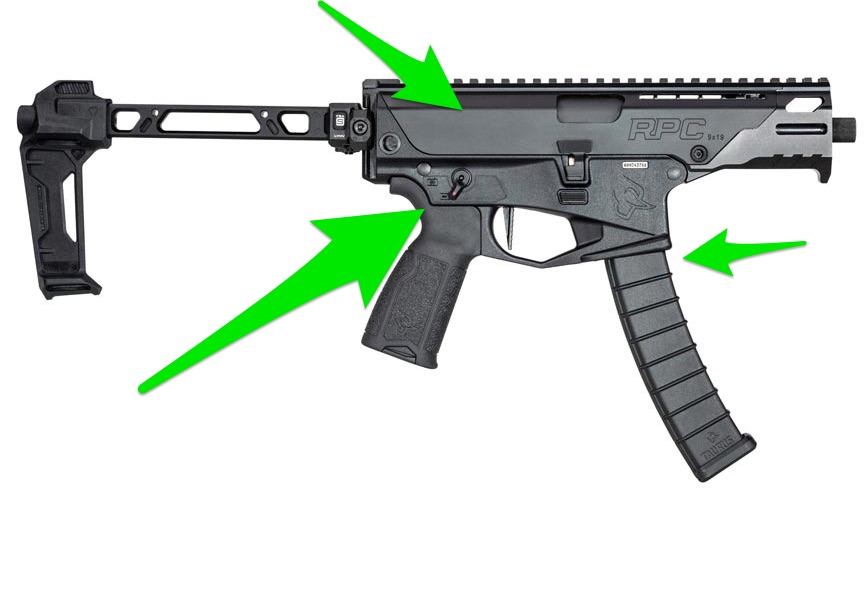
Taurus RPC – New 9mm PDW Pistol
The new Taurus RPC looks to be another PDW-type pistol rolling out at the 2026 NRA Annual Meetings & Exhibits. Chambered for the 9x19mm Parabellum cartridge, the new guns feed from 32-round magazines, have a 4.5″ threaded barrel and use a roller-delayed action.
On paper, the RPC has a lot of things going for it. The market Taurus is entering, however, already has a number of strong competitors – including those close to the MSRP of the RPC.
Can the Taurus RPC offer a genuinely different experience at its price point? I think it can, but it’s not a sure thing.
Taurus RPC Features
Let’s take a look at the RPC’s features starting with what many people ask first: price.
Taurus RPC MSRP
Taurus traditionally positioned itself as a inexpensive gun option. In my opinion, this has hurt the reliability of some of its firearm offerings. Nevertheless, the company built a sizable number of fans who appreciate the ability to buy a new firearm at an affordable price. And, in all fairness, the guns made by Taurus seem to have improved in recent years.
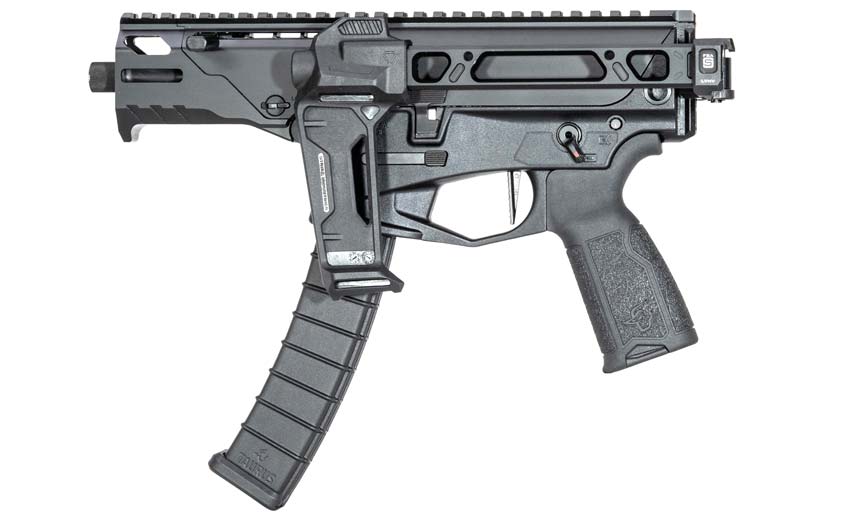
For the base model RPC with a 4.5″ barrel and no arm brace, the suggested retail price is $939.99. With the Strike Industries FSA folding brace, the price increases to $1,098.99.
Roller-Delayed Action
Instead of a traditional, straight-blowback system, Taurus elected to use a roller-delayed action.
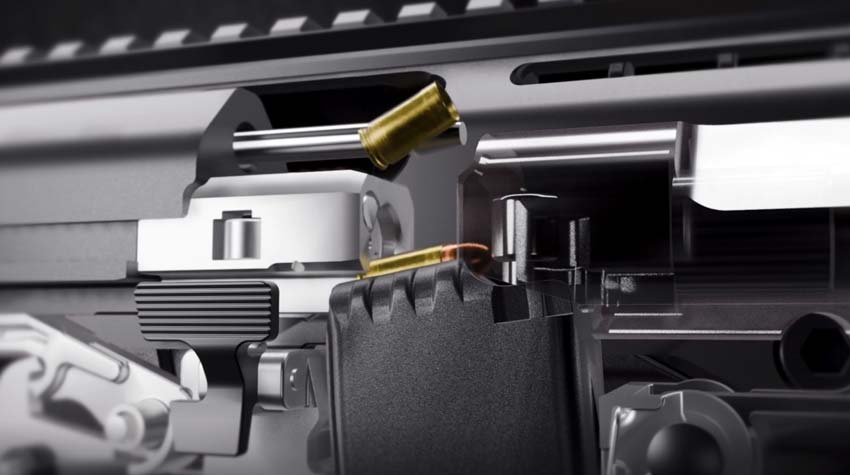
Roller-delayed actions have been used by a number of significant firearms including the HK MP5 submachine gun, the HK G3 rifle, and the Spanish CETME. It was also used on the prototype StG 45(M), the assault rifle intended to replace the StG 44 had World War II gone on long enough.
Compared to straight-blowback actions, the roller-delayed system offers a number of benefits including reduced felt recoil, lighter weight, and the ability to handle more powerful cartridges.
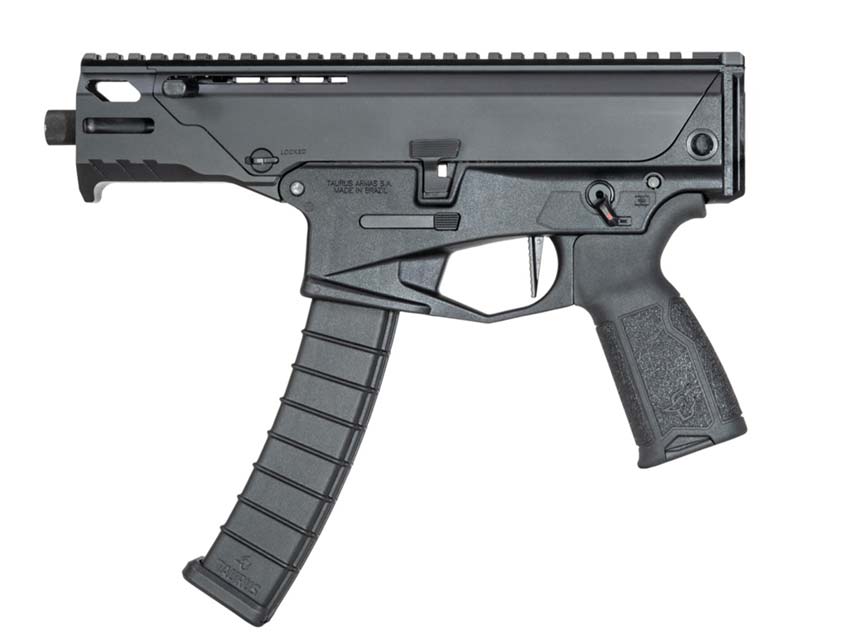
Taurus includes two locking tips for the roller assembly. The first is a 110-degree locking tip that is intended for use with standard (supersonic) ammunition. The second is an 85-degree tip that is designed for subsonic ammo and suppressed shooting. The RPC manual details swapping these tips out.
Construction
Taurus uses a carbon steel chassis with an aluminum upper body. Specific alloys were not immediately indicated. The company only states that the “…aluminum construction trims weight while maintaining duty-grade durability.” That’s very non-specific.
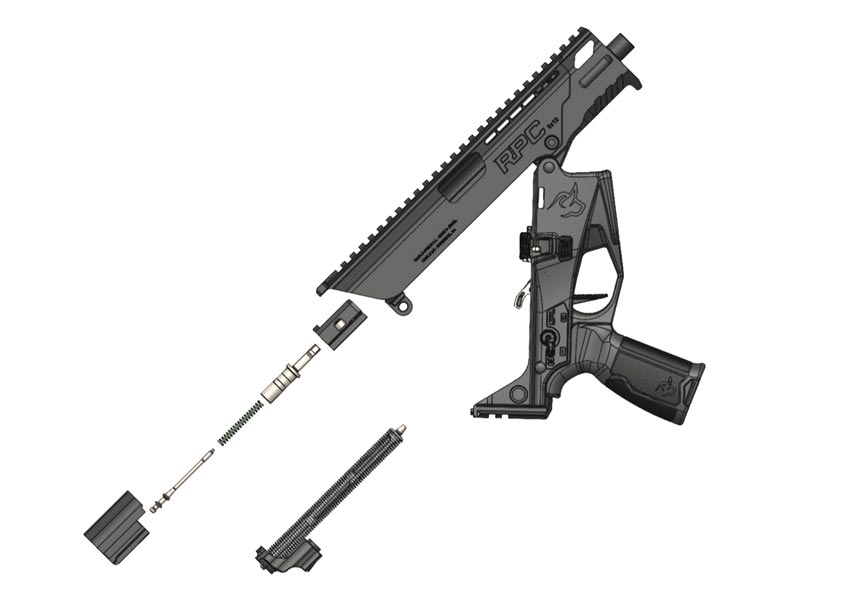
The gun essentially has an upper and lower configuration like an AR-15. In fact, it uses two pins for take down just like AR-style guns. However, the gun uses a serialized chassis that is set into the polymer lower.
Barrel
The steel barrel is 4.5″ long and threaded for the direct mount of common 9mm suppressors.
What I find interesting is the company indicates that the RPC uses a “quick change barrel system” so that other length barrels can be used on the gun. This makes the gun a bit more interesting to me as the 4.5″ barrel is shorter than I want on a PDW. I’m looking for something around 8″ – and it sounds like Taurus set up the gun to make that an option.
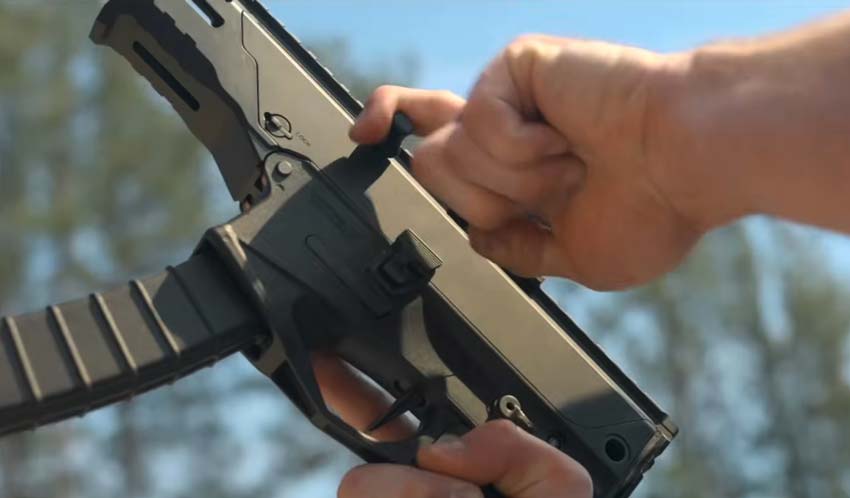
Taking a close look at the Taurus manual (embedded below), I see that the company lists specifications for an 8″ barreled gun in addition to the 4.5″ they announced. It would seem that the company fully intends on offering the longer barrel option.
Taurus RPC Magazines
Unsurprisingly, Taurus uses proprietary magazines. It does not take Glock magazines nor does it run from CZ Scorpion mags.
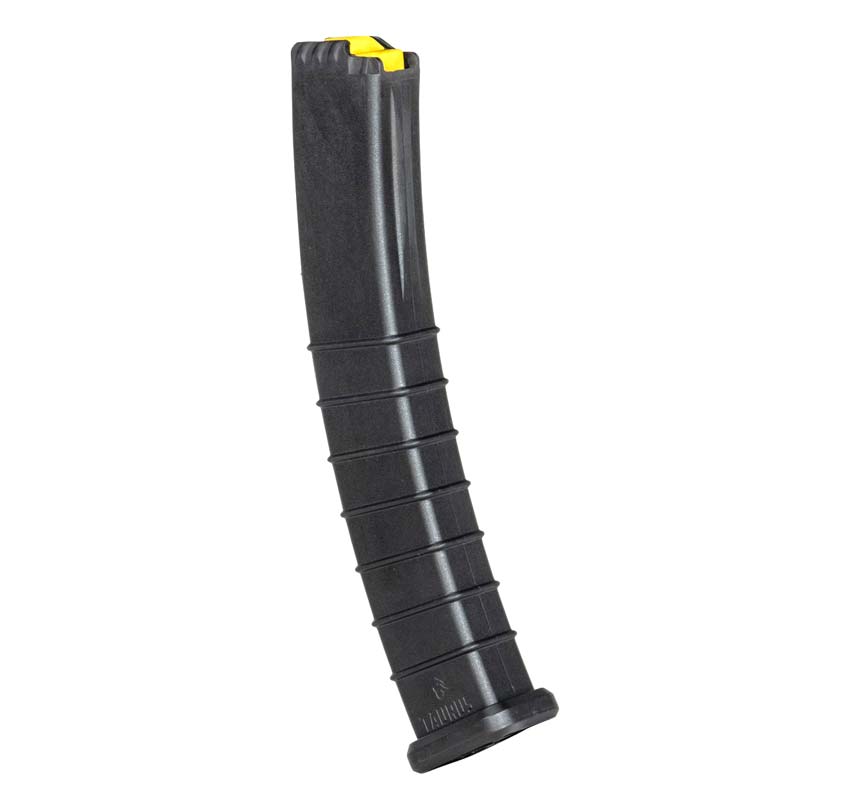
Magazines are curved and hold 32 rounds. Taurus includes two with each RPC. At the time of this article, there was no word on magazine pricing nor were any listed in the company’s store.
Additional Taurus RPC Features
Here are some of the additional RPC features:
- ambidextrous safety, bolt release and magazine release
- side swappable, non-reciprocating charging handle
- full length top Picatinny-type mounting rail
- M-Lok slots on the handguard
- flat faced trigger
- pistol grip compatible with most AR-15 pistol grips
- 4.5 lbs, 4.9 lbs with brace
RPC – Made in Brazil
I was hoping that these guns would be made in the United States. Unfortunately, they are not. Markings on the guns indicate that they are “MADE IN BRAZIL” by Taurus Armas S.A.

Taurus RPC Alternatives – Crowded Market
Taurus is entering an increasingly crowded market. While some may say they are too late to make an impact, it is also possible that the company has been taking notes about what does – and does not – work. Time will prove how successful the RPC will be.
Here’s a look at a few alternatives to the Taurus RPC:
Springfield Armory Kuna
Springfield Armory beat Taurus to the market with a roller-delayed 9mm PDW. Called the Kuna, the Springfield pistol offers ambidextrous controls, a non-reciprocating charging handle, a flat trigger, and an impressive set of iron sights.
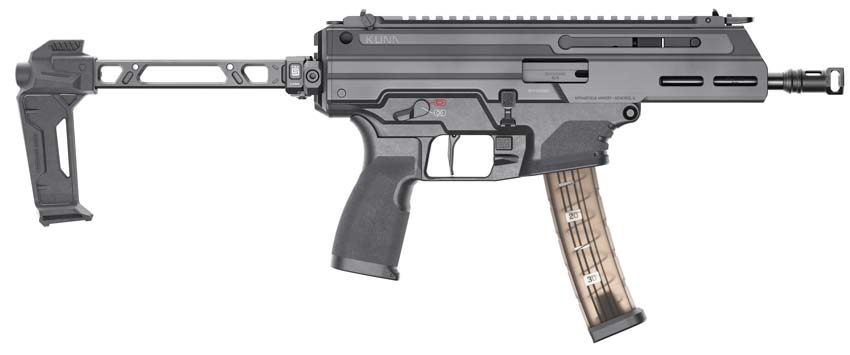
It feeds from 30-round magazines (a two-round advantage to Taurus.) While the mags are proprietary, they are very affordable with a MSRP of only $25.
I own a Kuna with a Strike Industries FSA brace. I’m planning on getting an SBR tax stamp for this one.
Pricing is reasonable in my estimation. Without a brace, MSRP is $1,179. With a brace, the MSRP is $1,330. Taurus wins on price.
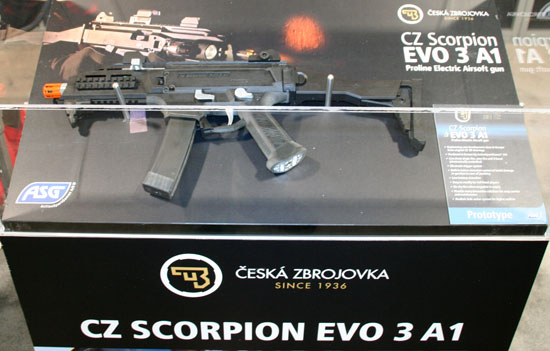
CZ Scorpion 3
All memes notwithstanding, the modern CZ Scorpion is quite popular with shooters. It is a modern, large-format handgun derived from the Czech-designed Scorpion EVO 3 submachine gun platform. Chambered in 9×19mm Parabellum, the firearm operates on a simple blowback system and is built largely from reinforced polymer to keep weight down while maintaining durability.
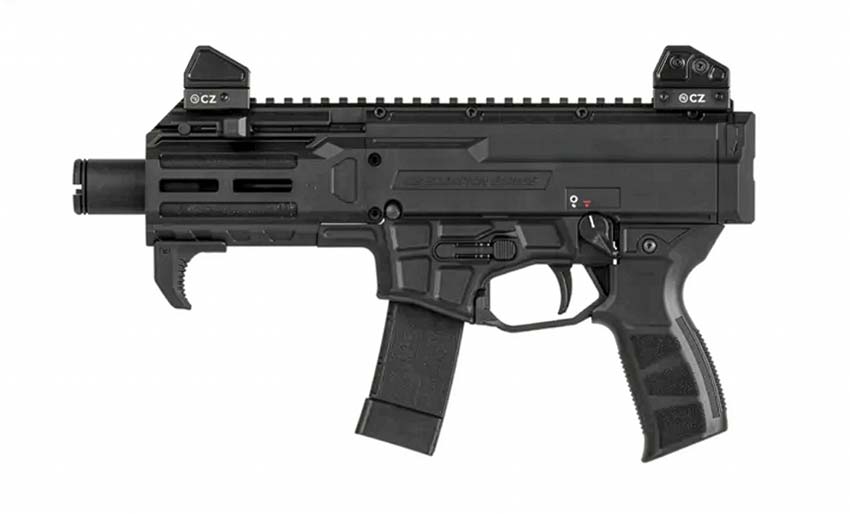
The Scorpion 3 series represents an evolution of earlier models, with the “3+” variant introducing improved ergonomics, updated controls, and enhanced modularity. It feeds from high-capacity detachable box magazines, commonly in 20- or 30-round configurations. It is designed for adaptability with optics, lights, and other accessories via its rail system.
The suggested retail pricing for the CZ Scorpions starts at $1,499. That’s a 50% increase in price over the Taurus. The CZ is debugged technology, so you know you are getting a good running gun.
Grand Power Stribog SP9 A3
The Grand Power Stribog SP9 A3 is a modern large-format pistol developed by Grand Power, designed from the ground up as a compact 9×19mm platform. It features an 8-inch barrel and a lightweight design built around an aluminum upper receiver paired with a polymer lower, striking a balance between durability and manageable weight.
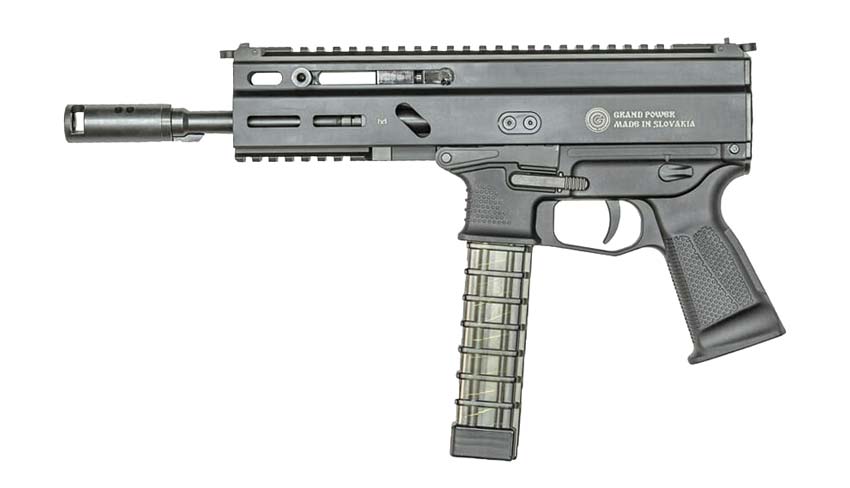
The pistol feeds from proprietary double-stack magazines typically available in 20- and 30-round capacities, and its overall size and layout place it squarely in the same niche as other pistol-caliber platforms intended for enhanced control and capacity over traditional handguns.
What sets the SP9 A3 apart from earlier Stribog models is its roller-delayed blowback and non-reciprocating charging handle. With its combination of compact size, soft recoil impulse, and robust construction, the SP9 A3 has become a popular option for range use, training, and defensive applications where a compact 9mm platform is desired.
Grand Power has these priced very affordably. They don’t have a MSRP listed on its website, but you can find these around $950-$1,000. Taurus may have a slight edge on street price, but it will be close.
CMMG Dissent
The CMMG Dissent is another 9mm PDW pistol of the same general size and usefulness. Instead of a roller-delayed action, however, the company uses a radial-delayed action. CMMG states that the system generates less recoil than roller delayed, and that it requires less mass making it lighter. Unfortunately, I’ve not had the chance to compare the Dissent to other firearms like the RPC.
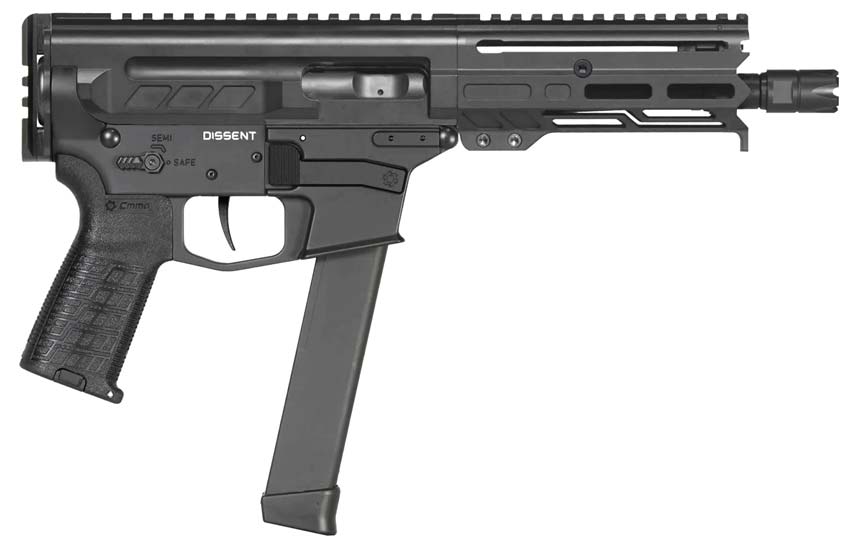
CMMG elected to use Glock-pattern magazines for this firearm. It ships with 33-round magazines. For a lot of shooters, taking a Glock magazine is an important feature. I’m not convinced that Glock pattern mags are the best choice, but they are easy to find and Glock branded magazines are reliable.
The Dissnent is not cheap. The MSRP is $1,949.95 making it roughly double the price of the Taurus RPC.
SIG MPX K
The SIG MPX K is pretty close to a direct comparison to the Taurus RPC when equipped with a brace. The MPX is a reliable 9mm PDW with a pistol brace. Instead of using roller-delay, it uses a gas piston which may generate slightly more recoil than the RPC.
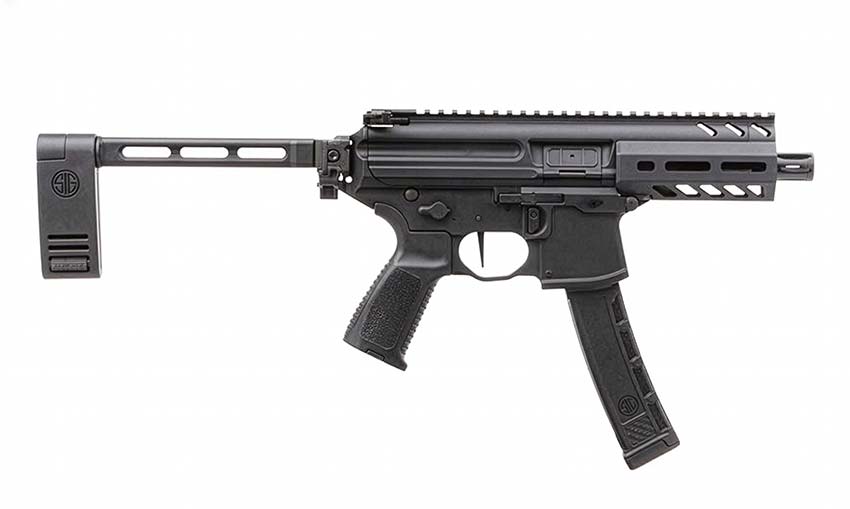
The MPX K is a great gun, but it is also about double the price with street pricing in the $2,000 range. It uses proprietary magazines.
HK SP5
The HK MP5 is widely considered to be one of the best 9mm submachine guns ever designed. As a guy who has run one of these in my former career, I agree. It’s easy to shoot and reliable.
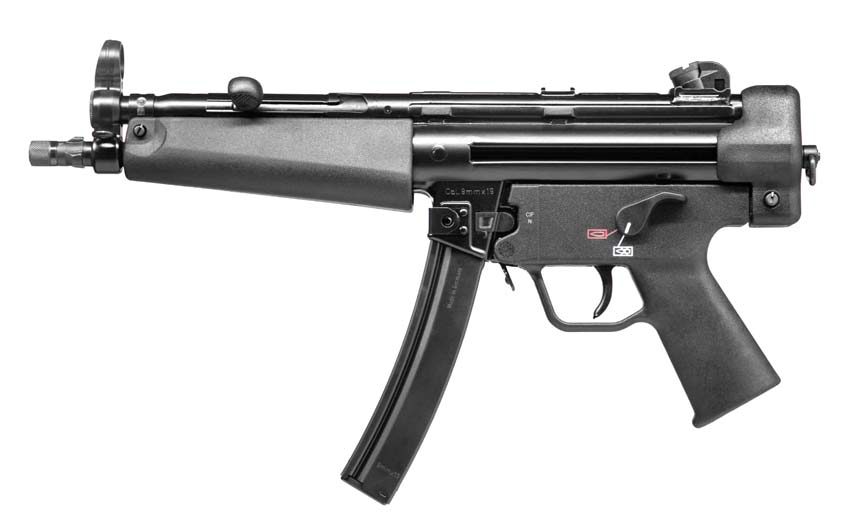
The SP5 is the company’s semi-automatic, pistol version of the MP5. It comes in a few different configurations, but they are all very similar with the same internals.
Pricing is not cheap on the SP5. Magazines are expensive and so are the guns. Expect to pay $3,000 or more for the gun. Huge advantage for the Taurus RPC. But, there’s no substitute for the SP5 if you want a civilian legal MP5.
Final Thoughts
In the end, the Taurus RPC enters the PDW market with a compelling mix of features, pricing, and ambition – but also a fair amount of uncertainty. On paper, it checks many of the right boxes: a roller-delayed action, modular design, ambidextrous controls, and a competitive MSRP that undercuts many established rivals. For shooters looking to get into a modern 9mm PDW without spending well over $1,000, it immediately stands out as an attractive option.
However, this is also a space filled with proven platforms that have already earned their reputations through years of use. From well-established designs to newer entrants that have already been vetted by consumers, Taurus is stepping into a field where reliability, durability, and long-term performance matter more than specs alone. While the company’s recent improvements in quality are encouraging, the RPC will ultimately need to prove itself where it counts—on the range and over time.
If Taurus delivers on the promise of the RPC, it could carve out a meaningful place in this crowded segment, offering shooters a softer-shooting, feature-rich alternative at a more accessible price point. But until real-world testing and user feedback accumulate, it remains a promising contender rather than a guaranteed success.


I like it, but I’ve been burned by Taurus too many times. I’d rather get the newer B&T or Kuna for not much more money.
I’ve also had problems with Taurus guns. Buddy’s 2″ revolver would keyhole at 7 yards. One of my semi-autos got recalled for firing when dropped. I hope the company is doing better now, but I’ll not be a beta tester.
I’m headed to look at the Taurus RPC this weekend at the NRA Show. IT looks pretty good for a 9mm PDW (pistol?) and the price is interesting. I wish it took Kuna mags (cheaper than the CZ ones around here), but as long as they aren’t too expensive, I’ll probably bite.
Lovin’ the look of this new gun! I know what my man is getting me for Mothers Day this year.
The 4.5″ threaded barrel and quick-change system give the RPC a lot of flexibility, especially with those 32-round magazines. At $939.99 the price looks competitive, and the roller-delayed action should keep recoil in check.
The roller-delayed action really does set the RPC apart, and the interchangeable barrel lengths are a nice bonus at that price. Magazine costs tend to fluctuate by retailer, so checking a few shops will give you the most accurate figure.
I love how the little detent on the barrel-swap lever gives a satisfying tactile cue–such a subtle touch that really enhances the overall experience. And the smooth, consistent trigger break makes the roller-delayed action feel even more refined.
Do you notice the same lever feel and trigger smoothness when the pistol is used with gloves or in low-light conditions? It would be useful to know if the tactile cues hold up in those environments.
The RPC’s 4.5″ threaded barrel and quick-change system are a nod to the modularity we’ve seen in the MP5’s evolution, but the 32-round proprietary magazines still lock Taurus into a niche ecosystem at a $939.99 entry price. The roller-delayed action should cut recoil compared to straight-blowback designs, though the company’s vague alloy specs leave durability questions open.
Interestingly, the 1/2-28 thread on the barrel matches the most common suppressor standard, making aftermarket suppression straightforward. The roller-delayed principle was first popularized in the HK G3, where it proved effective at reducing recoil without adding excessive weight.
I’m excited about the quick-change barrel, but I wonder if swapping to the 8-inch option could throw off the roller-delayed timing without a proper headspace check. Also, the M-Lok slots look handy, yet adding a heavy rail system might stress the aluminum upper and change the balance of the 4.5-lb base weight.
I share your enthusiasm for the quick-change barrel, and when I swapped to a longer barrel on a comparable platform a quick headspace check kept the roller-delayed timing perfectly on target. Likewise, adding a full-length rail can indeed shift the balance, something I observed on my own build when the extra weight made the pistol feel a bit front-heavy.
The RPC’s carbon-steel chassis paired with an unspecified aluminum upper raises a question about long-term durability when the gun is pushed hard, especially since the manufacturer only says the alloy “trims weight while maintaining duty-grade durability.” Because the chassis is serialized into the polymer lower, swapping out the lower or fitting a different AR-style grip may be more involved than on a conventional platform, something buyers should factor into their cost-benefit analysis.
The description notes that the RPC ships with two proprietary 32-round mags but gives no price or compatibility details, which could leave budget-conscious buyers uncertain. It would help to list the magazine cost and perhaps offer a Glock-compatible option or a clear conversion kit.
Hi Tyler,
Thanks for the comment. Taurus has not yet released the magazine pricing. Unfortunately, it does not look like these guns will be offered in a way that would accept other magazine types. When I get additional information, I will update the article. Thanks!
-Richard
The RPC’s dual-angle roller-delayed locking tips–110° for supersonic and 85° for subsonic ammo–remind me of a dual-clutch transmission that swaps gear ratios to optimise torque versus efficiency. Just as a driver selects the appropriate clutch mode for road conditions, a shooter must match the tip to the cartridge to maintain reliable timing. This mechanical flexibility is a subtle but valuable design nuance beyond the headline specs.
The 32-round proprietary magazines are a clear advantage for firepower, yet the article’s vague description of the aluminum upper body makes it hard to judge whether the weight savings truly hold up under sustained use. At $939.99 for the base model, the price looks attractive, but without clear specs on the alloy, durability remains an open question.
Seeing a pistol that can swap its 4.5″ barrel for an 8″ one on the fly was the biggest curveball – I expected a compact PDW, not a modular rifle in disguise. The quick-change barrel system feels like Taurus decided to give us a little AR-15 flexibility without the paperwork.
The RPC’s serialized chassis that snaps into the polymer lower is an interesting AR-style twist–do you think that joint will stay tight after repeated field stripping? And with the vague aluminum upper body claims, will the weight savings hold up without sacrificing long-term durability?
In a low-light, close-quarters operation where noise discipline is critical, swapping the 85-degree locking tip and fitting a suppressor onto the 4.5-inch threaded barrel lets the RPC stay compact while delivering subsonic fire with manageable recoil. The 32-round proprietary magazines also let you stay on target longer without frequent reloads, which is a real advantage in sustained CQB drills.
Assuming that adding a suppressor to the 4.5-inch barrel won’t noticeably alter the weapon’s balance may be optimistic, especially during rapid maneuvering. Likewise, the advantage of a 32-round proprietary magazine presumes the extra weight and bulk won’t impair handling in tight spaces.
I’m curious about the best way to mount a rail-mounted laser on the RPC’s full-length Picatinny rail without losing zero after swapping the barrel. Is there a recommended torque sequence for the rail screws and any specific alignment checks to perform before shooting?
The spec says the aluminum upper body “trims weight while maintaining duty-grade durability”, yet without any alloy data it’s hard to verify that the chassis can survive sustained high-round-count use. Even if the roller-delayed action reduces recoil, the 4.5-inch barrel may still feel harsh compared to a longer barrel that naturally dampens muzzle blast.
The RPC’s proprietary 32-round magazines remind me of smartphone manufacturers that lock users into exclusive charging docks, raising questions about long-term ecosystem lock-in. While the convenience of a purpose-built mag is clear, I’m curious whether the lack of interchangeability will limit adoption as much as proprietary connectors have done in the mobile market.
Hi Garcia,
It is a fair question. A lot of people want to standardize on Glock pattern mags, which work great in typical handguns. However, when you are running a PDW or PCC, the straight nature of the Glock magazine starts to cause engineering issues with the taper of the 9mm cartridge. Outside of Colt-pattern mags (based on Uzi magazines), most everyone else uses curved magazines to address the taper. HK MP5 magazines would be a good choice if they were not so expensive. Some people suggest the CZ Scorpion mags are a good pattern to standardize on. I like the Springfield Armory Kuna magazines – they seem very reliable and are also quite affordable.
-Richard
I noticed the price jumps to $1,098.99 when you add the Strike Industries FSA folding brace. Does the brace attach directly to the chassis, or is it more of a removable add-on that could affect the gun’s balance?