
![The author I will provide a description of a photo. You will three ALT text descriptions for the photo. Photos are used to illustrate the [ARTICLE]. Write ALT TEXT like this: Use related and LSI keywords and synonyms. Alt text should be six sentences in length following this format: - The first sentence is written for a visually impaired person describing the photo. - Each additional sentence is hyper-relevant to either the [MAIN KEYWORD] or the [SECONDARY KEYWORD] and work with the [ARTICLE]. - After the first sentence, each sentence should be a simple semantic triple designed to help the article rank in the Google search engine. [Example]: Men like guns. [Example]: Women like gun gifts. - The sentences should use LSI keywords and synonyms. [Example]: Men like guns. [Example]: Adult males enjoy firearms. - Arrange the sentences into a single paragraph. After providing the captions and ALT text descriptions, ask for the next [PHOTO DESCRIPTION] and continue the process. [MAIN KEYWORD]: Kalashnikov KR-9 rifle review [SECONDARY KEYWORD]: KUSA 9mm pistol caliber carbine [ARTICLE TITLE]: Kalashnikov KR-9 Rifle Review [ARTICLE]: When people search for a Kalashnikov KR-9 rifle review, they’re usually trying to answer a simple question. Does this 9mm AK-pattern carbine actually live up to the reputation that the Kalashnikov name carries? After spending several weeks shooting, handling, and living with the KR-9 rifle, I can say it does. This rifle left a strong impression on me. It blends familiar AK ergonomics with the practicality of a pistol caliber carbine, and in many ways it feels like a rifle that makes a lot of sense right now. I went into this review with realistic expectations. I wasn’t looking for a race gun or a featherweight competition PCC. What I wanted was a reliable, easy-to-shoot 9mm carbine that could realistically fill roles like home defense, training, and range fun. The KR-9 carbine checked those boxes, and then some. Note: Unfamiliar with the Soviet-era rifles? Read my article on what AK stands for to get a concise history of the guns. Why Pistol Caliber Carbines Make Sense to Me Waking up in the middle of the night to something going wrong is never ideal. You’re groggy, your heart rate spikes instantly, and your brain needs a few seconds to catch up. In those moments, simplicity matters. The 9x19mm Parabellum cartridge is affordable, widely available, and proven for self-defense. Most shooters have experience with it, and many already own 9mm pistols. From a carbine-length barrel, the round is even easier to control, produces less blast than a typical rifle cartridge, and it still delivers effective performance for defensive use. Overview of the Kalashnikov KR-9 The KR-9 is a semi-automatic, 9mm carbine built on an AK-style pattern. It draws heavily on the Russian Vityaz-SN submachine gun, a design that has seen extensive use in harsh environments. Obviously, the civilian version is semi-auto only, but the lineage is still there. My review sample was the 16.25" barrel version, which keeps it firmly out of short-barreled rifle (SBR) territory. There is also a shorter barrel option available for those willing to deal with the additional paperwork and tax stamp. For my purposes, the longer barrel made sense. At its core, the KR-9 is a blowback-operated firearm. That’s common for pistol caliber carbines, and it’s a simple system that tends to work well. The design has been proven over time, and it shows. Controls, Ergonomics, and Handling If you’ve ever handled an AK, you’ll feel right at home here. The selector lever is on the right side of the receiver, and on my rifle, it was smooth and easy to manipulate. There was none of the gritty resistance I’ve felt on some surplus AKs. It also didn’t overtravel or flop around, which is something I’ve seen on other 9mm AK-style guns. The paddle magazine release sits just behind the magazine well and functions exactly how you’d expect. It has a strong spring and locks magazines in securely. Standard magazines hold 30 rounds, and ten-round options are available for shooters living in restrictive states. If you already have Vityaz-style magazines, they’ll work just fine here. The rifle uses traditional AK-style iron sights that are adjustable and perfectly serviceable. That said, one of my favorite features is the hinged receiver cover with an integrated Picatinny rail. This makes mounting an optic straightforward, and more importantly, the cover locks up solid. I never noticed any movement or shift, which meant my EOTech optic stayed zeroed throughout testing. Stock Design and Overall Feel The KR-9 comes with a skeletonized folding stock that folds to the left side of the receiver. It’s fixed in length but folds neatly for storage or transport. The rifle can still be fired with the stock folded, which is a nice touch. That said, this was one of the few areas where I had mixed feelings. The stock measures around nine inches and feels short, especially for taller shooters like me. Shooting squared up to the target helped, but when using iron sights or a higher-mounted optic, I found myself wishing the stock was just a bit taller and longer. I understand why this stock was chosen. It stays true to the original design and keeps the rifle compact. Still, it’s something I’d consider swapping out. Fit, Finish, and First Impressions One thing that immediately stood out was the overall build quality. This rifle doesn’t feel cheap. The finish was clean, the rivets were well done, and everything fit together nicely. Kalashnikov USA ships the KR-9 in a hard-sided case with foam lining and a proper manual, which I genuinely appreciate. Too many premium firearms show up in flimsy cardboard boxes, and this felt like a more thoughtful presentation. It’s also worth noting that despite the name, Kalashnikov USA is an American company, and the KR-9 is manufactured in the United States. The company has no relationship with the original Kalashnikov company in Russia. My Range Testing Process I spent a little over three weeks testing this rifle, taking it to the range multiple times. I put more than 1,000 rounds through it, using a mix of full metal jacket (FMJ) practice ammo and 11 different premium defensive loads. I didn’t baby the rifle, but I also didn’t do any internet torture tests. No mud baths or ice blocks here. I focused on realistic shooting, drills, reloads, and accuracy testing at common defensive distances. The short version is this. The KR-9 didn’t malfunction once. Not a single failure to feed, fire, or eject. That kind of consistency goes a long way in building confidence. Recoil, Trigger, and Shootability Some pistol caliber carbines can feel surprisingly snappy, especially blowback designs. That wasn’t my experience here. The KR-9 weighs about 6.6 pounds, and that mass helps soak up recoil. Even with hotter +P+ defensive loads, recoil was minimal and easy to manage. Follow-up shots were quick, and staying on target felt natural. This is the kind of rifle I’d feel comfortable handing to a less experienced shooter without worrying about them being overwhelmed. The trigger was another pleasant surprise. Compared to many AK-style rifles I’ve shot, this one stood out. The pull was relatively light, the break was crisp, and the reset was short. It’s not a match trigger, but it’s better than I expected and perfectly suited to the rifle’s intended role. Accuracy testing was done with a non-magnified EOTech red dot optic mounted on the receiver cover. At 25 yards, my five-shot groups averaged between 1.1 and 1.5 inches. At 50 yards, groups opened up to around 4 to 6 inches. I honestly think the stock geometry limited me more than the rifle itself. With a stock that fit me better, I believe those groups could tighten up a bit. Even so, the accuracy was more than adequate for a 9mm carbine, especially one designed with reliability and durability in mind. Final Thoughts on the KR-9 I genuinely like this rifle. It’s well-built, reliable, and enjoyable to shoot. The Kalashnikov KR-9 delivers solid performance in a classic package, and it does exactly what a pistol caliber carbine should do. My only real complaint is the stock. It works, but it’s not ideal for my body type or shooting style. Thankfully, that’s something that can be addressed with aftermarket options or personal modifications. If you’re looking for a dependable 9mm AK-style carbine that’s easy to shoot, feeds common ammunition, and offers excellent reliability, the KR-9 is absolutely worth a serious look. It’s not just a novelty. It’s a practical, capable rifle that earns its place on the range and potentially in a defensive role.](https://www.gunsholstersandgear.com/wp-content/uploads/2026/02/Kalashnikov-KR-9-rifle-review.jpg)
When people search for a Kalashnikov KR-9 rifle review, they’re usually trying to answer a simple question. Does this 9mm AK-pattern carbine actually live up to the reputation that the Kalashnikov name carries?
After spending several weeks shooting, handling, and living with the KR-9 rifle, I can say it does. This rifle left a strong impression on me. It blends familiar AK ergonomics with the practicality of a pistol caliber carbine, and in many ways it feels like a rifle that makes a lot of sense right now.
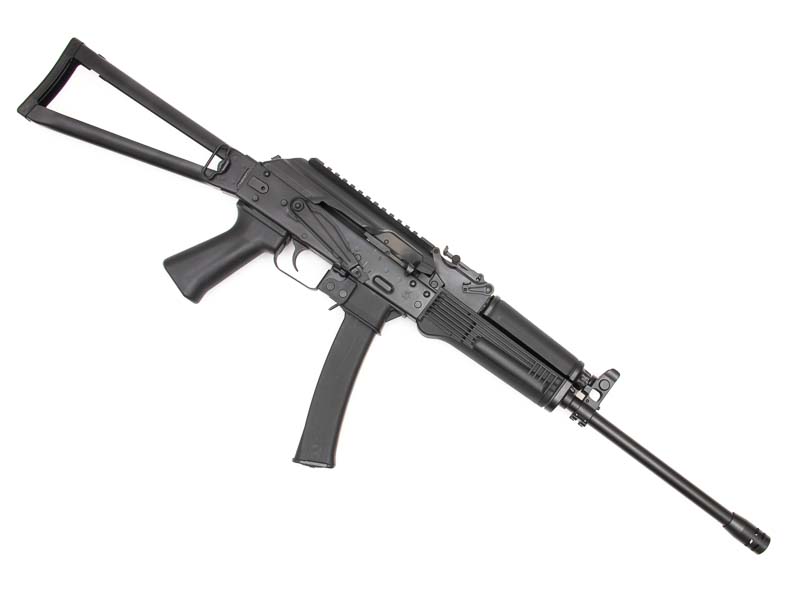
I went into this review with realistic expectations. I wasn’t looking for a race gun or a featherweight competition PCC. What I wanted was a reliable, easy-to-shoot 9mm carbine that could realistically fill roles like home defense, training, and range fun. The KR-9 carbine checked those boxes, and then some.
Note: Unfamiliar with the Soviet-era rifles? Read my article on what AK stands for to get a concise history of the guns.
Why Pistol Caliber Carbines Make Sense to Me
Waking up in the middle of the night to something going wrong is never ideal. You’re groggy, your heart rate spikes instantly, and your brain needs a few seconds to catch up. In those moments, simplicity matters.
The 9x19mm Parabellum cartridge is affordable, widely available, and proven for self-defense. Most shooters have experience with it, and many already own 9mm pistols. From a carbine-length barrel, the round is even easier to control, produces less blast than a typical rifle cartridge, and it still delivers effective performance for defensive use.
Overview of the Kalashnikov KR-9
The KR-9 is a semi-automatic, 9mm carbine built on an AK-style pattern. It draws heavily on the Russian Vityaz-SN submachine gun, a design that has seen extensive use in harsh environments. Obviously, the civilian version is semi-auto only, but the lineage is still there.
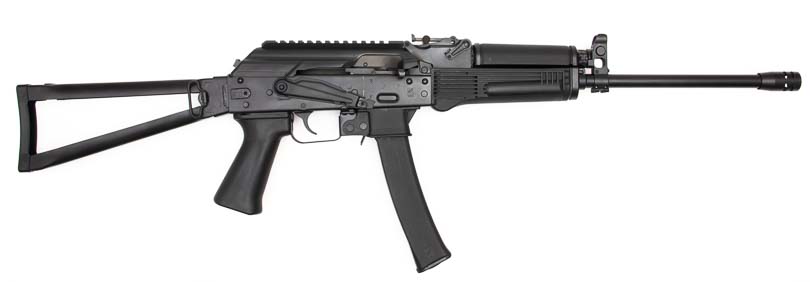
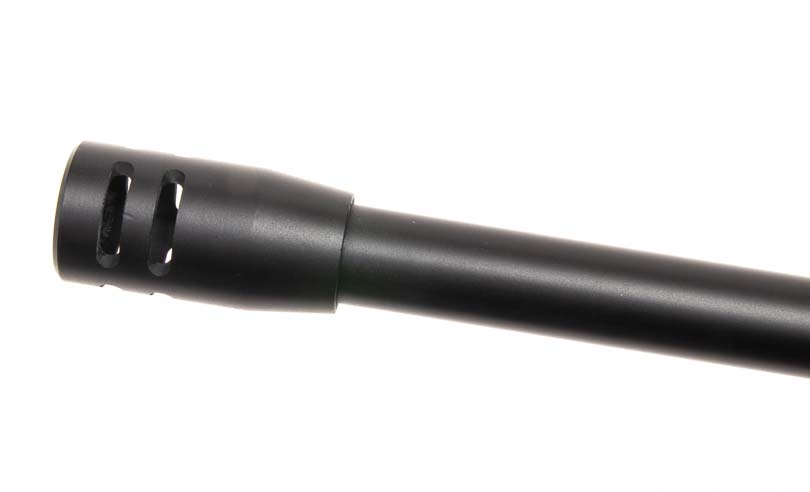
My review sample was the 16.25″ barrel version, which keeps it firmly out of short-barreled rifle (SBR) territory. There is also a shorter barrel option available for those willing to deal with the additional paperwork and tax stamp. For my purposes, the longer barrel made sense.
At its core, the KR-9 is a blowback-operated firearm. That’s common for pistol caliber carbines, and it’s a simple system that tends to work well. The design has been proven over time, and it shows.
KR-9 Specifications
- Caliber: 9mm
- Barrel: 16.25”
- OA Length: 34.5”
- Weight: 6.6 lbs
- Stock: skeletonized side folding
- Sights: AK-style
- Finish: matte black
- Capacity: 30+1
- MSRP: $1,249
Controls, Ergonomics, and Handling
If you’ve ever handled an AK, you’ll feel right at home here. The selector lever is on the right side of the receiver, and on my rifle, it was smooth and easy to manipulate. There was none of the gritty resistance I’ve felt on some surplus AKs. It also didn’t overtravel or flop around, which is something I’ve seen on other 9mm AK-style guns.
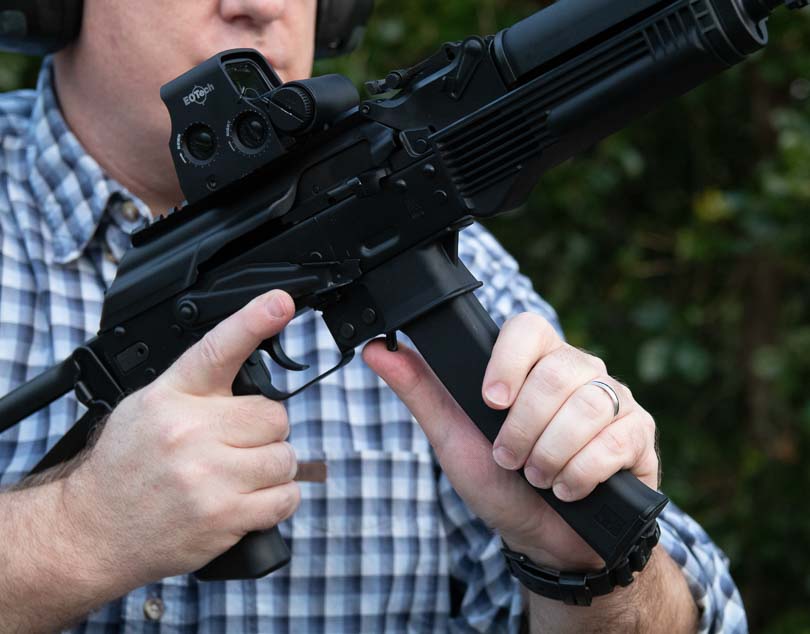
The paddle magazine release sits just behind the magazine well and functions exactly how you’d expect. It has a strong spring and locks magazines in securely. Standard magazines hold 30 rounds, and ten-round options are available for shooters living in restrictive states. If you already have Vityaz-style magazines, they’ll work just fine here.
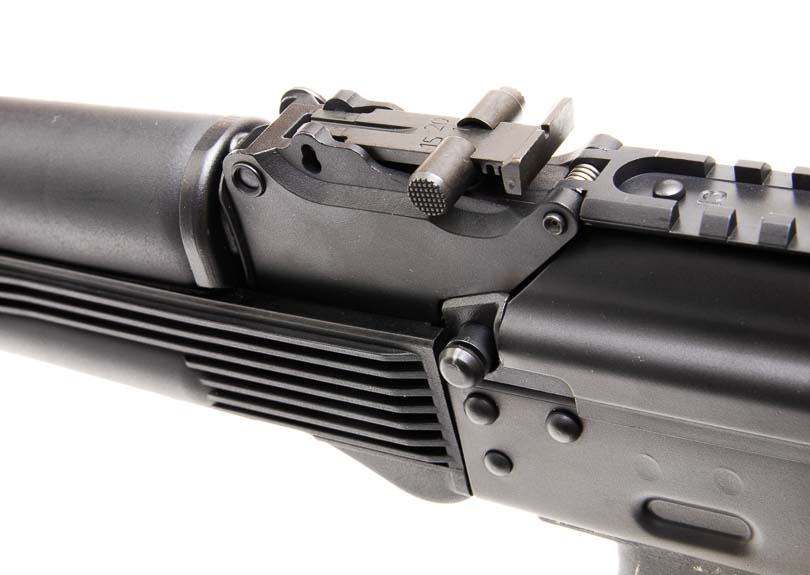
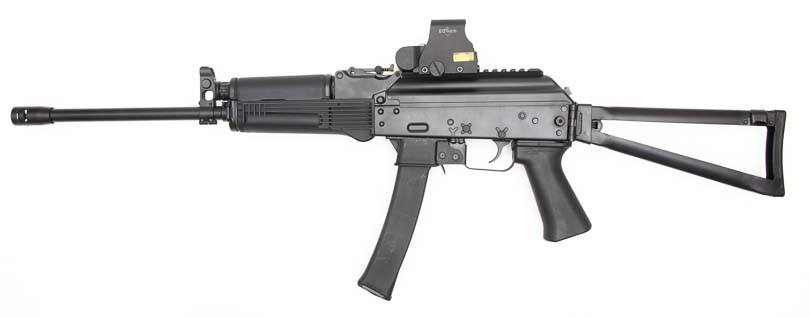
The rifle uses traditional AK-style iron sights that are adjustable and perfectly serviceable. That said, one of my favorite features is the hinged receiver cover with an integrated Picatinny rail. This makes mounting an optic straightforward, and more importantly, the cover locks up solid. I never noticed any movement or shift, which meant my EOTech optic stayed zeroed throughout testing.
The pistol grip feels good in the hand, but it’s not ideal for me. I guess I’ve spent too much time shooting AR-based firearms. Regardless, I prefer the Magpul AK grip that I previously reviewed.
Stock Design and Overall Feel
The KR-9 comes with a skeletonized folding stock that folds to the left side of the receiver. It’s fixed in length but folds neatly for storage or transport. The rifle can still be fired with the stock folded, which is a nice touch.
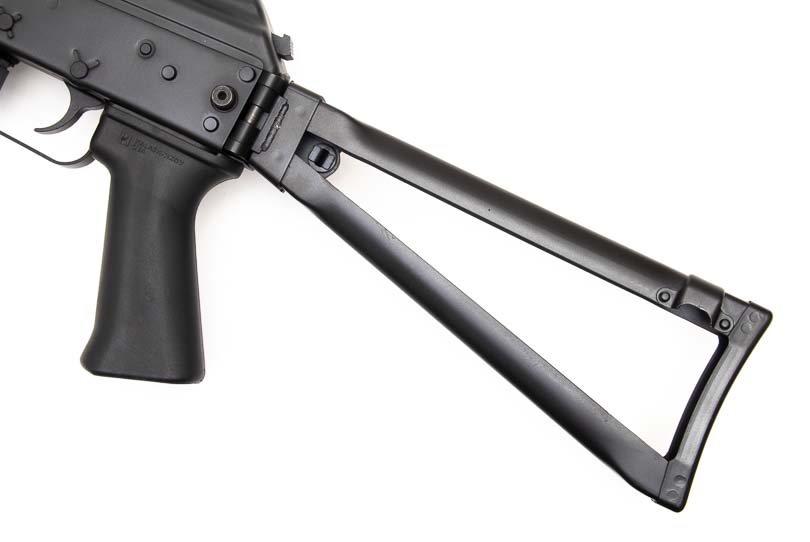
That said, this was one of the few areas where I had mixed feelings. The stock measures around nine inches and feels short, especially for taller shooters like me. Shooting squared up to the target helped, but when using iron sights or a higher-mounted optic, I found myself wishing the stock was just a bit taller and longer.
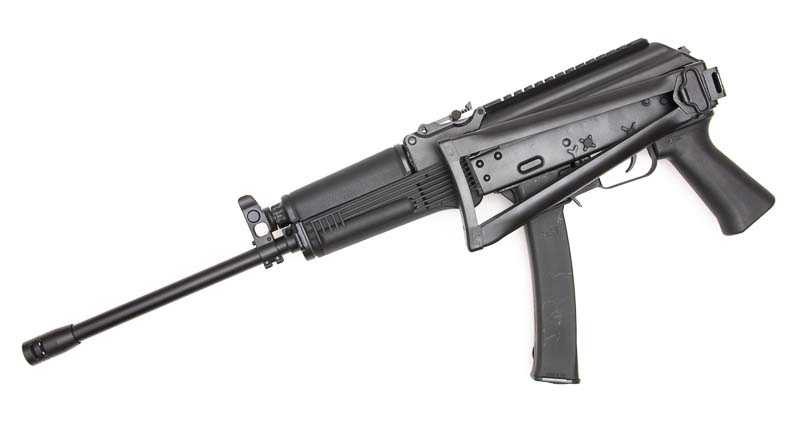
I understand why this stock was chosen. It stays true to the original design and keeps the rifle compact. Still, it’s something I’d consider swapping out.
Fit, Finish, and First Impressions
One thing that immediately stood out was the overall build quality. This rifle doesn’t feel cheap. The finish was clean, the rivets were well done, and everything fit together nicely.
Kalashnikov USA ships the KR-9 in a hard-sided case with foam lining and a proper manual, which I genuinely appreciate. Too many premium firearms show up in flimsy cardboard boxes, and this felt like a more thoughtful presentation.
It’s also worth noting that despite the name, Kalashnikov USA is an American company, and the KR-9 is manufactured in the United States. The company has no relationship with the original Kalashnikov company in Russia.
My Range Testing Process
I spent a little over three weeks testing this rifle, taking it to the range multiple times. I put more than 1,000 rounds through it, using a mix of full metal jacket (FMJ) practice ammo and 11 different premium defensive loads.
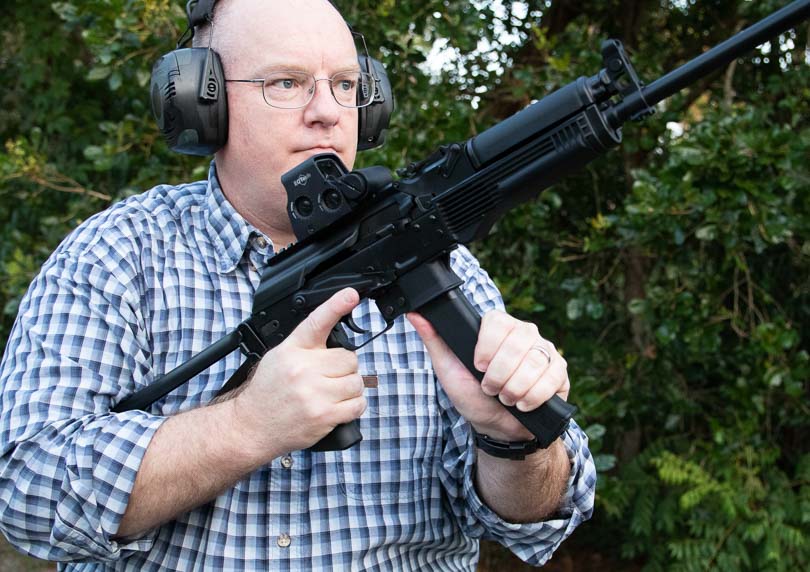
I didn’t baby the rifle, but I also didn’t do any internet torture tests. No mud baths or ice blocks here. I focused on realistic shooting, drills, reloads, and accuracy testing at common defensive distances.
The short version is this. The KR-9 didn’t malfunction once. Not a single failure to feed, fire, or eject. That kind of consistency goes a long way in building confidence.
Recoil, Trigger, and Shootability
Some pistol caliber carbines can feel surprisingly snappy, especially blowback designs. That wasn’t my experience here. The KR-9 weighs about 6.6 pounds, and that mass helps soak up recoil. Even with hotter +P+ defensive loads, recoil was minimal and easy to manage.
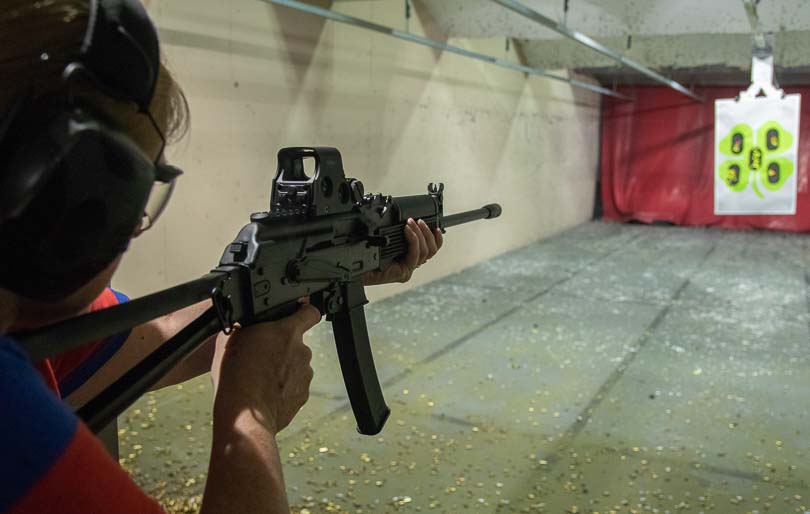
Follow-up shots were quick, and staying on target felt natural. This is the kind of rifle I’d feel comfortable handing to a less experienced shooter without worrying about them being overwhelmed.
The trigger was another pleasant surprise. Compared to many AK-style rifles I’ve shot, this one stood out. The pull was relatively light, the break was crisp, and the reset was short. It’s not a match trigger, but it’s better than I expected and perfectly suited to the rifle’s intended role.
Ammunition Performance
| Velocity | Energy | |
|---|---|---|
| Blazer Brass 124-grain FMJ | 1,386 fps | 529 ft-lbs |
| Federal BPLE 115-grain JHP +P+ | 1,490 fps | 567 ft-lbs |
| Federal HST 124-grain JHP +P | 1,390 fps | 532 ft-lbs |
| Hornady American Gunner 124-grain XTP +P | 1,322 fps | 481 ft-lbs |
| Hornady Critical Defense 115-grain FTX | 1,351 fps | 466 ft-lbs |
| Liberty Civil Defense 50-grain JHP +P | 2,549 fps | 721 ft-lbs |
| LTech 124-grain CuHP | 1,230 fps | 417 ft-lbs |
| Remington UMC 115-grain JHP | 1,313 fps | 440 ft-lbs |
| SIG SAUER 115-grain FMJ | 1,517 fps | 588 ft-lbs |
| SIG SAUER V-Crown 115-grain JHP | 1,437 fps | 527 ft-lbs |
| SIG SAUER V-Crown 124-grain JHP | 1,445 fps | 575 ft-lbs |
| SIG SAUER V-Crown 147-grain JHP | 1,083 fps | 383 ft-lbs |
| Speer Gold Dot 124-grain JHP | 1,284 fps | 454 ft-lbs |
| Winchester Forged 115-grain FMJ | 1,282 fps | 420 ft-lbs |
Accuracy testing was done with a non-magnified EOTech red dot optic mounted on the receiver cover. At 25 yards, my five-shot groups averaged between 1.1 and 1.5 inches. At 50 yards, groups opened up to around 4 to 6 inches.
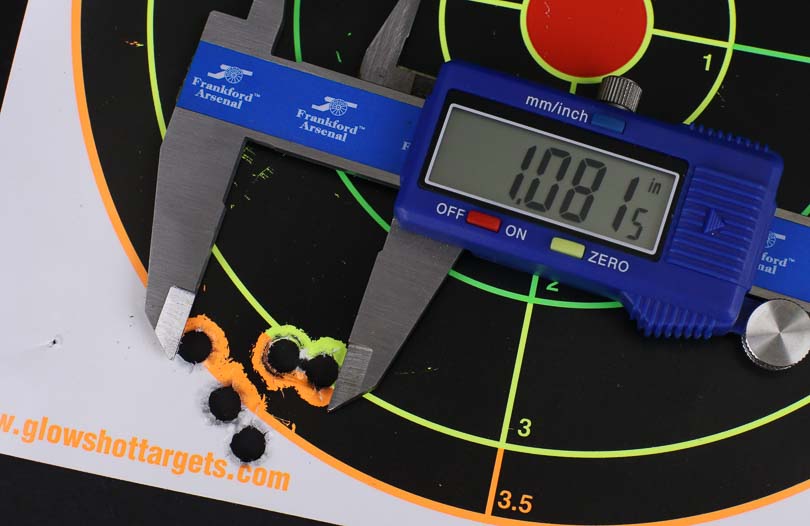
I honestly think the stock geometry limited me more than the rifle itself. With a stock that fit me better, I believe those groups could tighten up a bit. Even so, the accuracy was more than adequate for a 9mm carbine, especially one designed with reliability and durability in mind.
Final Thoughts on the KR-9
I genuinely like this rifle. It’s well-built, reliable, and enjoyable to shoot. The Kalashnikov KR-9 delivers solid performance in a classic package, and it does exactly what a pistol caliber carbine should do.
My only real complaint is the stock. It works, but it’s not ideal for my body type or shooting style. Thankfully, that’s something that can be addressed with aftermarket options or personal modifications.
If you’re looking for a dependable 9mm AK-style carbine that’s easy to shoot, feeds common ammunition, and offers excellent reliability, the KR-9 is absolutely worth a serious look. It’s not just a novelty. It’s a practical, capable rifle that earns its place on the range and potentially in a defensive role.